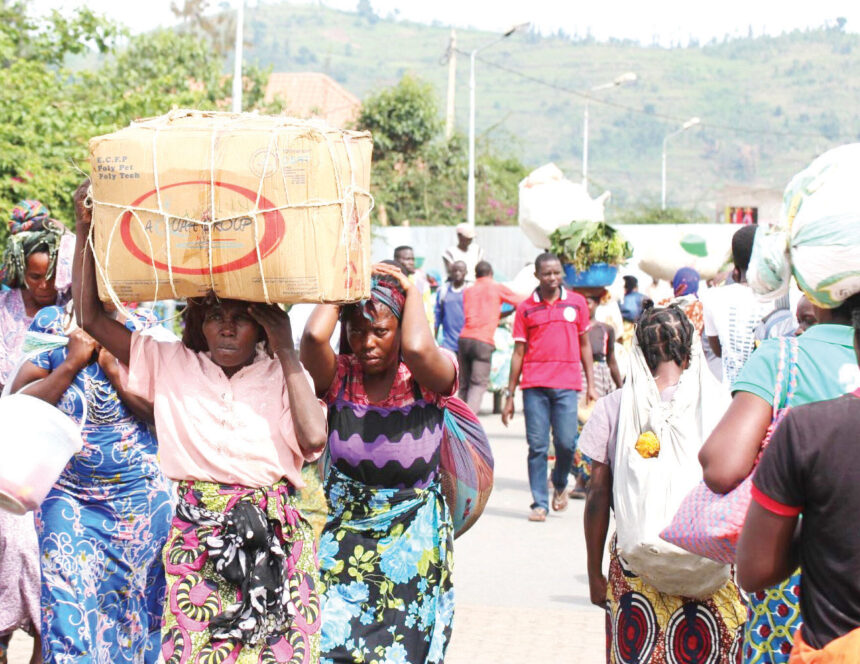
Malawi is among the countries in Southern African which is failing to protect human rights of women working in Informal Cross-Border Trade (ICBT) from among others gender-based violence and economic exploitation.
According to a report from the Amnesty International released Friday as the world commemorated International Women’s Day (IWD), Malawi, Zambia and Zimbabwe have failed to protect women, a development it says has impeded the women’s ability to exercise their human rights in the context of decent work.
Tigere Chagutah, Amnesty International’s Regional Director for East and Southern Africa, said the lack of robust legal frameworks and effective enforcement mechanisms further amplifies the injustices that women experience.
“Cross-border is our livelihood, it is our job: Decent work as a human right for women cross border traders in Southern Africa’, details how women working in ICBT in the three countries frequently face physical assault, sexual harassment, and intimidation, which is often perpetrated by state officials, including border authorities.
They also face violence from non-state actors.
- Advertisement -
“The vulnerability of women in informal employment to diverse forms of abuse, combined with restricted access to justice, highlights a glaring gap in state protection,” Chagutah said.
The report highlights systemic state failures in upholding the right to social security, with notable deficits in addressing the substantial care responsibilities borne by women engaged in cross-border trade.
“In the absence of social protection coverage, many of the women reported inability to exercise their right to an adequate standard of living. They also faced challenges such as being unable to take time off when sick and having little support in terms of childcare.
“Social security systems in Malawi, Zambia and Zimbabwe favour formal workers, leaving many in the informal sector without adequate assistance. A gendered impact of this is the lack of social protection measures to cover contingencies like maternity for workers in the informal economy. Governments must rectify these shortcomings, giving priority to upholding the rights of women engaged in cross-border trade,” said Chagutah.
- Advertisement -
- Advertisement -
Speaking at this year’s IWD’s celebrations at Jenda Community Day Secondary School in Kasungu, First Lady Monica Chakwera said women play a crucial role in the development of the country and ought to be recognised and included in various activities.
“This year’s theme resonates well with how countries should progress in as far involvement of women is concerned. We call upon all stakeholders from the grassroots level all the way to policy makers. Women can do it and women must be included. Progress at all stages must involve women because women are the backbone of development,” she said.
The report further states that the informal cross-border trade is predominantly conducted by women, with women comprising 60 percent to 90 percent of those engaged in this trade across sub regions.
This year the International Women’s Day was commemorated under the theme “Invest in Women: Accelerate Progress”.
website