Why did you organise the cultural exchange event?
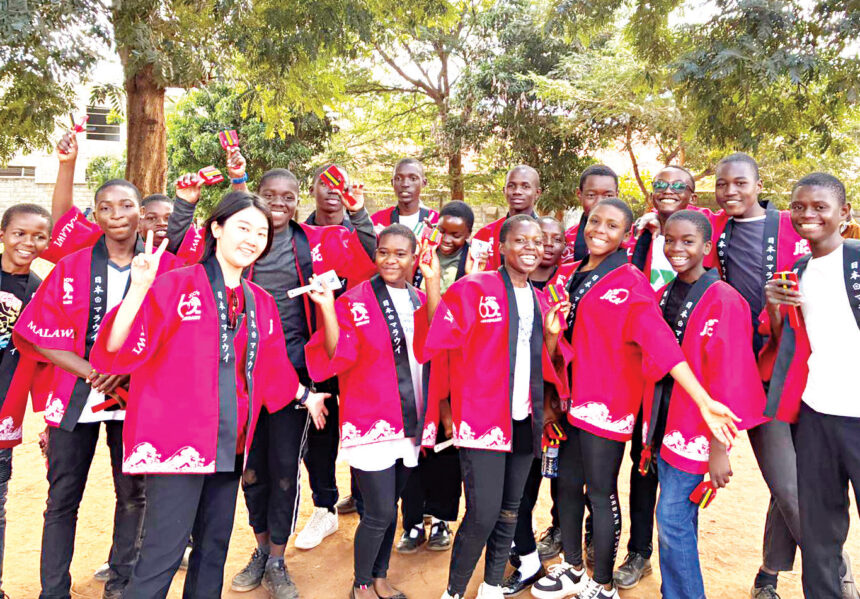
Every year, the Embassy of Japan holds an event called Japan Day. Admission is free, but many students from our Japanese Club have never attended because they cannot afford transportation costs or need to help with household chores. Since it is difficult for them to visit the embassy, I decided to bring the cultural experience to the school instead. That is how the idea of holding a Japanese cultural event at school together with the students began.
What were the successes and challenges of the event at Mkhwichi Secondary School?
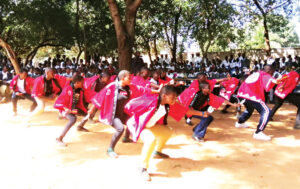
There were two major successes. First, the students took the initiative in organizing the event themselves. Second, it introduced many students to Japan and Japanese culture. While it is easy for a Japanese person to showcase their culture, the students had to begin by learning it first — which meant studying Japanese traditions, practising dances and origami, creating manga, and preparing performances. This entire process helped build their confidence and gave them a strong sense of achievement.
However, we faced several challenges. One was securing time and space for preparation. It takes dozens of hours to learn and perform a dance in unison, but we only had one club meeting per week for one hour. From February, we increased club time to twice a week and even practised outdoors when classrooms were unavailable. Without mirrors, practice was difficult, but students recorded themselves and practised at home, improving steadily.
- Advertisement -
On the event day, one issue was the large amount of used origami paper discarded on the ground. In hindsight, we should have set up trash bins and made announcements in advance to prevent littering.
Why is it important for Malawians and the Japanese to share culture?
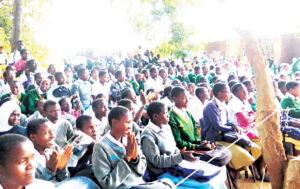
Sharing culture helps build mutual understanding. That is why I believe that by showing that Japan exists as a distinct country within Asia, with its own unique culture, we can foster more respectful and friendly relations between Malawi and Japan. I also hope that students who become interested in Japan will study hard and, if given the chance to study there on a scholarship, will proudly share Malawi’s wonderful culture and the spirit of the ‘Warm Heart of Africa’ with the Japanese people.
You have introduced Japanese discipline, principles, and respect to your club members. How beneficial are those three elements to Malawian learners?
- Advertisement -
- Advertisement -
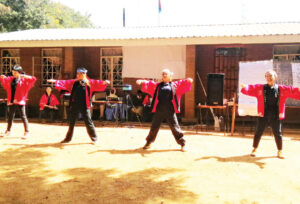
Malawian culture already places great value on respecting others and teachers, similar to Japan. Through the Japanese Club, we practised things like greeting together as a group and performing synchronized dances — practices common in Japanese schools from a young age. For students unfamiliar with doing things in unison, this was difficult at first, as it requires being aware of and adjusting to those around you.
Through dance rehearsals, I believe students learned the importance of paying attention to others and working as a team. We also emphasized the importance of keeping promises and meeting deadlines. In Japan, time and commitment are crucial — not just for yourself, but out of respect for others. For example, we set a deadline to memorize choreography. Students who didn’t attend practice or failed to meet the deadline were informed they would not be allowed to wear costumes on the event day. However, students who asked for a second chance were given a retest one week later.
From this, I believe students learned that missing deadlines or breaking promises can result in lost opportunities — a valuable lesson for the future, especially if they aim to succeed not only in Malawi but internationally.
Japan and Malawi are celebrating 60 years of Japan Overseas Cooperation Volunteers (JOCV). Over the 60 years, how have Malawians benefited from JOCV in terms of culture transfer?
JOCV has been active throughout Malawi, often organizing cultural events at schools. In Nsaru, for example, a previous JOCV volunteer led a Soran Bushi (Japanese traditional dance) event at a primary school, which many students enjoyed. Even today, when a Japanese person visits, they often hear students joyfully shouting, “Dokkoisho! Dokkoisho!” — a chant from the dance.
Last year in Monkey Bay, a JOCV volunteer helped organize a large school sports event modelled after Japan’s Undokai. They worked closely with students and teachers during the preparations, and the event became a lively and memorable experience. Such events remain cherished memories that can shape students’ perspectives long after they grow up.
Recently, when I visited Blantyre, I was confused about which minibus to take. A stranger helped guide me to the right stop — and to my surprise, he had once been taught mathematics by a JOCV teacher. He still remembered the teacher’s full name. I believe he would have helped me even if I wasn’t Japanese, but the fact that he remembered his former JOCV teacher so vividly shows how much of a positive impact volunteers have had.
Our activities as JOCV only last two years, and the impact may not seem large. But if even a small part of our work remains in the memories of our colleagues or students, and helps them in their future, then I believe it’s truly meaningful.