By Alick Ponje in Kigali, Rwanda:
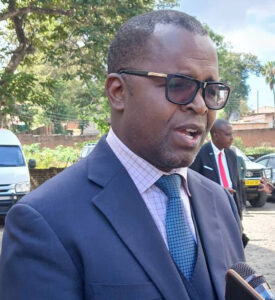
Officials from Malawi, led by Secretary for Health Samson Mndolo, joined others in pushing for resilience to be the buzzword as poor countries grapple with funding cuts to HIV-related programmes.
They spoke in Kigali, Rwanda, during a pre-conference session organised by the governments of Malawi and Rwanda, the Africa-led HIV Control Working Group and the Centre for Innovation in Global Health at Georgetown University.
The session centred on building resilience amidst a funding crisis caused by the suspension of aid for key HIV response programmes supported by the United States (US) President’s Emergency Plan for Aids Relief (Pepfar).
Mndolo said that in the unpredictable HIV financing realities, there is a demand for more efficiency and resilience.
- Advertisement -
“We must achieve better health outcomes with the limited resources available. It is extremely difficult to secure additional funding for health.
“We must explore practical models for maintaining and expanding services for key and vulnerable populations within constrained funding environments and develop shared priorities for national action and regional collaboration to ensure a sustainable and resilient HIV response,” he said.
He added that national leaders, policymakers, programme implementers and partners must recognise that the decisions they make today will shape the future of the HIV response.
Mndolo also said that the time has come for broad action, where stakeholders must move beyond dialogue to implementation, ensuring that strategies are not only responsive to today’s funding realities but also contribute to stronger, more integrated health systems.
- Advertisement -
- Advertisement -
Director for HIV, Aids, STIs and Viral Hepatitis at Malawi’s Ministry of Health, Linley Chewere, said that following the suspension of US support, the government had to quickly step in to prevent interruptions.
Chewere added that with Malawi’s HIV response having been largely donor-dependent, with the government contributing just about 20 percent, the funding cuts prompted the immediate development of a minimum package of services.
“Based on staffing levels, existing evidence, cost-effectiveness and sustainability, we identified interventions the government could offer with or without donor support. This is now what we are implementing,” she said.
Chewere added that government-employed health workers took over from partners who had been operating in several health facilities.
“The response is now government-led; the government sets the direction for HIV efforts. Additionally, our health and HIV information systems were previously partner-led.
“We are now working to establish government-led systems. We are currently assessing all existing systems in the country,” she said.
The Ministry of Health official further told the gathering that the government has also increased funding for the HIV response, including for antiretroviral therapy.
She added that the government is also reviewing the role of implementing partners, so that they do not deliver services directly, but offer technical assistance.
Charles Holmes from the Centre for Innovation in Global Health at Georgetown University noted that governments and civil society are finding ways to safeguard key programmes amid funding uncertainty.
He added that the stakeholders are preparing for progressive acts such as the scale-up of a long-acting HIV prevention drug, which has since been backed by the World Health Organisation.
“These efforts are aligned with UNAids’ vital work on sustainability roadmaps, which will be an important driver of long-term epidemic control,” Holmes said.
Meanwhile, there is a sense of relief among HIV experts, scientists and advocates following the US Senate’s move to safeguard funding to Pepfar, a vital initiative in the global fight against HIV.
The proposed $400 million reduction to the initiative was announced as part of a broader $9.4 billion rescission package introduced by US President Donald Trump in January this year.