As the world reflected this week on progress on Sustainable Development Goals (SGDs) at the 78th United Nations General Assembly (Unga), Malawi’s future on the goals does not look promising, half way through to the end of the race, analysts say.
In 2015, Member States of the United Nations agreed on 17 SDGs.
This year marks midway through and the Unga this year held a summit to track progress on the targets.
UN Secretary-General Antonio Guterres told the summit that only 15 percent of the targets are on track and that many are going in reverse.
“Instead of leaving no one behind, we risk leaving the SDGs behind … the SDGs need a global rescue plan,” Guterres told the summit.
- Advertisement -
And analysts in Malawi aren’t quite optimistic either that Malawi can achieve the targets in seven years’ time.
On ending poverty, economics expert Betchani Tcheleni said much as Malawi has been facing poverty challenge, it is also a problem that is prevalent in the Global South.
He said Malawi needs to depart from depending on subsistence farming and focus on growing the economy.
“We cannot continue to be dependent on subsistence agriculture. Mega farms have to be on the ground, industrialisation and mining. If we cannot do those things then we should not expect the economy to grow at all,” he said.
- Advertisement -
- Advertisement -
Human Rights Defenders Coalition (HRDC) Chairperson Gift Trapence said it is farfetched that Malawi can end poverty by 2030.
He said currently, more than half the population is struggling with intense poverty and there is tangible plan to deal away with all forms of poverty.
Agriculture experts Tamani NKhono-Mvula and Leonard Chimwaza said Malawi has a long way to go for the attainment of SDG 2 on ending hunger, for instance.
The two argued that Malawi has a lot of good policies and strategies that are not implemented.
“If you looking at the institutional frameworks in terms of strategies and everything, Malawi is very good at coming up with good policy documents that can help us achieve zero hunger but the challenge with Malawi is failure to operationalise these documents,” NKhono-Mvula said.
On the other hand, Chimwaza said one outstanding thing about Malawi’s fight against hunger is lack of adaptation measures to effects of climate change.
“We must acknowledge that we have effects of climate change among us. We should be able to be resilient. That is an area that we have not dwelled much on. We cannot be talking of a hunger free country when we are not prepared for disasters that greatly affect the fields.
“We need to come up with stringent measures that follow on issues of climate change. Our farmers ought to be taught techniques on how to go about negative effects of climate change. We can achieve zero hunger only we support the agriculture extension systems so that farmers have messages of climate change and adoption of new modern farming techniques,” he said.
On quality and inclusive education, education policy analysts Steven Shara from the Catholic University of Malawi and Benedicto Kondowe of Civil Society Education Coalition (Csec) said while the country is doing some things right, there is still need to accelerate progress in some areas.
“As a country, Malawi is able to measure progress using annual joint sector reviews, and in education, the documents that report progress are the Education Sector Performance Report (ESPR) and the Annual School Census (ASC)…
“In education, some of the most important 2030 targets are in enrolments rates, survival rates, completion rates, and transition rates through the education pipeline from early childhood to tertiary education,” Sharra said.
He further said the country is faring well in primary education enrolment; however, the struggle is in 100 percent completion and transition to secondary school.
“Outside the school system, we have too many young adults and grown up adults who do not have any school qualification. The 2018 Population and Housing Census put this figure at 71 percent, with 93 percent not possessing a secondary school qualification,” he said.
Kondowe said there are so many discrepancies in the country’s education system and as such attaining the SDG’s by 2030 is difficult.
“From the word go the assumptions and attitudes towards the SDG’s are more or less not being anchored in what different countries had agreed.
“As a country, we are not doing enough in collaborating efforts to promote education and opportunities for all. It is highly doubtful that SDG number 4 will be achieved by 2030,” he said.
With regard to health, activists Maziko Matemba and George Jobe said while Malawi has formulated a lot of policies aligning to the SDGs, there is a lot that needs to be done to attain the goal by 2030.
Matemba said Malawi is still registering high maternal and neonatal deaths.
He further said the patient to health worker ratio is still high, making it difficult for Malawi to achieve universal health for all.
Jobe said Malawi has so far failed on achieving universal health coverage which is a pertinent issue in the SDG.
“Malawi is part of the global village and was part and parcel of the few pilot countries which were selected to sample the SDG around 2015.
“But not much is being done as evidenced by how the health sector is failing to handle various pandemics thrown our way. So there is so much that needs to be done. We need to scale up our efforts to meet the target of 2030,” he said.
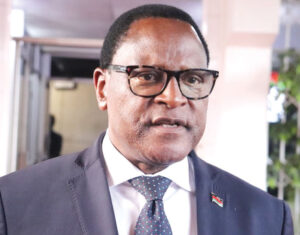
Speaking when he addressed delegates at the Unga on Thursday morning, President Lazarus Chakwera said Malawi aligned the nation’s aspirations to reflect the SDGs and created an implementation plan for the first 10 years.
According to Chakwera, Malawi is achieving results in areas of ending hunger, good health, improving quality of education and water and sanitation and management of aquatic habitats.
“While we celebrate the progress we have made on these goals, with seven years to go before the end of the Decade of Action on SDGs, we are not satisfied with seeing progress on only five out of 17 goals.
“In fact, not only do we need support with making gains in the areas where we are seeing little, but we even need urgent support with safeguarding the gains we have made in the areas where we are doing well. In short, we need urgent support in building resilience to inoculate our economy against the adverse effects of shocks,” Chakwera said.