



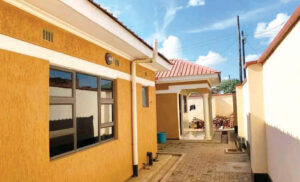
In Area 10 in Lilongwe, there is a 76-year-old retired teacher. He lives in a house worth K300 million. His monthly pension is K150,000. He cannot afford his diabetes medication at K85,000 per month. He cannot fix the leaking roof of his house.
He is asset-rich and cash-poor. He will die poor in a rich house.
This is not his failure. It is the failure of our system. Especially our laws.
Current situation
Malawi has over 400,000 people aged over 65. According to the 2018 census, 68 percent of elderly people in urban areas own their house fully paid. In Lilongwe’s Area 10, 43, 12, and Blantyre’s Sunnyside, Namiwawa, Nyambadwe and many such areas, thousands of houses worth between K200 mmillion and K500 million are owned by pensioners earning less than K200,000 per month.
- Advertisement -
Their capital value is locked. The current law gives them three bad options:
Do nothing and suffer
Live in the K300 million house, eat one meal a day, skip clinic because transport is expensive. Then their health deteriorates. A study done by College of Medicine in 2023 showed that 54 percent of elderly homeowners in Lilongwe missed chronic medication due to cost, despite owning valuable property.
Sell whole house and become homeless
- Advertisement -
- Advertisement -
Sell the K300 million house, rent a K1.5 million month flat. Money lasts a short time and most is consumed by relatives in three years. At 79, this elderly person is a tenant, vulnerable to eviction.
Die and leave it as a deceased estate Beneficiaries inherit the K300 million house after years of suffering due to poverty and health neglect. The wealth transfers, but the health is lost. The elderly parent never enjoyed his life’s work.
When all help is lost
Can banks help? Banks cannot help. The Financial Services Act requires monthly repayment and maximum age 65 for mortgage. A 75-year-old cannot get a bank loan.
Pension funds cannot help. The Pension Act does not allow pension to buy 20 percent of a house. It allows pension to build malls, but not to buy 20 percent of Mr. Phiri’s house in Area 10.
Land law cannot help. The Registered Land Act does not provide for fractional equity with lifetime occupancy. You can sell 100 percent or nothing. Even the new law in Section Title cannot help.
The result is that the estimated current K2 trillion in elderly housing equity is dead capital. It does not buy medicine, does not pay for carers and does not improve health.
What needs to be done then?
The answer lies in Equity Sharing. Equity Sharing allows an institution, like Nico Pension or Old Mutual, to buy 20 to 40 percent of the elderly person’s house. The elderly gets cash now, continues to live in the house rent-free for life, pays K0 rent.
The question though is on how the institution gets its return from this arrangement. That does not come from rental payments. It comes from house price growth or capital appreciation. For example, for a house worth K300 million today, Nico buys 20 percent of it, which is equivalent to K60 million to the 75-year-old.
The elderly pays zero rent. He lives rent-free for life. This is the critical point that needs to be clearly understood.
The value of the Lilongwe houses grow at 10 to 12 percent per year. Over 12 years, that house is worth K930 million. Nico’s 20 percent now becomes K186 million, bringing a profit of K126 million. The family inherits 80 percent which is K744 million.
The K60 million cash given to the elderly changes health immediately: K60 million invested at 15 percent brings K750,000 per month interest. That is five times his pension. This elderly can now afford private medical cover, a full-time carer, balanced diet, transport to clinic, fix roof, install solar, and no stress
Health economics is clear: One University of Malawi research shows that elderly people with income above K500,000 per month have 40 percent fewer hospital admissions.
That is why equity sharing is a health intervention, not just finance intervention.
There is therefore need for Malawi to amend four laws.
We do not need new money. We need new laws as follows:
Financial Services Act: It should create lifetime mortgage. Allow the Reserve Bank of Malawi to licence reverse mortgage. No monthly payment, interest rolls up at 8 percent (not 30 percent), repaid on death/sale, with no-negative-equity guarantee. Debt can never exceed house value. UK has done this since 1998.
Amend the Registered Land Act
This is to allow fractional and lifetime right. Allow title to read: “Nico Pension owns 20 percent, Mr. Phiri has lifetime right to occupy whole house.” He cannot be evicted. This is already done in Kenya’s Sectional Properties Act 2020.
Pension Act
It should allow 5 percent in home equity. Allow pension funds to invest up to 5 percent of its total holding in elderly home equity. That is currently about 6,500 houses at K60 million each. The Pension Fund gets about 10 percent annual return from house capital value growth, better than Treasury Bills when you consider inflation.
Taxation Act
It should promote zero capital gains for those aged 70 and above. If a 70+ year old sells equity to buy annuity or pay medical bills, there should be no Capital Gains Taxation at all. The current 30 percent tax only punishes the elderly who are only trying to survive.
Health is wealth. We built a system where a man works 35 years, builds a K300 million house, then starves inside it. That is cruel.
Equity Sharing turns dead brick into living health. Youth get houses through rent-to-own paying IN; elderly get health through equity sharing taking OUT. This is intergenerational justice.
It’s understood that the Law Commission may be reviewing the Land Act now; and the Reserve Bank of Malawi may be reviewing the Pension Act now. Let us add Equity Sharing in these reviews.
Our elderly should not die poor to leave behind rich houses. They should live comfortably in their houses.
—————–
The author is a real estate professional with over 50 years experience.