




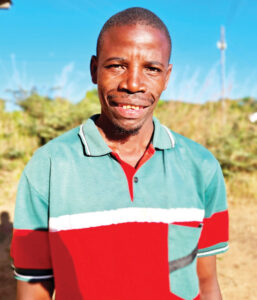
Suzgo Gondwe from Bulangete Nyirenda Village in Mzimba District was never a happy man whenever his wife visited the hospital to vaccinate their child.
“You just knew you wouldn’t sleep that night; the baby cried a lot,” he recalls.
The 29-year-old says their first child frequently suffered from illnesses such as coughing and fever. Back then, the couple mostly relied on traditional medicine.
But everything changed when Gondwe was engaged by Thimalala Mother Care Group, an initiative trained by the Malawi Health Equity Network (Mhen).
The group challenged him to rethink his beliefs and practices around child healthcare.
- Advertisement -
Today, Gondwe is not only a committed father of two but also a vocal advocate of immunisation amongst his peers.
He has convinced five other men in his area to accompany their wives to the clinic for their children’s vaccinations and other health services.
Gondwe also says he sees no problem helping his wife with other chores like drawing water or fetching firewood.
“It is better to be seen as a fool by peers, as long as you know your actions are helping your family,” he states.
- Advertisement -
- Advertisement -
Gondwe and his wife Bridget take their children to Thimalala Under-Five Clinic, which serves 18 villages with a combined population of over 3,100 people.
Chairperson of Thimalala Mother Care Group, Merina Mwandira, says the presence and involvement of men has encouraged the group to advocate for increased uptake of vaccines.
Mwandira adds that, through this, incidences of under-five deaths have reduced in the area.
“You see, men are heads of families and mostly they make decisions. Women used to get abused whenever their children went for vaccination and they ended up crying the whole night and having a fever.
“We used to have a lot of defaulters for fear of reprisals from their spouses. Now, when we visit their families, men easily understand the importance of vaccination,” she recalls.
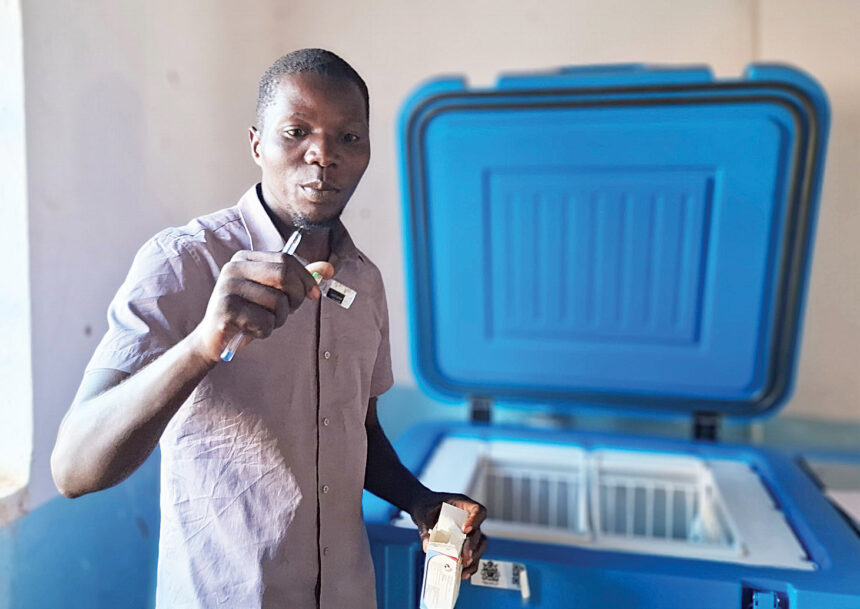
Beyond promoting immunisation, the group has mobilised resources to construct a house for Health Surveillance Assistants (HSAs) and lobbied for a cold storage facility for vaccines, which was successfully installed.

Happy Chawula, an HSA serving the clinic, says the facility is a lifeline for the area as health centres lie far apart.
“We have Engucwini, which is 25 kilometres (km) from here, Kaweche lies about 15km from here and it is almost 20km to another health centre at Enukweni.
“We are also surrounded by two big rivers, Kasito and Rukonkhowe, which makes it difficult for people, especially women, to visit the health centres during the rainy season,” Chaula explains.
As such, Thimalala has become vital for the community, currently storing and administering vaccines for both children and adolescents, including the HPV vaccine.
“We were lagging behind as an area because some people were holding on to old beliefs and under-five deaths were high. But since 2021, we have seen gradual change. It is now rare to hear about an under-five death,” Chaula says.
The story of Suzgo Gondwe is similar to that of 45-year-old Mark Mtseteka Gondwe, who has helped nine other men to join the bandwagon.
Gondwe, a father of four, was inspired by Jangavya Mother Care Group, which operates in the area of Inkosi Mpherembe in Mzimba District.
“It was not until we had our third-born child that I was engaged by these women. When my wife and I went to have the child vaccinated, we noticed great changes in the child’s health. We usually had bad experiences; our children were often sick. Not any more,” he says.
Here, the mother care group has helped rehabilitate the under-five clinic, built a house for the HSA and moulded bricks that could be used to further extend the clinic.
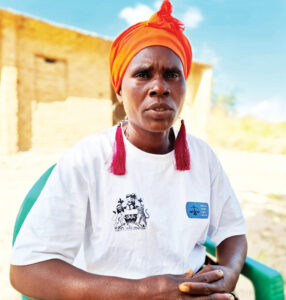
Chairperson of the group, Martha Tembo, says their long-term goal is to upgrade the clinic to include a maternity wing and, eventually, a fully-fledged health centre.
These women’s groups were trained by Mhen under its Zero-Dose Children and Strengthening Routine Immunisation project, funded by the Global Alliance for Vaccines and Immunisation through the Ministry of Health.
Commenting on mothers walking long distances to access healthcare services, Director of Health and Social Services for Mzimba North, Dr Wamaka Musopole, said there are a number of factors the office considers.
Musopole added that while the government looks at distance, five kilometres radius to the nearest hospital, they also consider catchment population.
He then commended the mother care groups in the district, saying they have played a role in the increase of immunisation coverage.
The health official said since the inception of the project in 2019, coverage for vaccines, for example, Measles-Rubella 1, has risen from an average of 77 percent to 93 percent