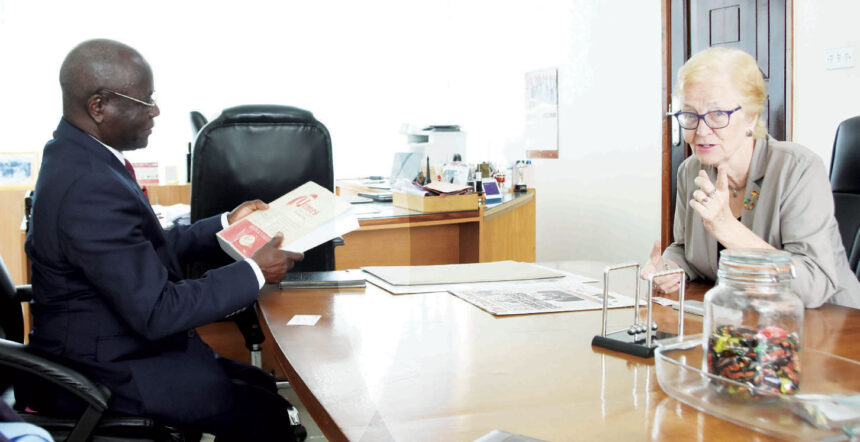
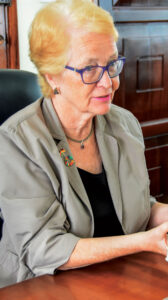
Federal Republic of Germany Ambassador to Malawi Ute König has said the country can develop economically if citizens change their mindset towards poverty and realise that they cannot depend on development partners forever.
König, who visited The Times Group headquarters at Ginnery Corner in Blantyre Tuesday, said mindset change would prompt the citizenry to explore other ways of lifting themselves out of poverty.
“There is a need for mindset change, which will enable people to realise that they cannot be recipients of donor aid forever,” she said.
She said this is why her government has been supporting the Social Cash Transfer Programme, saying it enables beneficiaries, “the majority of whom are women”, to buy basic necessities and pay school fees for children, thereby guaranteeing a brighter future for them.
“We are supporting the programme because we know that economic wealth will lift people out of poverty. At the same time, we understand that increase in productivity and growth of the economy will be very important to national development.
- Advertisement -
“There are other areas we are supporting, including health—especially reproductive health; nutrition, good governance, among others. At the same time, we understand that for the country to attain economic development, you need more schools and formations so that the foundation for development can be strong,” König said.
The ambassador added that the country can realise the best out of agriculture by prioritising agro-processing, saying she is impressed that instead of exporting raw materials from groundnuts, Malawi is now producing peanut butter.
“Do the value addition because markets are there. We are 84 million people in Germany. We buy a lot of goods [from other countries] and, on our part, we export cars, machinery and other things. Germans also make up a significant population of tourists. This is because Germans are curious and go everywhere in the world,” said the envoy, who has been a diplomat for over 30 years.
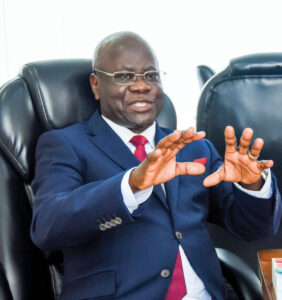
Before featuring in ‘Times Special’ program on Times Television, the envoy had discussions with The Group Managing Director Leonnard Chikadya, who took her through the history of the media giant.
- Advertisement -
- Advertisement -
Chikadya reaffirmed The Times Group’s commitment to impartiality, saying their fidelity is to Malawians.
“We follow an independent media policy. We stand by the voiceless,” Chikadya said.
Between 1994 and 1997, König served as private secretary to German president Roman Herzog.
Between 1988 and 1990, she joined the German Foreign Office, Bonn, in the United Nations Human Rights Section and between 1990 and 1993, König served as Head of the Legal and Consular Department at the German Embassy in Tel Aviv, Israel.
From 1993 to 1994, she served in the Foreign Policy Unit of the German president’s office in Bonn before, between 1994 and 1997, serving as private secretary to German president Roman Herzog.
Between 1997 and 2000, she worked as counsellor for Political Affairs at the German Embassy in London, England, before being assigned the role of deputy head of division, personnel management, at the German Foreign Office in Berlin.
König was then assigned the task of deputy head of mission at the German Embassy in Windhoek, Namibia, between 2004 and 2008. From 2008 to 2011, she served as director for the German Information Centre in Pretoria, South Africa, and then worked as head of division, International Criminal Law, at the German Foreign Office in Berlin from 2011 to 2015.