


By Pemphero Malimba:
Malawi and the world at large have faced an outbreak of various diseases in recent years. These diseases include cholera, Covid-19, Mpox and polio.
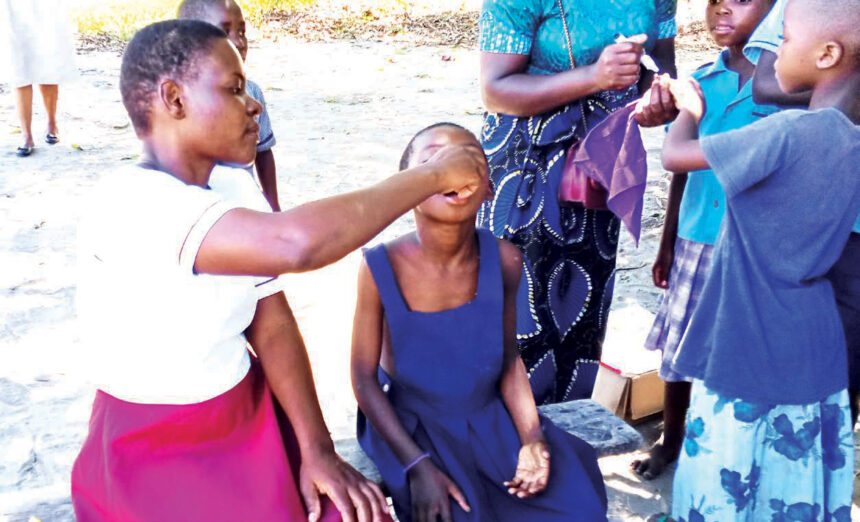
To contain the further spread of diseases, Malawi in particular implemented several interventions, including the provision of vaccines to targeted groups of people.
However, the provision of vaccines has always faced poor reception.
For example, the provision of the polio vaccine has, in recent years, faced resistance due to misconceptions based on traditional and religious beliefs.
- Advertisement -
“In the community, people were believing that these vaccines are family planning methods whereby the authorities are trying to reduce the population of people once they receive the vaccine. As such, this affects vaccines’ uptake,” Kennedy Nyirenda, senior assistant environmental health officer at Lifuwu Health Centre in Salima District, said.
Hundreds of kilometres from Lifuwu in Salima, people in Traditional Authority (TA) Kabudula, Lilongwe District, have their own misconceptions towards the uptake of vaccines.
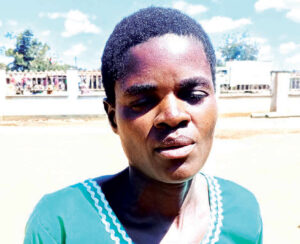
“People in our area feel that when your child gets a dosage of a vaccine, he or she shall die.
People think that this is the only way that the government uses to stop the rise in the number of people in our area,” Jenipher Kafalilani, mother to five children from TA Kabudula, said.
- Advertisement -
- Advertisement -
According to the United Nations Children’s Emergency Fund (Unicef), in Malawi, the authorities fail to reach out to at least 30,000 children with vaccines annually.
The organisation attributes this to failure by parents to ensure that their children get vaccinated at vaccination centres across the country due to misconceptions towards vaccines.
However, things are slowly taking shape, as evidenced by the recent conduct of the second round of the polio nationwide vaccination campaign.
Malawi targeted to reach out to over six million children under the age 10 through the exercise, which was conducted between April 27 and 30, 2026.
In Salima alone, the government targeted to reach out to 187,711 children with the vaccine.
According to the district health office, healthcare workers had administered the vaccine to 67,439 children across the district on the first day of the exercise alone.
Nyirenda, whose health facility reached out to over 2,900 children on the first day of the exercise out of the targeted 6,000 children, said the achievement showed that things were improving.
“People have now understood the messages.
People have now understood the reason we are giving out the vaccine to their children. The rumours that were there before are now gone. People are now believing that the vaccine is helpful and has the potential to protect their children from polio,” he said.
According to Nyirenda, social mobilisation mechanisms were key to sensitising people to the dangers of polio.
“We were giving messages to the community. We were using volunteers and chiefs and even went as far as churches and mosques and the messages were being presented to such places,” he said.
Back to Lilongwe, Kafalilani was all smiles after her nineyear-old son was administered with the polio vaccine at Kabudula Health Centre.
“I was encouraged by healthcare workers and traditional leaders that my child will be healthy once he gets immunised. So, I didn’t hesitate to come and ensure that my son was vaccinated,” she said.
TA Kabudula of Lilongwe said traditional leaders in his area played a huge role in mobilising community members for the exercise.
“We are using chiefs to encourage people to go to the hospital so that their children can receive the vaccine. Chiefs move around people’s homes to ensure that parents adhere to messages and take their children to vaccination centres. Apart from chiefs, we use community policing structures to ensure that no one is left behind,” he said.
Health Minister Madalitso Baloyi said the involvement of local leaders was key to ensuring that more children were getting vaccinated in the country.
“If you want our nation to be resilient, then our population should be vaccinated and we are sending this message out there to all parents and caregivers to take this seriously to ensure that you vaccinate your children.
Vaccination for polio is very important for this nation,” Baloyi said.
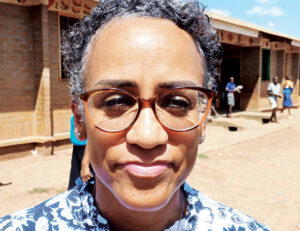
Unicef Country Representative Penelope Campbell feels ensuring that every child gets immunization every year would help Malawi to contain some diseases due to zero resistance to the vaccines.
“What we are finding is that every year, around 30,000 young children are not routinely immunised. If you don’t get your routine immunization right, you need to ensure that over 95 percent of Malawian children are vaccinated each year and, that way, we get the head immunity and that means that we don’t have any outbreak,” Campbell said.
She said community members needed to understand that the vaccines were free and helpful to their children.
“It is safe to bring your child to the services. They are free for all, no financial barrier whatsoever, and what we want is to ensure that every child is vaccinated,” she said.
World Health Organisation (WHO) Country Representative Charles Kuria Njuguna said vaccination is crucial as it annually saves lives of over three million children across the world.
“We have made a lot of progress. A lot of lives have been saved through vaccination and, therefore, we are here to create awareness on the importance of vaccination and not just routine vaccination. You are aware that Malawi has been going through outbreaks like polio, measles and cholera and mpox.
Vaccination has really helped us to control these outbreaks. We don’t want to leave any child behind. The awareness is important,” Njuguna said.
He said WHO is targeting to eradicate polio globally.
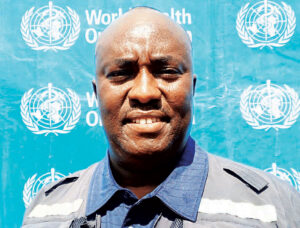
“You are aware that polio is one of the diseases that WHO has targeted for eradication. When you talk about eradication, you talk about a complete wipeout of the disease from the face of the earth. So far, we have managed to deal with small pox and, therefore, polio is the next disease we are targeting to eradicate from the face of the earth.
“We have already managed, in the African region, to deal with world type virus, which causes polio and, right now, we are dealing with another type of polio that is vaccine-derived.
That is why we are doing this campaign so that we address issues of immunity,” he said.
Unicef supported the exercise with 6.9 million doses of the polio vaccine, among others.
The polio vaccination campaign started with round zero from February 11 to 14, 2026 targeting eight districts.
During the exercise, at least 1.5 million children were vaccinated.
The first round of the exercise was then conducted between March 24 and 27, 2026 in all districts of the country, where 6.2 million children were covered.
Recently, the Ministry of Health declared the outbreak of polio after a polio virus type 2 was detected in two environmental samples taken from two sewerage plants in Blantyre.