
The Joint United Nations Programme on HIV and Aids (UNAids) is firm in its position that no single prevention method or approach can stop the HIV epidemic on its own.
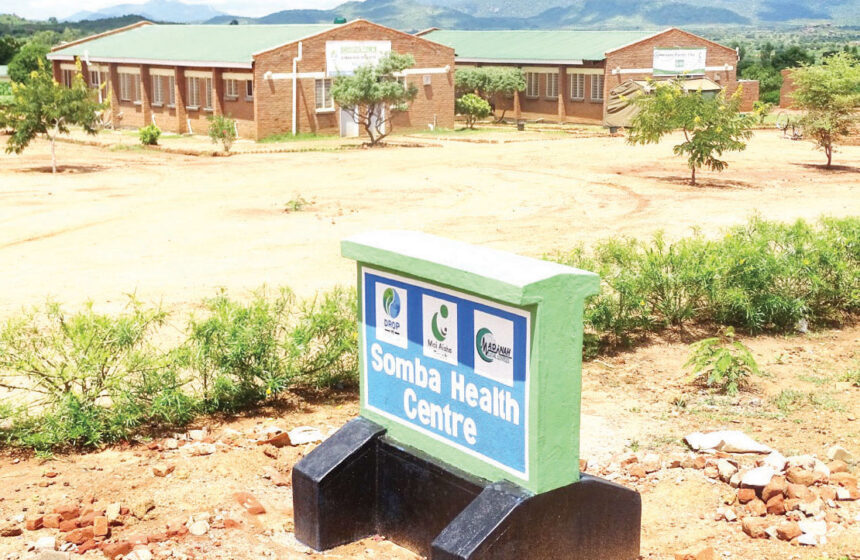
A healthcare worker in a rural setting in Malawi’s central region district of Dedza agrees.
UNAids—the main advocate for accelerated, comprehensive and coordinated global action on the epidemic—states that several methods and interventions have proved highly effective in slowing down HIV.
“But in most rural areas, some crucial prevention products are not available to those who need them,” the healthcare worker, who chooses not to be identified, laments.
She says, for instance, the steadfast push by HIV treatment advocates for pre-exposure prophylaxis (PrEP) to be universally available is triggering demand which cannot be met.
- Advertisement -
The healthcare worker says PrEP is being preferred by most people in her health centre’s catchment area, people who used to rush for post-exposure prophylaxis (PeP).
“We just hear that PrEP is accessible in district and tertiary hospitals. It is not fully rolled out in Malawi,” she says.
According to UNAids, condoms, use of antiretroviral medicines such as PrEP, voluntary male medical circumcision (VMMC) and the treatment of people living with the virus to reduce viral load and prevent onward transmission, are crucial in the fight.
The agency states that VMMC should continue to be promoted in 15 priority countries in eastern and southern Africa. Malawi is one of them.
- Advertisement -
- Advertisement -
“HIV prevention for men and boys requires greater focus on increasing access to services within and outside clinic settings including male-friendly services.
“This could entail community-based HIV testing, self-testing, linkages to early antiretroviral treatment as required, condoms, pre-exposure and post-exposure prophylaxis, comprehensive sexuality education and other sexual and reproductive health services and harm reduction,” UNAids says.
At the 12th International Aids Society (IAS) Conference on HIV Science that took place in Brisbane, Australia, from July 23 to 26, scientists presented the outcome of a study that showed that cisgender women in Malawi and six other African countries prefer long-acting injectables to daily oral PrEP.
“Nearly eight out of 10 cisgender women prefer long-acting injectable cabotegravir to daily oral PrEP for HIV prevention,” an introduction to study results reads.
The study was an extension of one that was done to evaluate the safety and efficacy of the injectable agent, cabotegravir, compared to a daily oral PrEP in HIV-uninfected women.
“Based on those results, long-acting injectable PrEP is now poised to be rolled out in multiple African countries,” an introduction to the presentation said.
It added that a variety of factors influenced product choice, including personal preference regarding whether to get an injection every eight weeks or take a pill each day.
The study further found that participants who chose long-acting PrEP were more likely to be sexually active but not live with a partner.
“These results suggest that long-acting PrEP could have a huge prevention impact in Africa, where uptake of daily oral PrEP has been disappointingly low,” IAS president Sarah Lewin said.
She added that her wish was for the results to accelerate momentum to make long-acting PrEP accessible to all those who need it.
Malawi’s PrEP communication strategy, which expires this year— but is said to have failed in implementation—outlines how to increase demand for the product among groups most at risk of HIV.
The Ministry of Health defines these groups as adolescent girls and young women, sero-discordant couples, female sex workers and men who have sex with men.
A preamble to the strategy states that PrEP “is proven to prevent HIV infection”.
“But until recently, PrEP access in Malawi was limited to people taking part in implementation studies. Creating demand for PrEP among groups most at risk of HIV is an important next step to rollout,” the overture reads.
That was the situation two years ago when the strategy was launched at an event presided over by Health Minister Khumbize Kandodo Chiponda.
Kandodo Chiponda emphasised the need for Malawi to enhance prevention and called on people exposed to the virus to seek PrEP at nearest health facilities.
The United States President’s Emergency Plan for Aids Relief (Pepfar), a key partner in Malawi’s HIV interventions, also waxed lyrical about injectable PrEP which, it said, had proved to be effective in other countries.

options
In an interview last week, Ministry of Health spokesperson Adrian Chikumbe admitted that while PrEP is among effective HIV prevention products, its accessibility is limited.
“There are more available methods such as the test-and-treat policy, VMMC and condom use that are contributing to the reduction in new HIV incidences.
“We are determined to expand options, but in terms of PrEP, our target is populations most at risk of contracting the virus,” Chikumbe said.
He could not indicate whether the reluctance to fully roll out the product is due to its costs which can reach up to $2,000 per individual per month.
But HIV prevention and treatment advocate Alick Makiyi believes the march towards the realisation of an HIV-free generation is being slowed down by the unavailability of some prevention products such as PrEP.
Makiyi argues that despite that PrEP has been around for years, there is little interest to expand its availability.
“Yet we all know that allowing people to have many prevention options at their disposal is the only way we can end the epidemic,” he says.
At the end of 2022, new HIV infections had declined from around 56,500 in 2010 to around 15,000.
The country has also managed to “significantly” reduce the number of Aids-related deaths from 36,000 in 2010 to around 11,100 in 2022.
According to the National Aids Commission, Malawi has confirmed the HIV-positive status of 1.01 million people and placed over 922,000 of them on treatment.
But Makiyi believes the progress would be way much better if people had access to more prevention products and methods.