By Isaac Salima:
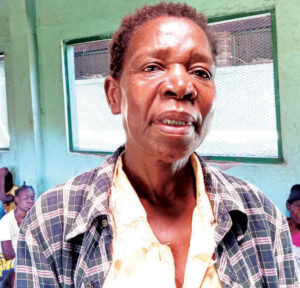
As the country joined the rest of the world in commemorating World Cancer Day on Saturday, cancer patient Emily Sambani was ironically detached from activities taking place on the day.
She said the day did not make sense to her and other patients at Queen Elizabeth Central Hospital (QECH) in Blantyre.
Sambani has been getting treatment at the referral hospital since August last year.
She was diagnosed with the disease last year and was enrolled on chemotherapy, a type of treatment that uses one or more anti-cancer drugs as part of a standardised regimen.
- Advertisement -
However, since August last year, Sambani, who comes from Machinga District, has been housed at QECH’s guardian shelter as she is failing to return home because of lack of money for transport.
She is supposed to get chemotherapy twice a month and due to lack of money to be used when travelling to the facility two times every month, she resorted to be staying at the place.
“I require about K20,000 to use as one-round trip transport from home to QECH but I cannot afford to be travelling to the facility and back and forth. It means I need about K40,000 a month. Where can I get that money? If I go back to the village, I will die,” Sambani said.
As staying put at the place seems to be a good solution to Sambani, food has become a challenge to the patient.
- Advertisement -
- Advertisement -
The 65-year-old woman needs money to sustain her stay at the facility.
“Just like anyone else, I need to eat.
“Unfortunately, we are not considered as patients who are on admission and, as such, we cannot receive food— which is provided to patients. We have to fend for ourselves,” she said.
Her stay at the place has been an eyesore as she has been struggling to get almost everything.
She said her grandchild back in the village was forced to drop out of school so that he could be doing some piecework and be sending her some money for upkeep.
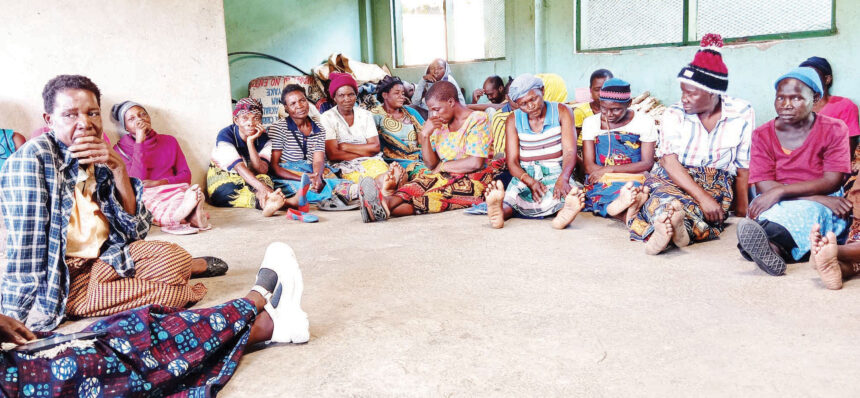
Sambani was among the 30-plus women and men we found at the guardian shelter last Friday.
They were either waiting for treatment or had been assisted but had no money for transport to travel back home..
As, one by one, they took turns in telling their tales, it was apparent that theirs is a story of forgotten persons who are suffering a double tragedy.
According to Chengitayi Phiri, who is grappling with blood cancer, their plight cannot make sense to someone who has not been in their situation.
“There is more to getting chemotherapy than just the treatment itself. What next after chemotherapy? Who cares about our welfare? Who is aware of our struggles to get to the hospital for medication?” Phiri queried.
Her concerns are too touching to ignore.
Unfortunately, hospitals only provide medication to patients, leaving those like the women we found at the guardian shelter at the mercy of unknown devices.
It is for such a reason that the guardian shelter, which was constructed to be serving as temporary shelter, and also to be used as a food preparation site by those whose relations are admitted to the facility, has turned to be a permanent home for most cancer patients who come from far-away places.
The people have been confined to the place as they do not know when they will go back to their respective homes.
“We are encouraged to take a good diet to boost our immunity, which is low. But what is happening is the opposite to us. We engage in piecework so that we can get money to buy food. Sometimes, we resort to selling firewood, and these are all desperate means to make ends meet,” Phiri said.
She said they are first tested for immunity and that, when it is low, they are told to wait until it improves.
“The immunity improves basing on the type of food one is taking but, to us, the challenge is how to get food because nobody is here to support us,” she said.
At the guardian shelter, life is unbearable as conditions are not good for human habitation.
The toilet facilities blocked sometime back, thereby compromising users’ sanitation.
“The condition is appalling. The toilets are full and we cannot get inside. People look elsewhere to ease themselves, something that puts us at the risk of contracting cholera,” Charles Kachere, a skin cancer patient from Zomba, said.
Director of Health and Social Services at Ntcheu District Hospital, Stephen Macheso, previously told us that cancer patients are mostly referred to central hospitals so that they can be handled by experts who are not available at district hospitals.
“We offer healthcare at different levels. We handle some cases while others are referred to higher levels. District hospitals do not have the capacity to manage cancers,” Macheso said.
Cancer remains one of the deadly diseases tormenting people on earth.
In 2000, countries around the world set aside February 4 as the day for raising awareness on the issue.
This year the event was commemorated under the theme ‘Close The Gap’ and focused on eliminating the difference in access to cancer care services faced by populations of various income, age, gender, ethnicity groups, among others.
Ministry of Health revealed that cancer is contributing to 50 percent of premature deaths in the country.
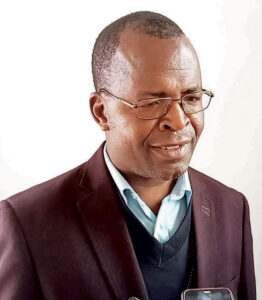
Principal Secretary for Health Samson Mndolo said, in a statement, that cancer remains a global burden, especially in low and middle income countries such as Malawi.
“In Malawi, cancers contribute to 50 percent of the premature deaths due to non-communicable diseases. The commonest cancers include cervical cancer (21 percent), Kaposi’s sarcoma (21 percent), esophageal cancer (9 percent) and breast cancer (8 percent).” Mdolo said.
And in a press release ahead of World Cancer Day, the World Health Organisation’s cancer agency, the International Agency for Research on Cancer, conducted research which indicated that out of the 115 countries surveyed, the majority of them do not adequately finance cancer and palliative care services as part of universal health coverage.
In Malawi, most cancer patients continue walking long distances to access screening and treatment services.
Médecins Sans Frontières has been running comprehensive cervical cancer screening, diagnose and treatment programmes.
However for the rest of the cancers, patients remain helpless and hopeless as it is survival of the fitness.