


With a Super El Niño forecast to worsen food insecurity later this year, development partners are urging Malawi to act early to avert a humanitarian crisis.
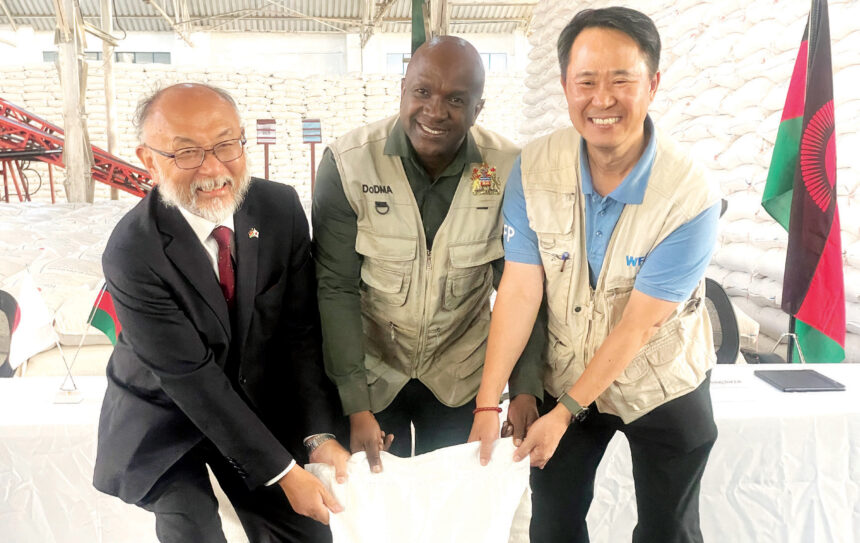
The Japanese government and the World Food Programme (WFP) issued the warning in Blantyre during the official handover of 876 metric tonnes of rice, part of a 1,300-tonne donation from Japan channelled through WFP and the Department of Disaster Management Affairs (Dodma).
Japanese Ambassador to Malawi Naito Yasushi said the anticipated El Niño conditions require early preparedness and stronger coordination among partners.
Naito said the support is intended to cushion vulnerable households while encouraging the government to act before conditions deteriorate.
“This assistance comes in anticipation of the Super El Niño and we urge the government to prepare in advance before people begin to suffer. We also hope there will be ways to strengthen the resilience of communities,” he said.
- Advertisement -
The rice will be distributed by WFP in collaboration with Dodma as part of efforts to support households expected to be affected during the coming lean season.
WFP Country Director Hyoung Joon Lim said the consignment marks the first food assistance to arrive in support of the emergency response.
He said timely intervention is critical in preventing worsening hunger situations.
“What matters most is timing and impact. Food available before shortages deepen, communities better prepared before the next emergency unfolds and families able to face the future with greater confidence. That is the value of acting early and the value of partnership,” Lim said.
- Advertisement -
- Advertisement -
Dodma Director of Disaster Preparedness and Response Charles Matabwa assured stakeholders that the assistance would be properly managed and directed to affected communities.
“There is indeed an El Niño event expected and the food requirement will be huge. Therefore, support such as what we are receiving today will be essential,” Matabwa said.
According to the latest Malawi Vulnerability Assessment Committee report, about 4.4 million people in the country are currently food insecure.