By Benadetta Chiwanda Mia:
The rapid spread of misinformation and pressure to prioritise speed over accuracy are reshaping journalism in Malawi and raising concerns about credibility in the digital information space.
As news consumption shifts to online platforms, journalists face increasing challenges in maintaining accuracy while remaining competitive.
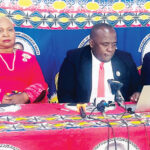
German Ambassador Ute König echoed similar concerns during the Media Institute of Southern Africa (Misa) Malawi Gala Dinner in Salima, where she questioned whether press freedom, though guaranteed in law, is fully realised in practice.
That question resonates within Malawi’s media landscape, where the Constitution provides for freedom of expression and of the press, yet journalists’ day-to-day experiences suggest a more complex reality with continuing limitations.
- Advertisement -
König said investigative journalism remains essential for exposing corruption, strengthening accountability and promoting transparency.
She, however, warned that is resource-intensive and many media houses under financial pressure struggle to sustain long-term investigations.
This leaves journalism that is vital to democracy among the hardest to maintain.
Misa Malawi Chairperson Golden Matonga mentioned the structural challenges facing the profession, saying economic instability undermines media independence.
- Advertisement -
- Advertisement -
“We cannot talk about media independence when journalists are underpaid. We cannot talk about holding power to account when reporters lack basic job security,” Matonga said.
This tension between legal guarantees and practical realities defines the current state of press freedom in Malawi.
While the country has a plural media environment with both public and private institutions contributing to public discourse, the conditions under which journalists operate continue to raise questions about how free that environment is in practice.
Economic pressures extend to individual journalists, where low pay, limited resources and reliance on allowances can influence independence and decision-making, according to observers.
At the same time, access to information remains inconsistent.
Despite the Access to Information Act, some public institutions continue to ignore requests, limiting journalists’ ability to perform their watchdog role.
“Transparency is not a favour granted by the state. It is a legal obligation,” Matonga said.
The challenges are not unique to Malawi.
Liberia Broadcasting System journalist Constance Joetta said although the country has made progress since the end of its civil war, including the adoption of the Freedom of Information Act in 2010, journalists still face political pressure, economic vulnerability and legal risks that can lead to self-censorship.
“Press freedom is not just the absence of restriction, but the presence of responsibility,” Joetta said.
This broader African perspective reflects a shared reality where press freedom depends on political, economic and institutional conditions and where legal reforms have not always translated into full implementation.
In Malawi, digital platforms have added further pressure, with misinformation spreading quickly and complicating efforts to verify information in newsrooms.
Community media, particularly radio, continues to play an important role in reaching rural audiences despite operating under financial and institutional constraints.
This was reflected on May 3, 2026 when Nsanje-based Nyanthepa Community Radio Station was named Best Community Radio of the Year.