There is no denying it; since Malawi’s worst cholera outbreak started in March 2022, breaking calendar boundaries by invading the year 2023, its lengthening shadows continue to leave Malawians in a state of flux. But, as SAMUEL KALIMIRA writes, there are portents of laxity.
By this time last year, Malawians were inundated with fear after cholera, long regarded as a waterborne disease that flourishes in the rainy season, defied seasonal patterns.
By January 5 that year, over 700 people had already died of cholera.
By January 26, the number of people that had contracted the disease was at 31,241, with 1,023 fatalities reported.

“Within four weeks, the numbers have doubled,” Health Minister Khumbize Kandodo Chiponda lamented at the time.
- Advertisement -
Today, with the rainy season in full swing, portents of laxity are everywhere.
In fact, some non-State actors that were implementing anti-cholera programmes are scaling down, if not pulling out of the fight altogether.
Take, for instance, People’s Federation for National Peace and Development, which was running cholera awareness campaigns in Mwanza, Chikwawa, Nsanje and Salima districts.
The organisation indicates, in a statement, that it believes that it has “done enough” on awareness campaigns, such that community members now understand how to prevent cholera.
- Advertisement -
- Advertisement -
“Most importantly, they understand preventative measures. So, having been satisfied with community response, we are scaling down on the cholera campaign. We hope that, with the work we have done, we will not have cholera cases that overwhelm healthcare service centres. We will remain alert to developments as they unfold,” the organisation indicates in a statement.
As for Oxfam Malawi, which was implementing a K500 million intervention in Traditional Authority Katuli, Mangochi, it wound up the initiative in the targeted Katuli and Luwalika areas last month, just when the rains were about to start.
The project targeted over 66,246 people from May 2023 to December 2023.
Among other things, the project was aimed at promoting good hygiene and sanitation practices among people, increase safe water supply and mitigate the prevalence of gender-based violence necessitated by water challenges.
Project coordinator Dilly Mwenda expressed satisfaction with the outcome of the project, saying they managed to contain the pandemic in the targeted area.
“At the start of the project, we found people consuming unsafe water from unprotected sources, which increasing cases of cholera,” he said.
Mwenda said, through the project, they rehabilitated 42-plus boreholes in the targeted areas, drilled six boreholes and upgraded the water system at Katuli Health Centre.
According to Katuli Health Centre in-charge Amidu Kachinga, cholera overwhelmed the health facility at the peak of the outbreak.
“Our health facilities were burdened with cholera cases but the situation has changed,” he said.
Of course, ever since the government announced that cholera was no longer a public health threat last year, cases have dissipated.
But that does not mean stakeholders should forget the imminent threat cholera poses, warns District Environmental Health Officers (Dehos).
They cite the resurgence of cholera cases in some parts of the country, emphasising the need for immediate action.
The caution follows reports from the Ministry of Health indicating the emergence of new cholera cases in several districts across all the regions of the country.
Chimwemwe Jella, President of Dehos, stresses the need for the Ministry of Health and other stakeholders to equip district environmental health offices with necessary resources.
“These resources are essential to conduct effective community sensitisation campaigns on hygiene and sanitation, specifically targeting areas prone to cholera outbreaks. This is because there is an imminent threat posed by the onset of the rainy season, which significantly increases the potential of the disease spreading to new districts, thereby straining healthcare facilities.
“Preparation to prevent the disease should have commenced before the onset of rains. It is imperative that the government and development partners allocate resources promptly to disseminate crucial information on disease containment,” he said.
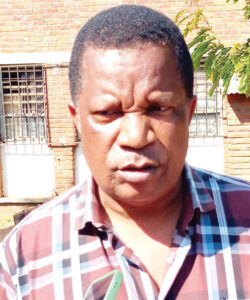
Chairperson for the Parliamentary Committee on Health Matthews Ngwale echoed Jella’s sentiments, emphasising that, by supporting community members in adopting good hygiene and sanitation practices, the country can effectively curb the spread of diseases such as cholera.
Ngwale stressed that preventing the outbreak demands reasonable resources compared to the substantial investments required for treatment.
“We must, therefore, collaborate to ensure that cholera does not cause distress as it did last year. We cannot afford a repeat of the same experience,” Ngwale said.
Recently, Secretary for Health Samson Mndolo said the country had made progress in combating the disease, citing a decrease in fatalities and a decline in hospitalised cases.
Despite this, several districts, including Karonga, Balaka, Mzimba South, Phalombe and Blantyre have reported new cholera cases in recent times.
It can only mean the threat is real.