By Deogratias Mmana & Serah Chilora:
At last, the whole report on public sector reforms has been leaked, and activists and governance commentators have rallied behind its details, saying implementing them would improve public service delivery.
President Lazarus Chakwera instituted a public service systems review taskforce on February 19 2021 to look at allowances, employment contracts, procurement and conditions of service and restructuring of the public service.
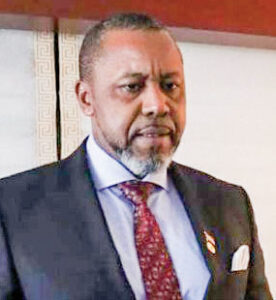
Vice President Saulos Chilima chaired the taskforce.
Chakwera kept the report under lock and key despite promising Malawians that he would make the contents available to them.
- Advertisement -
However, its snippets got leaked in September last year before everything else remained hidden until Tuesday, when the whole 292 pages finally found their way into the public space.
In general, the taskforce found endemic abuse of allowances, procurement and employment contracts across the public sector and that most control measures for curbing waste and abuse of taxpayers’ money had collapsed.
The report recommends the abolition of sitting allowances for senior officers from Grade E and above, including Cabinet ministers, who should instead be treated to a full-board arrangement.
It identified several areas which should be “rectified” for government to cut down on expenditure.
- Advertisement -
- Advertisement -
The taskforce recommended that no civil servant salary should be below the cost of living.
“Paying public officers’ salaries that are below the minimum needs basket violates their right to fair remuneration as is provided under Section 31(1) of the Constitution.
“There are huge disparities in salaries in the public service paid for work of equal value, especially between the civil service and the parastatals. There are also huge disparities among the parastatals,” the report says.
It also condemns politicising presidential appointments into the public service and further says appointees who are not career civil servants should not be transitioned into permanent civil service at the end of their contracts.
“There is evidence of cases in the civil service and parastatals including the Foreign Service of recruitment of unqualified candidates to positions whose qualifications are clearly provided for by the law.
“There is also evidence of political influence in the appointment/recruitment processes due to politics, cronyism, favouritism or/and corruption,” it says.
The task team also recommends a downgrade of motor vehicles for grade C officers from 3500cc to 2500cc, thus to use vehicles like Toyota RAV 4 and Nissan X-Trail and not Toyota Prado TXL.
It also proposes the abolition of the school fees scheme for some officers in parastatals and the civil service.
On procurement, the team admitted that there are cartels in the country and recommended that all procuring and disposing entities should migrate to the e-procurement system by December 2022.
The task force also condemns the practice by politicians of pushing for the commencement of infrastructure projects when designs and budgets are not ready.
“Such projects commence without proper procurement and contracting formalities and impose financial obligations on the government that do not meet even the minimum requirements of the value for money principle,” the report reads.
It also observed that the Malawi Public Service’s performance and productivity are low and cannot support the achievement of the country’s development goals.
The report also recommends that the President should introduce performance appraisals for the Secretary to the President and Cabinet supported by independent external evaluators.
It also recommends that the Constitution should be amended to provide that the number of constituencies should not exceed 200, as a way of cutting down on costs.
The report also recommends that government should have a maximum of 21 ministries and that the number of deputy ministers should be limited to five.
On the Judiciary, the task force suggests that the Supreme Court of Appeal should have nine judges, including the Chief Justice, and that the position of Deputy Chief Justice should be created.
Director of Communications in the Office of the Vice President Pilirani Phiri refused to comment on the report.
“I am under oath and I can’t discuss the contents of the report [including] whether it is real or fake. In fact, I have never seen the document myself,” Phiri said.

Commenting on the document, Human Rights Defenders Coalition Chairperson Gift Trapence and Willy Kambwandira of Centre for Social Accountability and Transparency said for a long time, government has been operating with dysfunctional and broken systems.
“A public sector that has seen most of its control measures for curbing “wastage and abuse” of tax-payer’s money collapsing cannot facilitate any meaningful development.
“The report should not be ignored in its entirety. It has raised very critical issues that need radical action to make the public service work again and deliver the best quality services for Malawians,” Trapence said.
He then challenged the authorities to look at the report with a sober mind and leave politics aside.
Trapence further charged that Malawi cannot develop if it continues to operate using a public sector service that has broken systems that are prone for abuse.
“We need to fix the broken systems and the only way to do it is to look critically at the report and see how proposed recommendations and reforms can be adopted and implemented,” he said.
While commending a “thorough job” that was done on the report, Kambwandira doubts if the recommendations will ever be implemented.
He said it is clear from investigations that billions of Kwacha are lost through allowances and that even those who are supposed to provide oversight services get caught up in abusing public funds.
“The culture of allowances has set wrong incentives in particular as one way of supplementing individual salaries.
“The MPs’ allowances are largely informed by acts of greed rather than concerns for ordinary Malawians who are struggling with the high cost of living,” Kambwandira said.
He described the findings and recommendations in the report as bitter pills to swallow which must still be taken on board for the improvement of the public service.
Michael Kaiyatsa of Centre for Human Rights and Rehabilitation also concurred with concerns that government is spending too much on allowances.
“If some of these allowances were scrapped off. We would save a lot of money,” Kaiyatsa said.
He, however, argued that some of the proposals in the report are not realistic, such as that Cabinet ministers should be using low-class vehicles.
“But another side of it would be reducing the number of Cabinet ministers, as suggested in the report, and advisers,” Kaiyatsa said.
Government spokesperson Moses Kunkuyu refused to comment on the leaked document and whatever it purports.
He, however, said Chakwera is at liberty to use the advice that he receives in a way he deems it fit.
“He applies his wisdom to deduce what he believes is practically doable at a given time for the benefit of the general populace,” Kunkuyu said.