In some parts of the world, once someone has been formally charged with a criminal offence, they are either suspended from public office or resign voluntarily to allow the legal process to proceed without interference.
This demonstrates respect for the rule of law and ensures that justice takes its proper course.
In countries where the rule of law functions effectively, everyone suspected of a crime must face legal proceedings, regardless of their political affiliation or public standing.
It does not matter whether the accused is part of the government or the opposition; what matters is that the legal process is followed fairly and without favour.
A key aspect of this system is the independence of public officers such as prosecutors.
- Advertisement -
In functional democracies, these people carry out their responsibilities without fear or favour, and without being swayed by political interests.
Their primary concern is to uphold the law and pursue justice based on evidence.
They do not hesitate to investigate or prosecute powerful people, including those who appointed them, as long as there is sufficient prima facie evidence to warrant legal action.
Unfortunately, the situation in Malawi is quite the opposite.
- Advertisement -
- Advertisement -
Here, individuals linked to political parties often find their legal troubles disappearing once their party comes to power, even if their cases have not been concluded in court.
This practice undermines public trust and sends a clear message that Malawi is far from being a country that genuinely respects the rule of law.
The application of the law seems to depend entirely on one’s political position.
Those in the opposition face prosecution while those in government enjoy freedom and even rewards, regardless of legal proceedings against them.
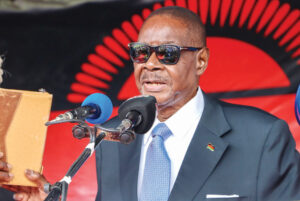
A recent example highlights this troubling trend. Several members of the governing Democratic Progressive Party (DPP), who are currently answering criminal charges in court, have been appointed to senior government positions, including Cabinet roles.
Their pending court cases appear to carry no weight now that their party holds power.
This pattern is unlikely to change unless serious reforms are introduced.
When another political party wins a future election, we can expect the same thing to happen again, with the new ruling elite protected and the opposition targeted.
Some may argue that these individuals remain innocent until proven guilty and therefore deserve the benefit of the doubt.
However, in countries where the rule of law is upheld, people facing criminal charges are usually sidelined from public office until they are cleared by the courts.
This protects the integrity of public institutions and the judicial process.
Allowing people who are actively answering criminal charges to occupy influential public offices presents obvious risks.
Such officials may attempt to interfere with the investigation or trial.
They could tamper with witnesses, manipulate documents, bribe officials or intimidate prosecutors. In such an environment, the chances of a fair trial are severely diminished.
Consider, for instance, the challenges facing officers at the Directorate of Public Prosecutions.
How are they supposed to proceed with cases involving people who now hold high-ranking government positions?
It is almost certain that these cases will be delayed, quietly dropped or simply ignored. The focus will instead shift to pursuing members of the opposition, many of whom may soon face arrest.
This is not justice. It is selective prosecution, guided by political convenience rather than principle.
It makes a mockery of the rule of law and breeds cynicism among citizens.
A meaningful reform of the legal and governance system in Malawi is now more necessary than ever.
The starting point should be empowering institutions such as the Anti-Corruption Bureau and the Directorate of Public Prosecutions to carry out their duties independently, even when those under investigation hold high office in the ruling party.
Equally important is for those with the power to appoint public officials to avoid placing people facing criminal charges into sensitive or strategic government roles.
In jurisdictions where the fight against corruption and impunity is taken seriously, this principle is observed as a basic standard of accountability.
At the moment, prosecutors who were once building cases against certain people now find themselves reporting to those very people.
These prosecutors are left in a state of uncertainty, unsure whether to proceed with cases or to wait for unclear instructions.
This is the consequence of allowing political interests to interfere with the legal process.
When the rule of law is not respected, the entire justice system is compromised.
The law ceases to be a tool for fairness and becomes an instrument for protecting the powerful and punishing the weak.