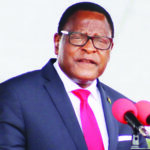




UTM believes that its president Saulos Chilima can stand as candidate in next year’s presidential election.
This is coming at a time there are contrary legal opinions on the issue, with some eminent legal scholars suggesting that he is eligible to stand while others are of the opinion that a previous court ruling bars him.
The legal interpretation comes from a ruling by the Constitutional Court in 2009 in a case on the third-term aspirations of former president Bakili Muluzi—Malawi’s president from 1994 to 2004–who attempted to extend his rule first by attempting to amend the Republican Constitution to provide for open terms of office.
Muluzi then eyed a third term of office, to no avail as lawmakers stood in his way.
His other attempt was to stand again in 2009 after taking a five-year break from office.
- Advertisement -
However, the Constitution limits the occupancy of the presidency to two terms, with some legal minds arguing that a State Vice President who has served two terms cannot contest as president as both offices are part of the presidency.
If it stands, the Constitutional Court’s interpretation could bar Chilima—a former corporate executive who served as State Vice President to former president Peter Mutharika under the Democratic Progressive Party (DPP) regime from 2014 to 2019 and returned to the role in 2020, after the then-opposition Malawi Congress Party leader Lazarus chose him to partner him in the court-ordered June 23 2020 presidential election—from standing.
Law Professor at the University of Malawi Garton Kamchedzera has in the past argued that for Chilima to clear his way to contest, the Vice President must successfully challenge the Constitutional Court’s ruling at the Supreme Court.
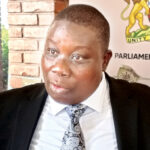
However, responding to questions from The Daily Times on whether the party intends to launch the court action to address the matter ahead of the elections, UTM spokesperson Felix Njawala said the party was under legal advice that Chilima will not be barred from contesting.
- Advertisement -
- Advertisement -
“Our view, based on the advice of our legal advisers, is that there is no legal bar to Dr Chilima contesting in the 2025 presidential election if he so desired,” Njawala said.
Responding to questions on whether the party would endorse Chilima to contest in the elections, the party spokesperson said the decision will be made at the party’s convention.
Njawala added that the decision would be made based on its partnership with the Malawi Congress Party (MCP), its major partner in the Tonse Alliance, arguing that the party believes the alliance agreement runs up to 2030, a position MCP disputes.
“The convention dates will be announced by the SG (secretary general) soon. We have an alliance agreement running up to 2030 with MCP,” Njawala said.
The UTM and MCP agreement, which was made in 2020, states that the then two presidential candidates, namely Lazarus Chakwera of MCP and Chilima of UTM, had agreed to each contest as presidential candidate on behalf of the alliance in one single election beginning with Chakwera in 2020 and Chilima in 2025, subject to the approval of the two parties’ respective national executive committees.

The MCP National Executive Committee (Nec) has since agreed that the party will field Chakwera as its candidate, although the party is yet to hold a convention.
In a separate interview, MCP spokesperson Ezekiel Ching’oma insisted that the alliance agreement ends in 2025 and that MCP will field its presidential candidate.
“The agreement covers the period between 2020 and 2025. In MCP, decisions are made by the National Executive Committee. The mandate of the Nec will end in August [this year]. The new Nec [that will] be elected in August will decide on what should be the way forward. It doesn’t mean the alliance will end. In MCP, you cannot decide for 10 years,” Ching’oma said.
The two parties became part of the Tonse Alliance— which also has People’s Party, People’s Progressive Movement, People’s Transformation Party [which has since left the alliance], Umodzi Party, Alliance for Democracy, among others—after the Constitutional Court famously nullified the May 21 2019 presidential election after the Malawi Electoral Commission had declared the then president Mutharika the winner.