By Innocent Kalikokha
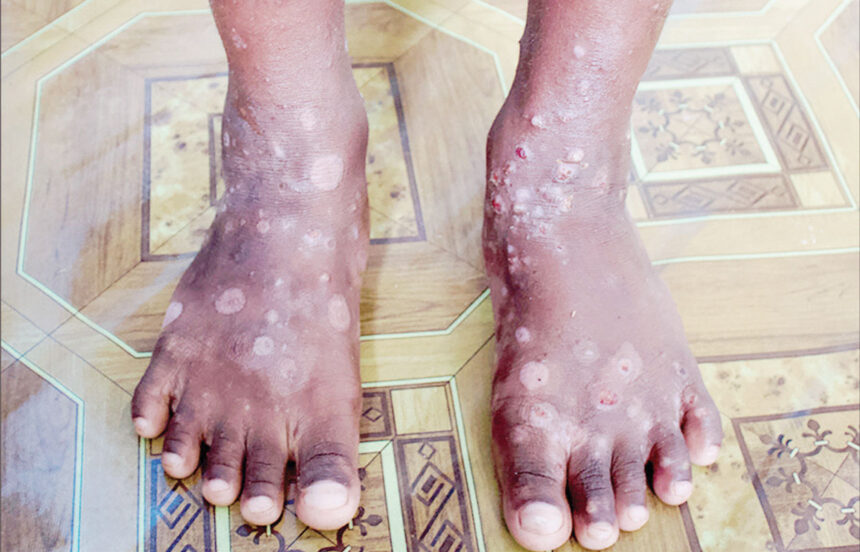
Scabies cases have been on the rise in October, starting with Mzuzu City, which had 152 cases by Sunday this week.
And Thursday, Nsanje District Health Office (DHO) officials announced that 4,000 people have been diagnosed with the disease, which the World Health Organisation defines as a contagious, intensely itchy skin condition caused by tiny, burrowing mites.

The district’s health promotions officer George Mbotwa told The Daily Times that they embarked on a mass screening exercise after observing that some learners were presenting to healthcare service facilities with the disease.
“Out of the [4,000] cases, 1,600 have been registered among learners in primary schools,” Mbotwa said.
- Advertisement -
“We have now intensified efforts to contain the spread of the disease. One of the things we are encouraging people to do is to embrace personal hygiene,” Mbotwa said.
These are not the first cases of scabies this month as, in one week, cases in Mzuzu rose from 79 to 152, according to a report by Mzuzu City Council (MCC) Health Department.
MCC Health Committee Chairperson Alywin Kumwenda said last week that Zolozolo Clinic and Mzuzu Health Centre had registered some cases which, by then, stood at 79 among males and 73 among females.
Like in Nsanje, primary schools such as Chibavi, Masasa and Kauwa also registered cases, some among children aged between six and 10 years.
- Advertisement -
- Advertisement -
Meanwhile, health rights advocate Maziko Matemba has blamed the situation on hot weather.
“It is true that cases are on the increase, at least in Mzuzu and the Shire Valley. This is because of climate change. Because of changes in the environment, cases are rising. The other reason is poor practices of hygiene. Remember that hygiene is linked to economic status. Most of the people affected do not have access to other commodities.
“Again, cases are being registered because of hot weather. If people are not taking care of themselves, they may suffer from it. In addition, we have not done enough on awareness. The problem is that scabies and other diseases are taken as neglected diseases. You will rarely find a donor or government funding it. We managed to deal with leprosy and rabies because there were funds for the task,” Matemba said.
In 2021, Blantyre registered 300 cases of scabies, a development that caused a stir.