By William Kumwembe in Windhoek, Namibia
Local small and medium enterprises (SMEs) are bound to reap from market opportunities brought about by the African Continental Free Trade Area (AfCFTA)—the continent’s single biggest trading bloc—the Ministry of Industry and Trade has said.
But low financial and technical capacity among most players remains a cause for worry as participation on the market entails enhanced competition.
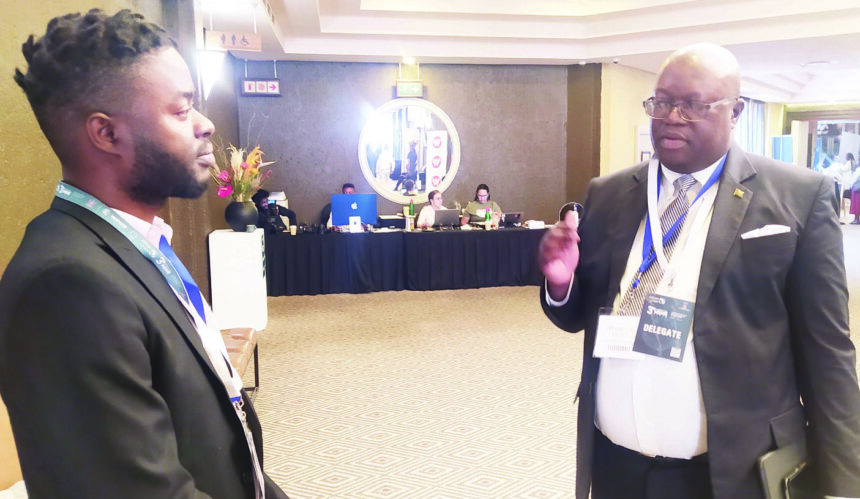
Speaking on the sidelines of 3rd Annual Micro, Small, and Medium-sized Enterprises (MSMEs) Forum in Windhoek, Namibia, Ministry of Trade Director of SMEs Limbikani Kachiwaya said ahead of entry into the market, various interventions have been lined up for building the industry’s competitive edge.
His remarks come as Malawi targets next month to join AfCFTA’s Guided Trade Initiative, a pilot intervention which gives room to member states to conduct trade without charging each other customs duties.
- Advertisement -
Under the GTI, Malawi will test its private sector’s readiness to participate in trade under the AfCFTA regime and identify possible future interventions to increase intra-African trade while maximising the benefits of the AfCFTA agreement.
The country has already highlighted key areas of focus for enhancing export trade under the initiative according to Kachiwaya.
“We are ready but we are in a process whereby we want to capacitate our SMEs. SMEs should not just be spectators on the borders when it comes to the opportunities that AfCFTA has created. We want them to grab those opportunities,” he said.
Among other things, Kachiwaya said the government is finalising the setting up an SMEs Incubation Strategy aimed at enhancing mentorship and capacity-building for the players.
- Advertisement -
- Advertisement -
He said this would accord the industry a chance to be nurtured on shaping business strategies, sourcing finance, developing business management skills and propel growth.
According to Kachiwaya, the ministry has also concluded drafting of the MSME Bill which will be tabled in the current meeting of Parliament to enable creation of a conducive environment for growth.
“Within the bill, we are establishing a new institution that will be called Small and Medium Enterprise Development Corporation. With this institution, we will have an oversight role and supervise the role of institutions and effectiveness of strategies,” he said.
The AfCFTA would create a market of more than 1.3 billion people and a combined gross domestic product of over $3.4 trillion and will increase competition among businesses in Africa.
One of the local participants at the MSMEs Forum, Precious Phiri of Awawo Africa—a handcraft and lifestyle brand—said players in the industry are systematically positioned to leverage market opportunities to be brought about through regional integration.
“We look forward to tapping into those markets and the opportunities they present. We have a unique product that Africa has to see and buy. We are ready for it,” he said.
Malawi has about 1.6 million MSMEs according to the 2019 Malawi FinScope MSMEs survey, and they are employing about 1.8 million people.
It is estimated that MSMEs contribute about 40 percent to gross domestic product, 24 percent of employment and about 21 percent of the country’s adult population derives their livelihood from the sector.
But lack of access to finance, access to land, high business operating costs and low production capacities are some of the major challenges they continue facing.