By Patience Lunda:
When public hospital land is encroached upon, the expansion of the facility, along with the security and privacy of patients, is put at risk.
This is the case for district health offices in the Northern Region, which are facing medium- to large-scale encroachment by communities.
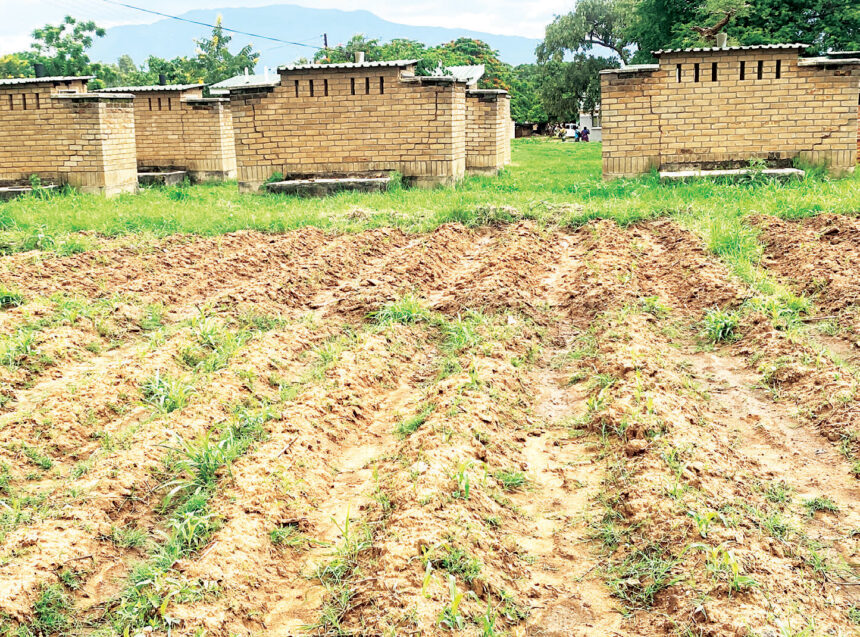
Some have built houses, while others have opened farmlands, as The Daily Times has discovered.
For instance, in Nkhata Bay District, all 20 of its health facilities are facing encroachment, largely due to a lack of clear boundaries, among other factors.
- Advertisement -
The district’s Director of Health and Social Services (DHSS), Topcy Mdolo, said that the encroachment is hindering the further development of the facilities.
Mdolo added that the problem is also compromising the security of the health facilities, which serve a population of 314,810 people.
“Even when you enter the district hospital premises, you will find a house to your left and the other health centres have also not been spared.
“For us to embark on various development projects, we need adequate space. So, this is a big challenge,” he said.
- Advertisement -
- Advertisement -
Chitipa District Health Office (DHO) is facing a similar challenge, with all of its 15 health facilities having been encroached upon.
Chitipa District Medical Officer, Victor Matumbo, said that people are farming on hospital premises at all health facilities.
At Rumphi DHO, the encroachment has affected five health centres, namely Lura, Mphompha, Katowo, Kamphenda and the district hospital.
In an interview, Rumphi DHSS Arnold Jumbe said that people are building houses, churches and farming on hospital land.
Jumbe said they wish to engage with the Ministry of Lands and health centre management committees on the matter.
“It is about the understanding of the people surrounding these health facilities, so we are trying to meet with the health centre management committees to ensure that they help us liaise with the community to prevent encroachment.
“However, on our part, we need to ensure that the Ministry of Lands demarcates and places beacons at all health facilities in the district to secure our land,” he said.
The problem has also not spared Karonga District Hospital, where five health facilities have been encroached upon.
These include the district hospital, Kaporo and Chilumba rural hospitals and Mwenilondo and Nyungwe health centres.
Karonga DHSS David Sibale said that people have encroached on spaces where the hospitals and health facilities are supposed to expand.
Sibale said they are working closely with the Department of Lands to secure title deeds for all health facilities, ensuring that the land is protected.
“We have also been affected by this challenge and it has become a problem, especially when we want to construct additional structures at our facilities. However, we are doing something about it to ensure that the land is secured,” he said.
At Mzimba South DHO, the problem is so significant that there is a court case regarding the encroachment of Mzimba District Hospital.
Mzimba South DHSS, Prince Chirwa, said that while he could not comment on the matter as it is still in court, encroachment has also affected other health centres in the district.
Finally, Likoma DHO is also facing issues, with St Mary’s Health Centre at Chizumulu Island experiencing encroachment due to unclear land ownership involving the Anglican Church, the government and the community.
Deputy Minister of Health Noah Chimpeni has called on traditional leaders to discourage land encroachment and illegal sales around hospitals and health centres.
Chimpeni said that the government aims to bring health services closer to the people, but encroachment undermines expansion efforts.

“There is a need to preserve land for our facilities because the government has plans to construct more structures. Encroachment frustrates these efforts and we ask our chiefs to help us deal with this challenge,” he said.
Malawi Health Equity Network Executive Director, George Jobe, described the situation as unfortunate and stressed the importance of securing legal documents for all health facilities.
“The failure to have legal documents will allow the problem to continue. We urge chiefs to provide the necessary evidence of boundaries,” Jobe said.
The Northern Region has five district hospitals, 68 health centres, 11 rural hospitals, nine dispensaries and one central hospital.