By Wanangwa Tembo:
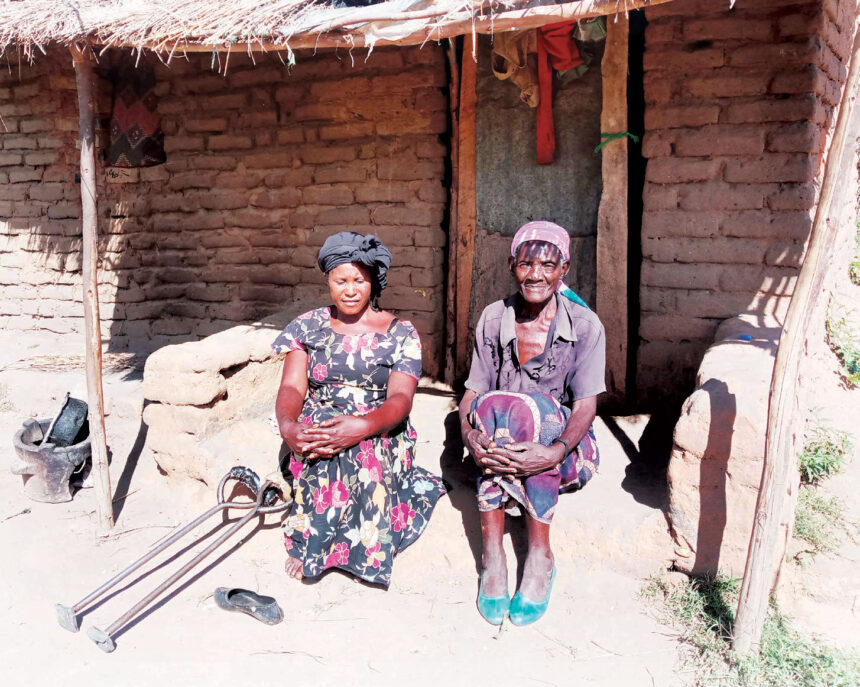
When Tilile Nabanda of Mponda Village, Traditional Authority (TA) Kaomba, in Kasungu got pregnant in 1976, she did not think about the possibility that she would give birth to a child with a disability.
However, when the baby came out to the world, Nabanda noticed that its legs were not in the right shape.
“No woman expects that to happen to her child. But it is something you do not have control over,” she says.
Nabanda, now in her early 70s, says children, whether born with a disability or not, are precious gifts and must be given the best care a parent can offer.
- Advertisement -
“Unfortunately for me, I did not have anything to offer my child. We were a very poor family such that we couldn’t even send the child to school,” she recollects.
That child, named Monica Kafantandala, needed assistance in form of mobility assistive gear to attend school but the parents could not afford any.
At 48 years old now, Monica is a poor illiterate single mother of two, struggling with the realities of life.
“It was my wish to get educated. Unfortunately, schools were far away and I couldn’t walk. If there was a wheelchair, my story could be different,” Monica says.
- Advertisement -
- Advertisement -
Her two children, born in 2000 and 2004, dropped out of school upon reaching Standard 7 due to lack of parental support after the father abandoned the family.
“He told me he was going to Lilongwe to look for piecework and that was it. He never came back. So the children have grown up in very difficult conditions,” Monica says.
Monica attributes her family’s impoverishment to the disability, which made her fail to get to school.
District Social Welfare Officer for Kasungu, Ephraim Njikho, says people with disabilities often suffer in silence.
“In most cases, they are confined to their homes and end up missing out on socioeconomic opportunities,” Njikho says.
He adds that there is need to raise community awareness through advocacy and trainings to help them enjoy their rights like anyone else.
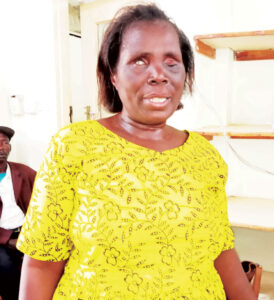
Esther Luhana, who chairs Kasungu District Disability Forum, says in most families headed by a person with disability, there are high levels of poverty because of lack of education.
“While there may be some systematic exclusion of people with disabilities in some cases, the major cause of poverty is that most of our members did not get proper education because of their conditions,” Luhana says.
According to the 2018-2023 National Disability Mainstreaming Strategy, there are over 1.5 million people with disabilities in the country and about 90 percent of them live in the rural areas surviving on subsistence farming.
International Labour Organisation noticed this challenge and hatched the Sparking Disability Inclusive Rural Transformation (Spark) project for promoting the inclusion of people with disabilities.
The Spark initiative seeks to ensure that persons with disabilities, particularly women like Monica, and youths, actively participate in, and benefit from, rural development projects tailored to fit the specific profiles of their disabilities.
It also aims to expose them to opportunities that are there so that they live a quality and independent life through participation in inclusive socioeconomic activities.
National Project Officer for Spark, Vincent Kavala, says at least 300 people with different kinds of impairments have already found opportunities in the Ifad-funded projects, specifically the Transforming Agriculture through Diversification and Entrepreneurship (Trade) and Financial Access for Rural Markets, Smallholders and Enterprise (Farmse).
The Trade project supports rural communities in the agriculture value chain while the Farmse programme supports household economic development through promotion of access to financial services.
“We are targeting people with any type of impairment through a rights-based approach towards inclusion.
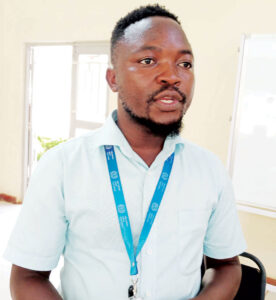
“We have made good strides in that we have over 300 beneficiaries included in Ifad-funded programmes in Kasungu only, against our target of 428. We are sure by the end of this year we will have reached our target,” Kavala says.
In Kasungu, the project is targeting persons with disabilities in TAs Chulu, Chisemphere, Kaluluma and Kaomba. It is also being implemented in Thyolo, Nkhata Bay and Chitipa.
So far, the project has trained 20 Disability Inclusion Facilitators from each of the target districts to provide professional advice on understanding disability and how to make disability inclusion work.
In turn, the facilitators have helped to build capacity of Ifad programmes and implementing staff on how to include people with disabilities in the various livelihood and agricultural value chain programmes.
Malawi Council for Disability Affairs District Manager for Kasungu, Wisdom Mseteka, says the Spark project has helped to build the capacity of organisations of persons with disabilities to enable them to effectively represent the needs of their membership and offer technical expertise on disability inclusion.
“There are many people with disabilities in the district who live in similar circumstances like Monica’s.
“But we are thankful to ILO through the Spark project for uplifting their lives, giving them the dignity that they deserve just like any other person,” he says.
Mseteka says the Spark project has assisted a lot in terms of mobilisation of persons with disabilities, fighting for their inclusion in various community projects and also empowering them.
“Through awareness conducted by Spark disability inclusion facilitators, most people with disabilities have joined cooperatives and farmers’ clubs, which is helping to uplift their livelihood,” he says.— Mana