




By Taonga Sabola:
The African Development Bank (AfDB) has slashed Malawi’s gross domestic product (GDP) growth forecast for 2024 by 0.2 percentage points from 3.5 percent in January to 3.3 percent.
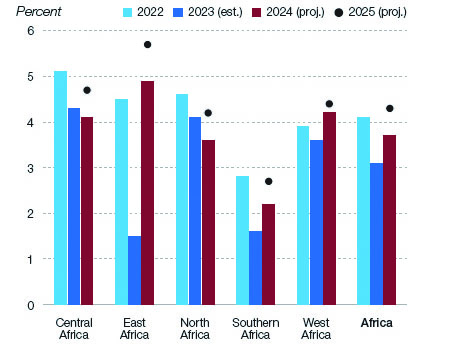
The forecast is contained in the 2024 African Economic Outlook released on Friday.
The forecast by the AfDB comes a few weeks after both the International Monetary Fund (IMF) and World Bank cut Malawi’s economic growth for 2024 to two percent.
“Economic growth is projected at 3.3 percent in 2024 and 3.8 percent in 2025, lower than the January 2024 projections due to the negative impact of drought on agriculture.
- Advertisement -
“Growth will be driven by the mining, retail and tourism sectors. Inflation is projected to remain elevated due to a poor agricultural season,” the report says.
AfDB adds that fiscal consolidation measures are expected to narrow the fiscal deficit to 8.7 percent in 2024 and 7.6 percent in 2025.
It adds that as the economy recovers, the current account deficit is projected to widen in both 2024 and 2025, when it could reach 9.5 percent.
“Malawi’s economy faces significant head-winds, most notably a shortage of international reserves, macroeconomic instability, and drought. Dependence on rain-fed agriculture, given the increasing vulnerability to climate change, is also a major risk.
- Advertisement -
- Advertisement -
“Ongoing debt restructuring negotiations, if successful, could reduce debt to sustainable levels. Increased inflows of donor resources following the approval of the International Monetary Fund Extended Credit Facility in late 2023 are likely to reduce the foreign currency squeeze,” AfDB says.
According to the African Economic Outlook, since 1990, Malawi’s economy has been dominated by services, at 55 percent of value added, and agriculture, at 31 percent.
It further notes that manufacturing contributed an average of about 10 percent of value added over the same period, while all the other sectors contributed a meagre 5 percent.
In addition, AfDB says agriculture’s share of employment has fallen from its peak of 86 percent in 1990 to about 60 percent in 2021, while services’ share has more than tripled, from 9 percent to about 30 percent.
“To radically transform the economy, manufacturing capacity, underpinned by agricultural-based diversification and beneficiation in the minerals sector, needs to expand.
“Increased inflows of global climate funds are needed to help Malawi adapt to climate change and mitigate its challenges,” the outlook reads

Scotland-based economist, Velli Nyirongo, Monday said Malawi’s aspiration to achieve lower-middle-income status necessitates a strategic shift towards an export-oriented production model.
This transition from import dependence to export leadership, according to Nyirongo, will foster economic growth, elevate GDP and cultivate a thriving middle class.
He observed that the current focus on domestic trade faces limitations due to the population’s low disposable income, resulting in a stagnant domestic market.
“Diversification beyond a predominantly agricultural base is equally crucial. Malawi’s frequent exposure to natural disasters underscores the vulnerability of relying solely on agricultural output. Encouragingly, the service sector has exhibited growth potential.
“However, for Malawi’s services to compete globally, efficiency improvements are paramount. The expansion of Malawian banks into neighbouring countries offers a promising niche. To capitalise on this opportunity, a skilled workforce and robust infrastructure are essential,” Nyirongo said.
Finance Minister Simplex Chithyola Banda was not immediately available for comment.