By William Kumwembe in Addis Ababa, Ethiopia:
The African Development Bank (AfDB) says it expects the Malawi economy to grow by 3.5 percent in 2024.
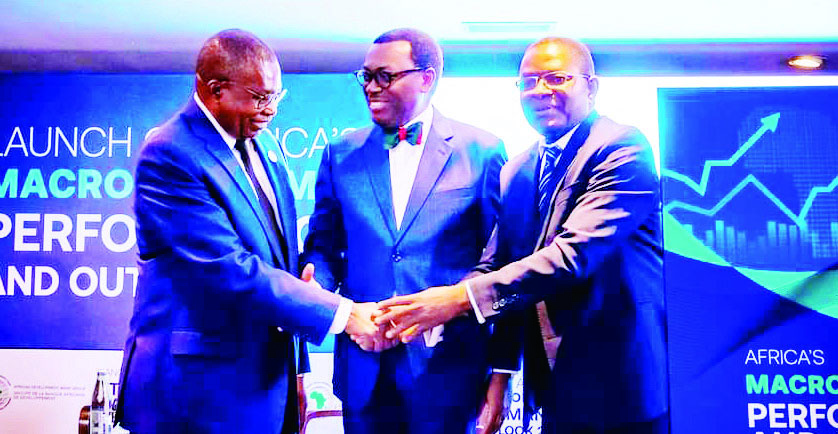
The bank said this in its latest bi-annual Africa Macroeconomic Performance and Outlook Report issued on Friday on the sidelines of the 37th session of the African Union Summit in Addis Ababa, Ethiopia.
The projection is 0.3 percentage basis points shy of the 3.8 growth estimate by the Reserve Bank of Malawi.
It is also higher than the 2.0 GDP growth estimates the regional lender made for Malawi for 2023.
- Advertisement -
In the report, AfDB projects Malawi’s inflation—the rate at which commodity prices change at a given period in an economy —to average 21 percent.
It sees the county’s current account deficit at -7 percent of the GDP while the fiscal balance is projected at -8.0 percent of GDP.
Reacting, Minister of Finance Simplex Chithyola Banda said the projected pick-up in GDP growth is a result of consistency in public finance management by the government, coupled with policy interventions deployed to necessitate growth.
“The reforms and programmes put forward [by the government] are leading to economic growth. I am more than humbled to note that what we told Malawians has now caught the eyes of international institutions,” Chithyola Banda said.
- Advertisement -
- Advertisement -
Meanwhile, in the Africa Macroeconomic Performance and Outlook, the AfDB says Africa’s average real GDP could rebound to 3.8 percent in 2024 from 3.2 percent a year before.
The report projects Africa to remain the fastest-growing region in the world, after Asia, exceeding the global average of three percent in 2023.
It is forecasted that Africa will account for 11 out of the 20 fastest-growing economies in the world in 2024.
In his address at the launch of the report, AfDB President Akinwumi Adesina said growth in the region will be broad-based, although domestic supply bottlenecks such as shortfalls in electricity generation are still lingering.
“We project that economic growth will regain moderate strength as long as the global economy remains resilient, disinflation continues, investment in infrastructure projects remains buoyant, and there is sustained progress on debt restructuring and fiscal consolidation,” Adesina said.
The regional lender’s chief said boosting Africa’s growth momentum requires bold policies.
He said tackling persistent inflation will need a mix of restraining monetary policy, coupled with fiscal consolidation and stable exchange rates.
“But structural reforms and strategic industrial and agricultural policies remain the key to accelerate economic diversification and strengthen the export sector. It is possible to reinforce structural transformation by investing in human capital,” he said.