





BELEM, Brazil – Two of the world’s most vulnerable climate negotiation blocs emerged from the United Nations Climate Change Conference (COP30) in Belém, Brazil, on Saturday with a mixture of cautious relief and simmering frustration.
After two weeks of intense debate and one marathon overnight session, the summit concluded with a compromise package of initiatives aimed at strengthening emissions-cutting plans, tripling adaptation finance to $120 billion per year by 2035 and advancing the global climate agenda.
Yet for the Least Developed Countries (LDCs) and the African Group of Negotiators (AGN), the outcomes fell short of delivering guaranteed funding and the rapid transition they urgently require.
The absence of a tangible roadmap for fossil fuel phaseout is another major concern and spans several other negotiation blocs and individual delegate countries.
Vulnerable nations speak out
- Advertisement -
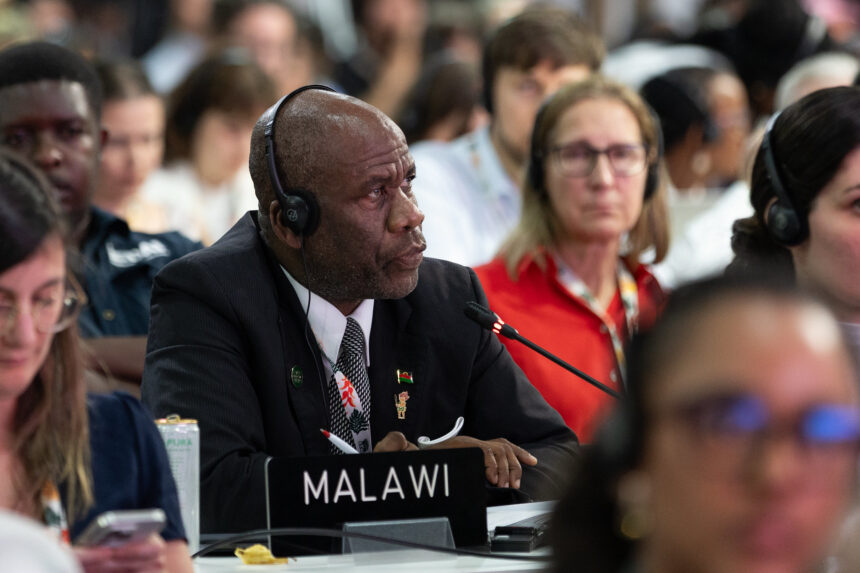
Speaking for the 44 LDCs, the majority of whom are in Africa and are grappling with rising debt and persistent poverty, Malawi’s Minister of Natural Resources, Jean Mathanga, acknowledged the efforts of the COP30 presidency but did not shy away from pointing out the compromises her bloc had to accept.
“We recognise that the decision you have just gavelled on the [Global Goal on Adaptation – GGA] is not perfect.
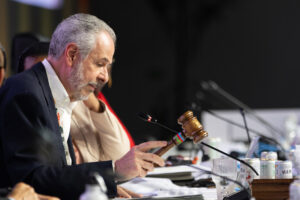
“As a group, we have lost many elements in the decision that were pertinent to our survival, including the Means of Implementation,” Mathanga said after COP president André Aranha Corrêa do Lago signalled the adoption of the GGA text.
She confirmed that the bloc would engage over the next year to refine the 59 adaptation indicators adopted under the GGA, ensuring they deliver tangible benefits to the most vulnerable communities.
- Advertisement -
- Advertisement -
A similar message of reluctant solidarity came from the AGN, represented by Tanzania’s Richard Muyungi.
He referenced the divisions that surfaced in the final hours of negotiations but reiterated what he termed Africa’s commitment to preserving the integrity of the multilateral process.
“I want to assure you that we stand with your presidency in moving forward in the spirit of compromise in the mutirão,” Muyungi said.
‘Mutirão’ is a Brazilian Portuguese term originating from Indigenous traditions meaning collective community effort and at COP30, it symbolised the collaborative spirit of negotiators, Indigenous groups and civil society working together to reach compromise outcomes.
“We worked throughout the night, we have not slept and we are here to show the international community that our multilateralism cannot be broken,” Muyungi said.
Shortfalls and frustrations
Evans Njewa, the outgoing Chair of the LDC bloc and a senior official in Malawi’s Ministry of Natural Resources, delivered an emotional and candid assessment of COP30’s outcomes.
He described several core issues where vulnerable nations fell short, citing weak provisions on access to funds, inadequate support for capacity building and technology transfer and a gender action plan without clear means of implementation.
Njewa expressed particular disappointment over adaptation finance, saying that while the LDCs had arrived in Belém pushing for substantial needs-based adaptation funding by 2030, the text ultimately agreed amounted to a “weak compromise accepted only to conclude the plenary in the early hours”.
He concluded his response to the COP30 outcome with a rallying cry: “Aluta continua! Words were agreed upon in Belém but we will judge success by when and how these commitments translate into real action.”
Civil society voices amplified the urgency of securing public finance for vulnerable countries.
Muhammad Lamin from the Climate Action Network, a global network of over 1,500 climate-focused civil society organisations, warned in an interview with The Times Group that climate loans and private funding were insufficient and potentially harmful.
Lamin charged that it is a new form of colonialism for climate finance to come in the form of loans.
“Countries in the Global South should not be burdened with debt for crises caused largely by others. Private finance cannot substitute for public funding,” he said.
He also weighed in on the Loss and Damage Fund, saying that despite its launch with pledges of $788 million, only about a third of that amount had been disbursed.
“This clearly demonstrates that the world needs substantial funding to respond to climate catastrophes,” Lamin said.
Compromise and key wins
Despite these frustrations, the Brazilian COP30 Presidency still felt the compromise solutions it sought in the final hours of the summit were worthwhile.
The ‘Belém political package’ was complemented with pledges to create two voluntary roadmaps outside the UN climate change process.
The first one is on transitioning away from fossil fuels, supported by over 80 countries, and the second on halting and reversing deforestation, endorsed by over 90 countries.
Corrêa Do Lago said these initiatives, including Colombia’s efforts to organise a global conference on fossil fuel transition, would allow progress even where formal consensus proved elusive.
UN Climate Change Executive Secretary Simon Stiell framed the summit as a success in the face of unprecedented political turbulence.
“We knew this COP would take place in stormy political waters. Denial, division and geopolitics have dealt international cooperation some heavy blows this year,” Stiell said.
He was apparently referring to challenges such as the second United States withdrawal from the Paris Agreement and tensions between major fossil fuel producers and other countries.
“But friends, COP30 showed that climate cooperation is alive and kicking, keeping humanity in the fight for a liveable planet with a firm resolve to keep 1.5°C within reach,” he said.
Stiell mentioned what he called the real-world achievements of the COP, such as a trillion dollars pledged for clean power grids, hundreds of millions of hectares of land, ocean and forest restored or protected and over 400 million people becoming more resilient.
“These achievements are not a sideshow – they are real-world progress on the things billions of people care about most,” he said.
‘A clear signal for clean energy’
Stiell also referenced the “political and market significance” of the summit.
He said for the first time, 194 nations “said in unison” that the global transition to low greenhouse gas emissions and climate resilience is irreversible and the trend of the future.
He called this a political and market signal that cannot be ignored and that the COP had delivered not only through negotiations but also through market and investment flows.

Stiell reiterated what he had said at the opening of the summit, that the path to renewables was becoming clearer, with green energy now attracting twice as much global investment as fossil fuels.
He framed the Action Agenda, including the Global Implementation Accelerator and the Belém Mission to 1.5, as critical mechanisms to move national climate plans from paper to practice.
Launched at the summit, the new initiatives are designed to help countries speed up their climate plans, strengthen action to limit warming to 1.5°C, protect forests, expand clean energy and increase support for vulnerable communities.
“With or without navigation aids, our direction is clear: the shift from fossil fuels to renewables and resilience is unstoppable,” he said.
Tensions persisted during the closing plenary with several interjections and other protests that forced Corrêa do Lago to suspend the proceedings for nearly an hour.
European and Latin American delegates objected to the gavelled decisions on the GGA and emissions-cutting initiatives, pressing for explicit language on fossil fuels.
Saudi Arabia, Russia and India criticised procedural disruptions, with the chair, Corrêa do Lago, clarifying that the gavelled decisions could not be revoked.
The text did, however, include agreements to triple adaptation finance by 2035, formal recognition of Indigenous land rights with $1.8 billion pledged and the adoption of 59 voluntary indicators to track progress on adaptation, including finance, capacity building and technology transfer.
Shaping the future of climate diplomacy
COP30 also elevated forests, Indigenous rights, trade and energy transition from the margins to the centre of climate diplomacy.
Marcelo Behar, Special Envoy for Bioeconomy, said the summit brought these issues “from the margins to the epicentre of climate talks.”
Delcio Rodrigues, Executive Director of ClimaInfo, praised hosting the COP in the Amazon, calling it “an inspired move. Hopefully both forests and Indigenous people will be better protected in the future as a result of this summit.”
Trade, investment and carbon markets were included for the first time as formal COP agenda items, while energy transition commitments included over $1 trillion pledged by 2030 for clean energy infrastructure, methane reduction and industrial decarbonisation initiatives.
Despite the compromises, the summit reaffirmed global solidarity, according to observers.
Jennifer Morgan, former German climate envoy, said the outcome represented “meaningful progress”.
“The Paris Agreement is working, the transition away from fossil fuels agreed in Dubai is accelerating. Despite the efforts of major oil-producing states to slow down the green transition, multilateralism continues to support the interests of the whole world in tackling the climate crisis,” Morgan said.
Key takeaways from COP30
- Climate adaptation finance for vulnerable countries tripled to $120 billion per year by 2035
- Voluntary fossil fuel transition roadmap supported by 80–90 countries
- Voluntary roadmap on finance, monitoring and Indigenous land rights endorsed by over 90 countries
- Just Transition Mechanism agreed for fair transition for workers, women and Indigenous peoples
- Global Goal on Adaptation adopted with 59 voluntary indicators covering finance, capacity, technology and social dimensions
- Trade and carbon markets included on the COP agenda; global carbon market coalition established
- Over $1 trillion pledged for clean energy infrastructure, methane reduction and industrial decarbonisation
- Launch of Global Implementation Accelerator and Belém Mission to 1.5°C to support national climate plans
This story was produced as part of the 2025 Climate Change Media Partnership, a journalism fellowship organised by Internews’ Earth Journalism Network and the Stanley Center for Peace and Security.