






As heatwaves intensify across the globe, new research from the UN Environment Programme (Unep) offers a message of hope: the planet can stay cool without further heating up.
A report launched on Tuesday at the United Nations Climate Conference (COP30) in Belém, Brazil, shows that sustainable cooling solutions could cut emissions, save trillions of dollars and provide life-saving cooling for billions of people.
Global Cooling Watch 2025, the report in question, finds that global demand for cooling could more than triple by 2050 if current trends continue.
Such a surge, it warns, could double greenhouse gas emissions from the sector.
However, the report also outlines a “Sustainable Cooling Pathway” that could reduce emissions by up to 97 percent compared with business as usual.
- Advertisement -
It says, by adopting smarter building designs, low-energy cooling systems and renewable energy, global cooling demand could be met sustainably.
“As deadly heatwaves become more frequent and severe, access to cooling must be treated as essential infrastructure alongside water, energy and sanitation,” Unep Executive Director Inger Andersen said.
She cautioned, however, against “air-conditioning our way out of the heat crisis”, saying that overreliance on conventional air conditioning would increase emissions and costs.

Nearly two-thirds of the potential emission reductions identified in the report come from passive and low-energy measures such as shaded streets, reflective roofs, efficient fans and improved building designs.
- Advertisement -
- Advertisement -
These solutions are described as affordable, inclusive and capable of protecting the three billion people expected to require access to cooling by 2050.
Malawi, facing rising temperatures and limited electricity access, is among the nations that have signed the Global Cooling Pledge.
Launched at COP28, the pledge was initially signed by more than 60 countries, rising to 127, with a voluntary target to cut cooling-related emissions by at least 68 percent globally by 2050 in line with the Paris Agreement.
Recent national data indicate that Malawi has been hit by intense heatwaves.
In the Shire Valley region, temperatures exceeded 43°C, six to seven degrees above the norm, while lakeshore areas recorded 39 to 40°C on some occasions.
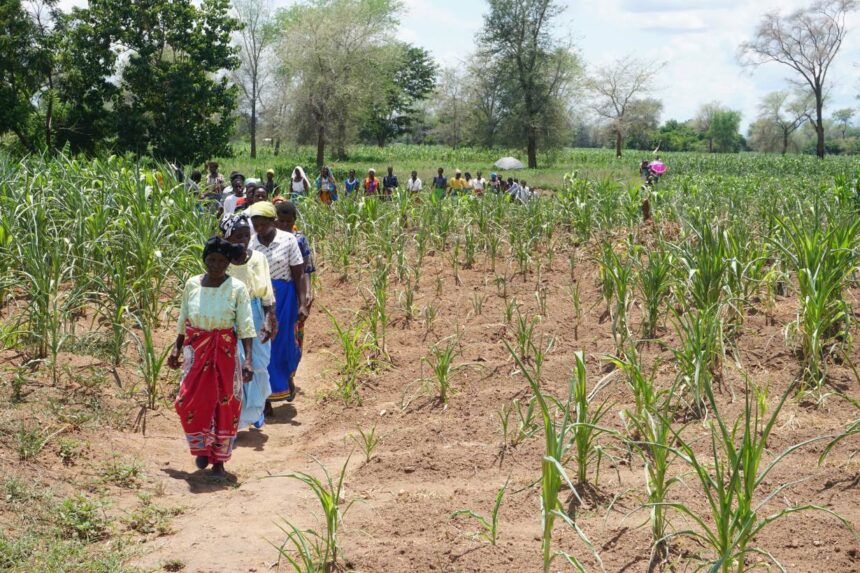
During a five-day heatwave in December 2024, crops wilted across several districts where maize and tobacco had already been affected by erratic rains.
According to the country’s climate assessment, some monitoring stations recorded more than 300 days in a year with maximum temperatures above 30°C, particularly in the Shire Valley.
To help countries and cities meet cooling targets, the report supports the ‘Beat the Heat’ implementation drive, led by the Brazil COP30 presidency and Unep’s Cool Coalition.
Building on the Global Cooling Pledge, the campaign now involves 185 cities and 83 partners.
Meanwhile, Malawi is exploring passive and solar-powered cooling systems to store crops and medicines in rural areas with financial support from development partners.
It is also creating shaded markets to protect traders and produce, efforts that authorities say help smallholder farmers reduce food loss, increase income and shield families from extreme heat.
This story was produced as part of the 2025 Climate Change Media Partnership, a journalism fellowship organised by Internews’ Earth Journalism Network and the Stanley Center for Peace and Security.