By Imam Walli:
“I had no options to return home. After sometime, I was forced to start sleeping with them,” says 18-year-old Mtisunge Matias (not real name).
Mtisunge fails to hold her tears when she thinks of the trap her own aunt laid against her. In 2017, she left her home Kapesi Village, Traditional Authority Kachere in Dedza for Mozambique.’
She was only 11 then. Her aunt promised she would be earning a living as a domestic worker. Mtisunge’s parents found the assurance refreshing with the cruel poverty back home.
“Shockingly, I was left in the hands of another female boss, who owned a small drinking joint,” recalls Mtisunge.
- Advertisement -
That’s how she found herself trapped in young prostitution in shabeens. She was forced to sleep with men, old enough to be her fathers. She now lives with regrets and wished she turn the hands of time. Unfortunate Mtisunge!
In Ntchisi, 17-year old Abel Tobias was born and bred in estates. Today, he regrets missing what education could have done to shape his future. His parents forced him out school to help them with farm work at a tender age.
When his age mates were heading to class, Tobias was busy plucking tobacco and filling sacks hanging on his shoulders.
“My parents had been labourers in the tobacco estate, long before I was born. So, I was born at the farm and started school while we were still living at the farm.
- Advertisement -
- Advertisement -
“While in Standard three, I was forced to drop out of school and started working at the farm as a full time worker. My parents used to collect money on my behalf which was used to help buy food at the house,” explains Tobias.
Years down the line, Tobias faces some harsh reality. He left school, citing poverty. But he is not any better. School again? He says time is up! Tobias now banks on gaining some vocational skills.
Tobias and Mtisunge’s predicaments are typical examples of child labour; a silent beast devouring beautiful dreams of most children in Malawi.
A 2015 National Child Labour survey in Malawi showed a magnitude of 38 percent among those aged between 5 to 17 years. Out of these children 72 percent work in the agriculture sector, 23 percent in domestic sector and the rest in other sectors.
But Malawi is relentless in its serious quest to protect the children and possibly attain a child labour free society by 2025 as stipulated in the Sustainable Development Goal 8.
It stresses on promoting inclusive and sustainable economic growth, employment and decent work for all with its target 8.7 directly calling for an end to child trafficking and modern slavery.
In addition, target 5.2 seeks to end violence against girls and women including trafficking and sexual exploitation while target 16.2 aims to end abuse, exploitation and trafficking of children
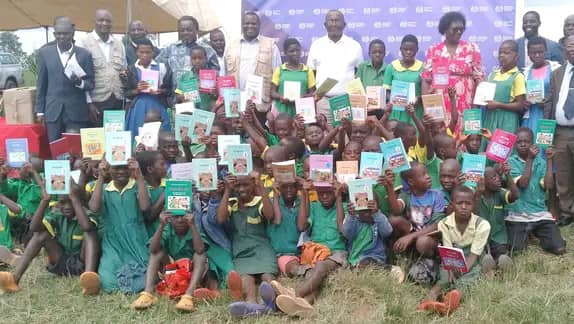
The International Labour Organization (ILO) with the support from the government of Netherlands in partnership with the Teachers Union of Malawi is implementing the project called ‘Action for Elimination of Child Labour in Supply Chains in Africa’.
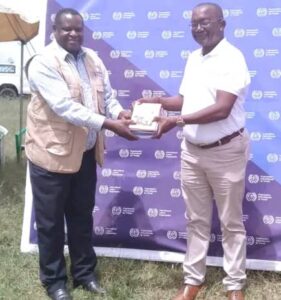
Among others, the project is distributing learning and teaching materials to schools in Chitipa, Mulanje, Thyolo, Mzimba and Ntchisi districts.
ILO country Director for Zambia, Malawi and Mozambique Wellington Chibebe the intervention will help enhance the quality of education while eliminating child labour.
“The donation of scholastic materials resonates very well with our role as we want to ensure that there is social justice through provision of education and securing the future of children,” he says.
Chibebe observes that elimination of child labour within supply chains necessitates coordinated and corroborative action by all stakeholders at all levels.
Director of Administration in the Ministry of Labour, Paul Kalilombe says the materials will help empower children who have been withdrawn from tobacco estates and other forms of child labour through education.
“The fight against child labour is very complicated and expensive and government alone might not be able to do everything therefore we greatly value the support that ILO has given towards Education,” he says.
Child rights activist, Lucky Mbewe says there is need for intensified awareness in communities on the ills of child labour on innocent children.
In 2020, two United Nations agencies-ILO and Unicef-reported that globally; 160 million children were involved in child labour and 9.6 million were in southern Africa.

Currently, Ministry of Labour spokesperson, Nellie Kapatuka indicates the Malawi government is working with development partners, social partners, NGOs and Civil Society Organizations in the implementation of programmes in the elimination of child labour.
Some of these programmes include, Protect the Future: Ending Child Labour in the Agriculture Industry in Malawi (PROCLAIM) Project working in the tobacco sector in Mchinji and Ntchisi, the Accelerating Action for the Elimination of Child Labour in Supply Chains (ACCEL Africa) Project working in the Tea and Coffee supply chains where the programmes fights child labour in these sectors.
Kapatuka says the government is doing everything possible to address the situation to make children free from bondage of these evil doings and exploitation.
“The government has at international level ratified international instruments that include ILO Convention 138 on the Minimum Age on entry into employment and Convention 182 on the Worst Forms of Child Labour. Malawi also joined the Alliance 8.7 as a Pathfinder Country that has promised to accelerate the elimination of child labour faster than other countries.” she explains.
According to Kapatuka, the government is also making a move to ratify ILO Convention 190 on Violence and Harassment that will address all types of harassment and violence both at work place and homes.
Some treaties to which Malawi is party to include: The International Labour Organization (ILO) No 182 (The Worst Forms of Child Labour Convention), the United Nations Convention on the Rights of the Child and the African Charter on the Rights and Welfare of the Child along with the Constitution, Child Care Protection and Justice Act of 2010, Employment Act of 2000 and the Education Act 2012, which contain provisions to promote child education and prohibit child labour.
Unless the government and other stakeholders seriously collaborate and exercise unity of purpose to eliminate child labour, many more innocent children will join Mtisunge and Tobias in nursing their bruised future due to the cruel vice.