


By Deogratias Mmana:
It is a Sunday and the church service has started at Balira Catholic Church, an outstation of Guillime Parish in Mchinji District.
The service starts in the usual fashion, but a few minutes later, the entire congregation gets shocked and becomes anxious when it is time for the second reading of the scripture.
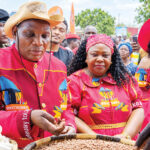
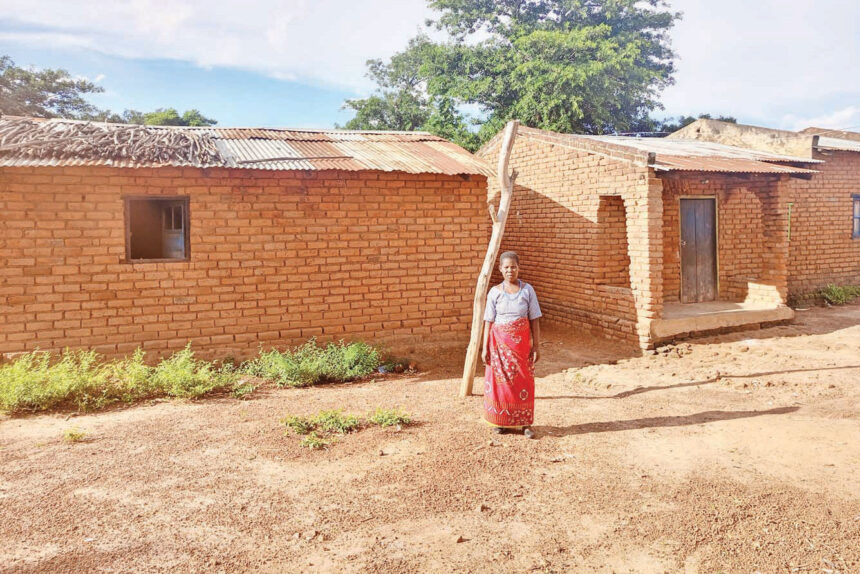
Rachel Hamilton, 42, a mother of seven children, walks to the altar with a friend to take the reading.
Instead of listening to the scriptures, the congregation stands up, claps and ululates for Hamilton.
- Advertisement -
The woman earns the honour for being able to read before a big crowd. People in Balira Village, Traditional Authority Mlonyeni, knew her as someone who was illiterate.
“That Sunday was my biggest day. I read the scriptures in the church and everyone was happy for me… I felt motivated. My family at home also congratulated me and I became the talk of the community,” Hamilton says.
Life started improving for her. She became one of the people that could be entrusted with responsibilities in the community.
It started at her mphakati (small Christian community). She was elected treasurer of the mphakati.
- Advertisement -
- Advertisement -
Later, the outstation church also chose her to be its treasurer.
“Although it was a challenge for me, I gladly accepted the task. I realised that education is powerful. I was elected treasurer just because I was now able to read and write,” Hamilton explains.
She joined an adult literacy centre three years ago. The class started with 30 learners that included only three men.
“At first it was not easy to attend classes. Many people mocked me. But I was determined because I wanted to know how to read and write.
“We have written three examinations and I have two certificates. I can read and write,” Hamilton says, adding that her ambition is to keep on learning until she speaks and writes in English.
She is also the chairperson of Chifundo Village Loans and Savings (VSL) group in her community.
The education that she has received has also had a great impact on her fish business and agriculture.
“I am able to understand figures. I am able to plan my farming calendar and calculate profits or losses,” Hamilton explains.
The VSL has 21 members and since she joined it, she got K34,000 in the first year, K62,000 in the second year and K94,000 in the third year.
She was able to join the bank after making profits from her farming after getting soya bean seed from the National Association of Smallholder Farmers in Malawi (Nasfam).
Sabina Patrick, Chairperson for Likhungwa Adult Literacy Centre, where Hamilton goes to, confirms that when Hamilton read the scriptures for the first time, she received a standing ovation.
“I also became motivated because we are attending the classes together,” Patrick explains, adding that the adult literacy school runs under Nasfam and the government.
Mchinji District Manager for Nasfam Catherine Jalamaye says since adult literacy classes started in 2019 in the district, at least 400 learners have been reached from 32 centres.
“Learners received livestock such as pigs to empower them. Adult literacy education has a great impact on the area. Community members are able to establish social funds to support themselves,” Jalamaye says.
About 27 percent of Malawi’s adult population is illiterate, of which 19 percent are men and 34 percent are women, according to the 2017 National Statistical Office Integrated Survey.
The sector faces a number of challenges that include low funding, lack of motivation for instructors and inadequate infrastructure.
In September 2018, then Ministry of Gender, Community Development and Social Welfare Principal Secretary Ivy Luhanga lobbied Members of Parliament to push for an increase in funds for adult literacy programmes.
That time, Luhanga said the sector was getting only K80 million per year against a budget of K450 million.
Seeing that the government is struggling to successfully implement adult literacy programmes, some individuals have opened adult literacy centres in their communities.
One such individual is a 2018 Mzuzu University graduate Anafi Geofrey, who opened a centre in his home village in Mangochi in 2019.
“I noted that literacy levels in my community and Mangochi as a district were very low. As a result, many businesspeople are unable to keep track of their businesses,” Geofrey says.
Mary Leni is one of the beneficiaries, who are now able to read and write.
“We also learn numeracy skills, which have helped me in my vegetables business,” Leni says.
Director of National Centre of Adult Literacy and Education in the Ministry of Gender, Community Development and Social Welfare Samuel Ziba says in the 2023-2024 national budget, Treasury allocated K91 million to the Central Government while the councils were allocated K113 million.
“These are operational funds, which translate to book and direct service delivery,” Ziba says.
In November last year, the ministry launched the National Adult Literacy Strategic Plan (2022-27) as one way of bolstering adult literacy education in Malawi.
During the launch, Minister of Gender, Community Development and Social Welfare Jean Sendeza admitted that inadequate supply of adult literacy learning and teaching materials is frustrating the progress of the programme.
Sendeza said the last teaching and learning materials for adult literacy were procured using government resources in 2012 and that few of them were still available for literacy classes.
Executive Director of Civil Society Education Coalition Benedicto Kondowe is concerned about the “little support” that adult literacy education gets.
“We can prosper as a country if we prioritise the education of our adult population, which will unlock their potential so that they can contribute to the development of our society,” Kondowe says.