By Wezzie Gausi:
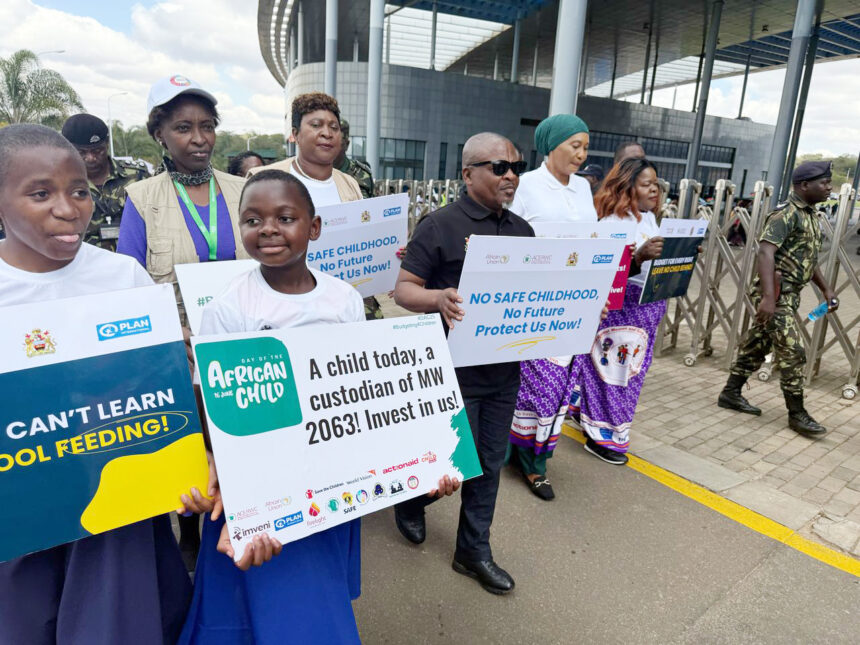
Monday, Malawi hosted the 25th Regional Commemoration of the Day of the African Child, with key speakers calling on African governments to make child-focused planning and budgeting a development priority.
Held under the theme ‘Planning and Budgeting for Children’s Rights: Progress since 2010’, the event brought together children, policymakers, civil society and international partners who reflected on the continent’s journey in protecting and promoting children’s rights.
State Vice President Michael Usi, who presided over the event, described the commemoration as more than symbolic, stressing that Africa’s future depended on how seriously it invested in its children.
“This is no ordinary event. It reminds us of our responsibility to protect and promote the rights of African children,” Usi said. “The future of Africa depends on how best we plan and invest in our children.”
- Advertisement -
Usi cited Malawi’s development blueprint— the Malawi 2063 Implementation Plan I— which includes human capital development as a pillar and focuses on early childhood education, healthcare, infrastructure and protection services.
However, he admitted that the current fiscal environment poses challenges to child-focused sectors.
According to Usi, spending on social sectors in Malawi has recently reached 31.1 percent of total government expenditure, with education receiving 14.8 percent, health 9.2 percent, social protection 3.7 percent and water, sanitation and hygiene at 3.4 percent.
He said the government planned to increase these allocations.
- Advertisement -
- Advertisement -
Chairperson for the African Committee of Experts on the Rights and Welfare of the Child (ACERWC), Wilson Almeida Adao, commended countries for progress made since 2010.
He, however, warned that insufficient funding, data gaps and emerging threats such as climate change, conflict and digital risks continued to hinder efforts.
“Planning and budgeting for children must be fair, transparent and based on real data. Most importantly, children must be given a real chance to share their views,” Adao said.
He applauded Malawi for hosting the event and for facilitating meaningful child participation through pre-commemoration training, where children developed an outcome statement outlining their priorities.
Child representative Loyce Mwale, speaking on behalf of children across Africa, said children wanted more than inclusion; they want real influence.
“We, children, are free with the call for our governments to plan and budget for children’s rights in order to achieve sustainable development,” Mwale said. “Planning and budgeting for children can reduce poverty, improve education and health, and address climate change impacts.”
Save the Children Country Director Bhekimpilo Khanye added that while legal reforms and social protection programmes were commendable, underfunding remained a barrier.
“Many essential programmes still rely on short-term donor funding. This is not sustainable,” said Khanye. “Children with disabilities remain excluded, and we lack proper indicators to track progress.’
Khanye urged governments to introduce dedicated budget lines for child-related interventions and called for trained child officers at local council level to monitor implementation of activities.