





By Bertha Banda:
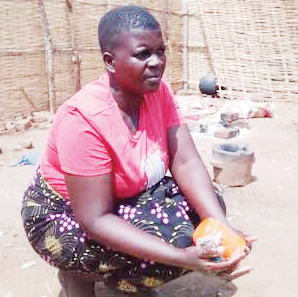
The chairs are gone; so are the two goats, her clothes, chickens and other household possessions she worked hard to acquire.
For Felista Chadzandiyani of Gomeya Village, under Traditional Authority (TA) Makwangwala in Ntcheu District, these are more than just missing household items. They are painful reminders of a financial decision that turned her hopes for a better life into years of struggle.
In 2020, Chadzandiyani joined village banks in the belief that borrowing money would help her establish a small-scale business, improve her livelihood and provide for her two children.
- Advertisement -
But what started as an opportunity to become financially independent eventually left her struggling to rebuild her life after losing almost everything she owned.
- Advertisement -
In June that year, she borrowed K50,000 from Ntira Village Bank, hoping to repay the money within the agreed period.
However, as interest accumulated, the loan reportedly rose to about K500,000 by December.
Still determined to improve her financial situation, she borrowed another K150,000 from Chinkutika Village Bank to establish a small-scale business.
But the business failed to generate enough income to meet her financial obligations. The second loan reportedly rose to K600,000, with interest increasing by K25,000 every month.
- Advertisement -
As a single mother raising two children at the time, Chadzandiyani found herself struggling to provide food for her family while meeting her loan repayment obligations.
“I thought I would be able to repay the loan using money from my business, but the business also failed me. The little money I generated was barely enough to find food for myself and my children,” she says.
Chadzandiyani says her attempts to explain her financial difficulties to group members did not change the situation, as they eventually took her household possessions as part of the loan recovery process.
“They took almost everything I had, including chairs, two goats, my clothes and other household items. They left me with my house, my children and nothing much else.
“For months, thinking about what had happened affected my health. My blood pressure would rise, and I was frequently sick,” she recalls.
Although she has since remarried and hopes to rebuild her household together with her husband, replacing the possessions she lost has remained difficult.
“I have worked hard over the years, but I have not managed to replace those things because life has become expensive,” she says.
Yet, amid the painful memories, Chadzandiyani has drawn lessons about borrowing and financial responsibility.
She now advises fellow women against joining several village banks at once and encourages them to have reliable sources of income before taking loans.
She also believes married women should discuss their borrowing decisions with their husbands to ensure that they can receive support if they encounter repayment difficulties.
“I advise fellow women to have something productive to do and multiple sources of income so that they can manage to repay their loans.
“Married women should also inform their husbands before joining village banks because, if they fail to repay, their husbands can help them. This can prevent them from losing their household possessions,” she says.
Despite her experience, Chadzandiyani has not completely lost faith in village banking.
She has since joined another village bank whose members received training from an organisation.
She says the group has clear guidelines and manageable interest rates, with members paying K300 interest for every K1,000 borrowed.
Her experience illustrates the difference that proper financial education, clear lending guidelines and responsible loan management can make in determining whether village banks empower or burden their members.
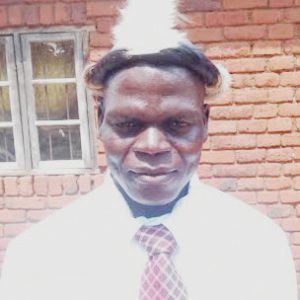
For Moses Walasi of Gomeya Village, village banks can be an important tool for improving people’s livelihoods when members understand how they operate.
Walasi says his village bank started in 2023 and received training from Futu4All Malawi on proper village banking practices.
Before the training, he says, members had limited knowledge of loan management and repayment procedures.
However, the training helped them understand the importance of borrowing within their financial means.
He says he has witnessed cases, in other areas, where borrowers fail to repay their loans, resulting in serious consequences.
“One member of a village bank in another area ran away from the area after failing to repay a loan.
“In another village, members took iron sheets from someone’s house after the person failed to repay the money. I know of four people who failed to repay their loans and faced the consequences,” he says.
Walasi believes village banks have the potential to improve people’s economic circumstances, citing his own experience.
He says he has managed to buy a piece of land worth K500,000 and access money for irrigation and other farming activities through village banking.
“I am happy that village banking has helped me access money for my farming activities. I have managed to buy land at the price of K500,000, and I hope to achieve more things through the group,” he says.
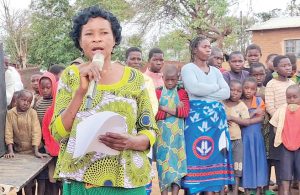
Ntcheu District Director of Community and Social Services Phalles Chizule says the council continues to train village bank members in business management and loan repayment to reduce cases of borrowers losing their property because of unpaid loans.
She says the training also equips members with knowledge to identify viable business opportunities that can generate income and help them repay borrowed money.
However, Chizule is concerned about people who use borrowed money for betting in the hope of winning enough to repay their loans.
She says she is aware of about four people who died by suicide this year after using borrowed money for betting and subsequently failing to repay their loans.
“We are training people in business ideas so that they can generate income and repay their loans.
“However, they must avoid betting because it is not a reliable source of income,” she says.
Chizule urges village bank members to use borrowed money responsibly and invest in activities that can improve their livelihoods.
“They should have dreams and aspirations they want to achieve, such as investing in farming, paying their children’s school fees and buying farm inputs, rather than borrowing money simply for enjoyment,” she says.
But while village banks are helping some households access money for development, economist Happy Chirwa questions whether the way some groups conduct their lending and recover unpaid loans complies with Malawi’s financial and legal framework.
Chirwa says village banks provide people, particularly small-scale business operators, with relatively quick access to money compared with commercial banks, where accessing loans can involve lengthy procedures.
He says this has helped some small-scale businesses grow and enabled households to undertake development activities.
However, he is concerned that some groups operate without adequate knowledge of the laws governing lending and debt recovery.
Chirwa says taking household possessions from borrowers who fail to repay loans is not an acceptable way of recovering money, asking groups to explore lawful ways of addressing loan defaults.
“There must be a way in which a person can be held accountable if they default on a loan. Taking away their property does not help people develop,” he says.
He says such practices can cause psychological and financial distress, affecting not only borrowers but also their families, whose development plans may be disrupted.
“When someone has built a house, it is good for the social development of the family. But if village bank members take away the roof iron sheets because of an unpaid loan, that is not good. There must be other ways of recovering the money,” he says.
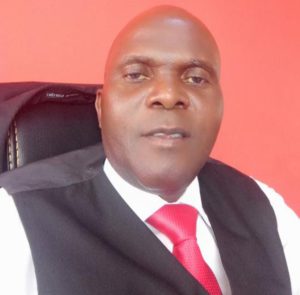
Chirwa also advises borrowers to invest money in the activities for which it was borrowed rather than spending it on luxuries that cannot generate income.
He says village banking has grown from small community initiatives into an important source of financing for many households, making proper management and financial education increasingly necessary.
“Village banks started as a small initiative and are now growing. People need training. I have seen people helping each other build houses through village banks, which is a good thing. The problem is that some people are not managing these groups according to the laws of Malawi,” he says.
Malawi’s Sheriffs Act provides for the seizure and sale of a debtor’s property through a formal court process, with a warrant issued by a court and execution carried out by the Sheriff.
In 2020, the Reserve Bank of Malawi said it had no specific policy regulating village savings and loan groups, describing their regulation as a policy matter for the Ministry of Finance.
As December approaches, a period when many village bank members are expected to settle their loans, Chadzandiyani’s experience offers a sobering reminder of the consequences of borrowing without a sustainable repayment plan.
For her, the dream of replacing the chairs and two goats she lost remains alive.
But her story raises a bigger question about the purpose of village banking. How can a financial arrangement established to empower struggling households become a source of distress for the very people it is meant to help?
Ultimately, village banks should be a stepping stone towards financial independence, not a path that leaves families struggling to rebuild what they have lost.