




 Press freedom goes beyond journalists and media organisations being able to publish news and information without undue interference from the government and powerful individuals.
It goes beyond not having a journalist arrested by the police over a story they are pursuing or they have produced and have had it published or broadcast.
Press freedom is more than journalists being allowed to ask their leaders tough questions regarding how they are conducting State affairs.
It is not just a fundamental aspect of freedom of speech and expression, which allows journalists to investigate and report on issues of public interest.
Holding governments and powerful individuals, whether public or private, accountable and publishing or broadcasting information that allows citizens to make informed decisions are crucial elements of press freedom.
- Advertisement -
But in a democracy such as ours, the lack of transparency and accountability in the activities of some public officers and offices slaps press freedom in the face.
As journalists, we are aware that telling the truth can sometimes be a threatening task, even though we appreciate that we have had some relative amount of freedom over the years.
But this could also be the case because some bigger realities fail to find themselves into the public domain through the media’s work because holders of information that could make that possible are not willing to let it out.
The passing of the Access to Information Act in 2016 was seen by many as a progressive step towards getting rid of bottlenecks which journalists encounter when they seek public-interest information from relevant holders.
- Advertisement -
- Advertisement -
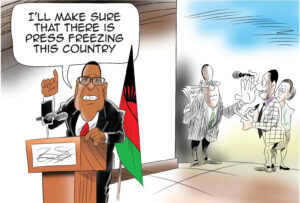
While President Lazarus Chakwera promised that he would do everything possible to ensure the law is operationalised, there have been strong attempts by his men and women to thwart it.
They are just not willing to give journalists information, apparently because there is a lot to hide in this government.
That is why stories often come out incomplete and finer details—where the devil lies—get swept under the carpet.
Yet the law even provides for proactive disclosure of information as long as it is in public interest.
For press freedom to be complete—of course, we all know such a realisation may not happen in our lifetime— journalists must access public information which is not classified whenever they want to.
Powerful and corrupt individuals have used the police to curtail journalists’ freedom even when it is clear that the pressmen and presswomen are simply doing their job.
Chakwera might have never ordered the police to go after any Malawian let alone a journalist, but, just like he indicated during a World Press Freedom Day breakfast at Kamuzu Palace in Lilongwe on Thursday, there are overzealous public officers that have surreptitiously drawn his name into the acts.
There even are police officers who make arrests simply to be seen to be working or aligning themselves with a current administration.
What has been lacking, however, is a review of such decisions and proper sanctions on those who reportedly abuse and misuse the President’s office or name.
As we approach the 2025 general elections, it is obvious that attacks on journalists—verbal or physical—will intensify.
The nation will be going through interesting times, where the scuffle for power will become more pronounced.
Journalists will be targeted for doing their job.
Overzealous police officers, perhaps also at the prompt of equally overzealous politicians, mostly those in government, will be pouncing on journalists for simply doing their work.
But our message remains the same: We will not be cowed into submission by those who abhor the truth and feel our work dampens chances of winning at the elections.
Like we have always done and, perhaps even dialling up on that, we will take an attack on one journalist as an attack on the whole media fraternity.
This is not to say that we will protect those who depart from the ethical and professional ways of doing their work.
We will endeavour that just like we demand that public officers and others who benefit from public resources are accountable, so shall we demand of ourselves.
But in terms of protecting our freedom, we will not do anything that compromises it. Ours is just a plea to duty-bearers and all those who hold public information to make it available when we ask for it.
By the way, sometimes the reluctance to release the information is rightly interpreted as an attempt to conceal underhand dealings and leads to more suspicion.
Above all, defending and promoting press freedom also entails protecting whistle-blowers, who sometimes put their own lives on the line to reveal information that some powerful individuals never want to leave their closets.