






By Patience Lunda:
She never imagined life would turn this bitter someday. For eight solid years, they shared love and made children. The kids felt they had a home and a future. But circumstances have left them distraught, helpless and hopeless. It all started after her husband and their father left an unannounced!
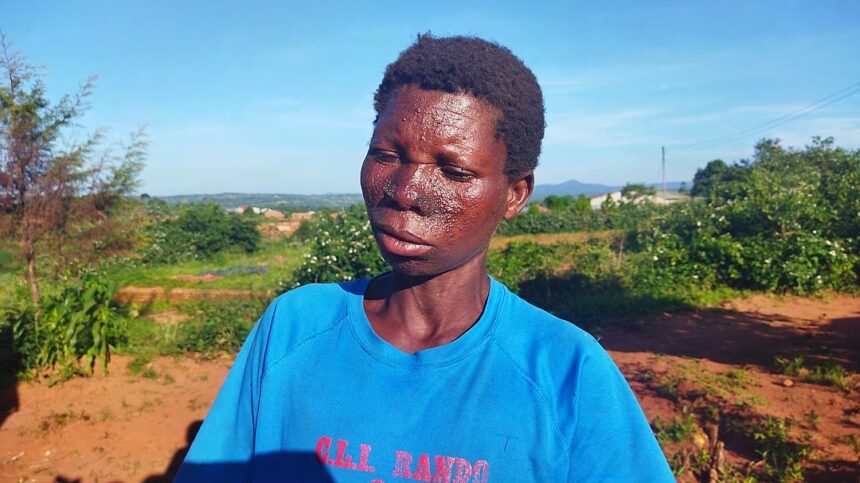
Brenda Moyo is a mother of seven children with various forms of disabilities. Her husband dumped them in 2022. So, she struggles to fend for the family. Worse still, four of her children are not in school. Moyo can’t afford meeting their fees and transportation costs.
“We got married in 2002 and he had a tendency of leaving temporarily until I decided to follow him here in town.
“But, he left again and is nowhere to be seen. I am facing a lot of challenges in raising the children,” narrated Moyo.
- Advertisement -
She says they are surviving at the mercy of well-wishers. They provide them with both food and shelter.
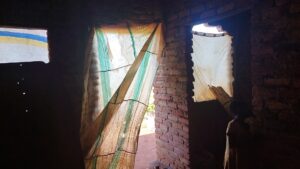
Desperate, Moyo lives in some incomplete building with no windows and doors in Nkholongo in Mzuzu. There is no security. She just has nowhere to go. A forced destitute!
Primarily, a family is meant to be a foundation of society, strengthening bonds between children and their parents.
Sadly, some innocent children have witnessed their dreams shattered right under their watch. Their fathers leave their homes under the guise of hunting for jobs. Others simply walk away without explanations.
- Advertisement -
- Advertisement -
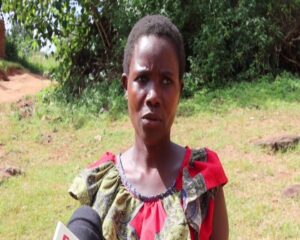
Ireen Mphande, 27, is a mother three. She is almost caught up a similar predicament. She says her left her for another woman. Mphande hears the husband migrated to Tanzania. He provides no support to the kids.
“He doesn’t even call to check on the children and before he left he used to beat me to the point that police intervened. I’ve been trying to get hold of him to at least help the children because I am struggling to take care of them,” she said.
Currently, Mphande stays with her mother who sells bananas. They have at least found solace in the business.
Moyo and Mphande’s predicaments mirror the unbearable conditions most women are subjected to in Malawi when men abandon their families. The situation is even worse now amid the harsh economic hardships.
Several of Malawian women migrate to South Africa in their desperate search for economic opportunities. Some don’t return at all. Others literally have nothing to do their families back home. They find new lovers out there!
Unlike divorce which typically involves negotiations and court proceedings to divide accumulated assets and determine child custody and support, abandonment on the other hand leaves the spouse and children in a vulnerable and challenging situation.
In 2014, International Labour Organization estimated that more 80% of all Malawian emigrants trek to the rainbow nation. It cited lack of steady employment in Malawi with 90% of Malawian youth working in the informal sector with no realistic chance of securing a formal job.
NGO Gender Coordination Network chairperson, Barbara Banda stressed the need to strengthen laws that can hold men accountable for not taking care of their families.
Banda called on community leaders to strengthen by-laws so that men who are not employed are still held accountable in terms of taking care of their children.
“We know that the system is very porous because if the men are not working it becomes hard for them to pay child support which is why community leaders need to strengthen by-laws so that those that aren’t working should still be held accountable,” she said.
On his part, Centre for Youth and Children’s Affairs Executive Director, Desmond Mhango condemned the behaviour of men abandoning their families, saying the decision of bearing children is made by two adults.
Mhango said the constitution of Malawi stipulates that children are supposed to be taken care of by both parents. He challenged the abandoned children to report such cases to relevant authorities.
“Growth of children in all aspects requires parents as they are responsible for provision of everything that is needed for them to grow well and hearing stories that some men are abandoning their families is really bad and should not be condemned,” Mhango said.
Traditional Authority Jalavikuba of Mzimba District said he would ensure that by-laws are punitive enough to deter parents from absconding from their duties.
According to the Constitution of Malawi, all children are entitled to reasonable maintenance from their parents, whether such parents are married, unmarried or divorced, and from their guardians.
It adds all children, and particularly orphans, children with disabilities and other children in situations of disadvantage shall be entitled to live in safety and security and, where appropriate, to state assistance.
National Police spokesperson, Peter Kalaya indicated that many cases of abandonment involve men and they are mostly reported by women.
Kalaya added that they trace whereabouts of the men that have deserted and through their Victim Support Unit {VSU}, they try to discuss the issue and map the way forward.
If the case can’t be handled at VSU level, Kalaya said it is referred to the courts.
“We first hear what both sides have to say about the matter before we intervene and if we can handle it we offer counselling but if it’s bigger we refer it to the courts. But most of the times it’s women that present these cases,” he said.
Chandulo Kayira is a psychotherapist and said both parents have diverse responsibilities and the failure to execute them has a psychological bearing in a person’s life.
For instance, Kayira argues that culturally, there are some issues that are supposed to be handled by a specific parent and not the other. This, he adds, means that the absence of a parent would make them miss out on some things.
“Fathers have their own responsibilities and when a child is growing up in a family without a father figure, it means that that some aspects are compromised when growing up. So, psychologically they have a bearing later on in life,” he said.
And Nkhata Bay District gender officer, Cecelia Kaunda said her office ensures that abandoned women are connected to village savings groups and to organisations that support Gender Based Violence survivors.
“We have several projects that are supporting such women in the district and we make sure we connect them so that some of the challenges they are facing are alleviated,” she said.
Moyo and Mphande’s harsh realities are a painful reminder of the inequality and injustice that remain so entrenched in our society. However, their struggles are far from over as the road ahead is still long and arduous.
The issue of men abandoning their children is a complex and multi-faceted problem that requires urgent attention.
While there are several reasons why men may choose to abandon their children, such as financial hardships, lack of emotional maturity, or relationship breakdown, the consequences of such actions can be devastating for both the children and the families involved.
It is important for men to understand that abandoning their children is not an option and that they have a moral and legal responsibility to provide for and support their children.
To prevent men from abandoning their children, society must create a support system that addresses the underlying issues that lead to such behavior.