


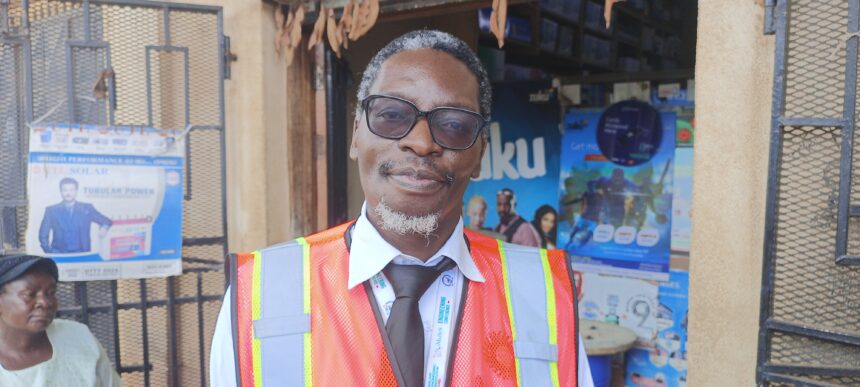
Kamzati Trading Centre lies quietly along the dusty road about 20 kilometres south of Ntcheu District, where night arrives quickly and electricity remains an elusive promise.
For years, Maxwell John waited for the power lines that many rural Malawians are told will eventually reach their homes.
The poles never came. The wires never followed. And patience, like daylight in Kamzati, eventually faded.
So John did what millions across the developing world now do when the state fails to deliver a basic service: he turned to the market.
After months of doing piece work in other people’s maize fields, he scraped together enough money for a trip to Blantyre.
There, in the bustling commercial suburb of Limbe, he bought a solar system that he hoped would bring light into his home and dignity into his evenings.
For seven months, the modest panel mounted on his roof felt like a quiet revolution. The dim orange glow of a paraffin lamp was replaced by a clean electric bulb.
Nights grew longer. Children could read. Conversations stretched deeper into the evening. For a brief moment, the sun had delivered what the grid could not.
But then the system failed.
The battery died. The panel stopped producing power. The wires that once promised light now lead nowhere.
Today John is back in darkness, poorer than before and with little recourse against the traders who sold him the equipment. His experience is not an exception. It is becoming the rule.
Across Malawi, where only about a quarter of the population has access to electricity, solar technology has become the energy solution of last resort.
Panels glimmer on tin roofs from villages to trading centres, symbols of both ingenuity and desperation.
Yet behind this quiet solar revolution lies a troubling reality: the market has been flooded with cheap and substandard equipment, fragile batteries, faulty panels and poorly assembled systems that fail long before consumers recover their investment.
In effect, the poorest Malawians are paying the highest price for the country’s energy crisis.
Buying solar equipment has, for many households, become less a careful investment than a gamble.
Labels promise durability, capacity and reliability, but the truth often reveals itself months later when the battery refuses to charge or the panel produces little power.
There are no warranties that mean much in practice, no reliable standards that consumers can easily verify, and no guarantees that the product will survive the next rainy season.
Yet the darkness outside is simply too deep to ignore. And so people take the risk.
Namvula Kachipapa of Katete in Lilongwe counts herself among the lucky ones. Her solar battery lasted three years, an unusually long life in a market filled with fragile equipment.
On Wednesday she returned to the bustling stalls of Bwalo la Njobvu in the capital’s central business district to search for a replacement.
After hours of asking questions and comparing prices, she finally handed over K90,000 for a new battery. It was less a confident purchase than a cautious hope that this one might behave better than the last.
Consumer advocates say this desperation has created fertile ground for exploitation
Consumers Association of Malawi executive director John Kapito argues that the country’s chronic electricity shortages have driven households into a chaotic solar market where regulation struggles to keep pace with demand.
Traders, he says, have taken advantage of the vacuum, flooding markets with low-quality panels and batteries that fail to serve the purpose consumers expect.
“Every corner of the country is flooded with these substandard gadgets,” Kapito warns, arguing that the agencies responsible for inspecting solar equipment must become far more vigilant if consumers are to be protected from daily exploitation. Competition and Fair Trading Commission (CFTC) spokesperson Innocent Helema says the commission is aware of the influx of substandard solar products on the market.
According to Helema, when consumers invest their hard-earned money in solar technology to escape the limitations of the grid, they have a legal right to expect goods that are not only fit for purpose but also durabl
“The Commission has, of late, noted with concern the rise in complaints regarding counterfeit solar panels, batteries and inverters, and all this is pointing to the fact that the problem is rea
“We recognize that as demand for solar energy increases, some traders are exploiting the technical knowledge gap of consumers,” Helema said.

He observed that the commission’s complaint statistics indicate that excluding liability for defective goods, which includes solar energy products, is one of the most common violations of the Competition and Fair Trading Act (CFTA).
Helema said the CFTC is playing its role, but not in isolation.
He said the commission is strengthening its partnership with the Malawi Bureau of Standards (MBS), which is responsible for testing and certifying equipment, as well as the Malawi Energy Regulatory Authority (Mera).
“If a product does not meet MBS standards, its sale automatically constitutes an unfair trading practice.
“We are, therefore, reminding all solar equipment retailers that they are legally obligated to provide clear information on product life as well as offering valid warranties.
“‘No refund, no exchange’ policies on defective solar batteries or panels are a violation of the law,” Helema said.
Ironically, veterans of Malawi’s solar industry say the system once worked better.
Hament Tanna of Solair Corporation recalls the early 2000s when renewable energy began gaining momentum under the Barrier Removal to Renewable Energy in Malawi (Barrem) Project.
The initiative, implemented by the Department of Energy Affairs with support from the United Nations Development Programme, introduced strict controls on solar imports.
Back then, importers needed certification from government engineers before their equipment could be cleared duty-free and VAT-free at the border.
Officials inspected consignments themselves, checking whether the technology met acceptable standards before allowing it onto the market. It was an imperfect system, but it imposed a degree of discipline.
Today, the market has grown larger and far more chaotic.
Renewable Energy Industries Association of Malawi (REIAMA) President Brave Mhone agrees that there is an influx of cheap substandard products on the market.
According to Mhone, REIAMA is working with Mera, the Malawi Bureau of Standards and the Malawi Revenue Authority to ensure that the quality of imported equipment is checked to avoid turning Malawi into a dumping groun
According to Mhone, it is very difficult for laymen to identify most substandard products just by looking at them, saying the outlook and the labelling may be deceiving.
Mhone said that to enlighten Malawians on quality products, his organisation has been organising Energy Weeks.
He was quick to note that most Malawians are lured by the cheap prices of substandard products, saying genuine products come at a price.
Regulators have begun acknowledging the scale of the problem.
A joint market inspection conducted by Mera, MBS and MRA in Blantyre and Lilongwe revealed that most importers and traders of solar equipment do not have the required Mera certification.
Mera has since given the traders three months to obtain the required certification.
Mera Senior Licensing Officer Tufwane Mwagomba admitted that the problem of substandard solar products is big on the Malawi market.
“There are some which we have seen that are complying, but the majority are not complying,” Mwagomba said.
According to Mwagomba, consumers must look for certification from Mera in the shops where solar equipment is being sold.
MBS Senior Certification Officer Masozi Mwenifumbo admitted that most operators are not complying with the licensing requirements from Mera in terms of the quality of consignments being sold.
Mwenifumbo cited an example of traders selling batteries of smaller capacity but declaring on the labelling that the batteries are of bigger capacity.
He said the traders had taken advantage of the disjointed operations of MRA, Mera and MBS in the aftermath of the Barrem Project.

According to Mwenifumbo, now that the three government institutions are working together in this area, the importation and selling of substandard renewable energy equipment is expected to become a thing of the past.
He added that MBS will continue to inspect the market and impound all substandard renewable energy products, and link up with MRA to ensure that such products do not enter Malawi again.
But for households like John’s in Kamzati, reform cannot come soon enough.
Across the country, a quiet tragedy is unfolding each evening. Families spend their scarce savings chasing light, only to discover that the products meant to illuminate their homes instead deepen their poverty.
In Malawi’s solar marketplace, hope often arrives packaged in a cardboard box with bright labels and bold promises.
Too often, it ends in darkness.
- Advertisement -