Friday, 30 years ago, Malawians queued in an election to usher in a multiparty government, departing from another 30 years of one party rule. Has the country been moving forward, backwards, sideways or in all directions at the same time? Does democracy suit us?
By Deogratias Mmana:
Thirty years after Malawi adopted democracy as a system of government, the country is refusing to show maturity in the system, as evidenced by the multiple challenges which should not have been there three decades down the line.
This is according to some analysts, who conclude that in essence, it seems that democracy does not suit Malawi or that it is Malawi that is resisting from being in its brace.
They further argue that there is deliberate rejection of progressive democratic tenets among Malawians who have replaced these values with retrogressive culture of corruption, laziness, lack of discipline and unwarranted self-entitlement.
Yet, on the whole, democracy is not really roundly bad, they say.
- Advertisement -
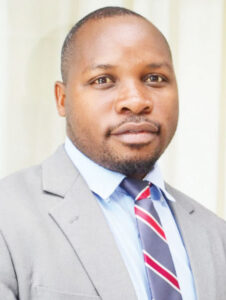
National Coordinator for Catholic Commission for Justice and Peace Boniface Chibwana said Friday that in a large way, Malawi has been walking forwards, sideways and backwards in the 30 years of democracy.
He said Malawi has witnessed a mixed progress tilted on persistent challenges over the past three decades of multi-party politics.
“The transition from one party rule under Malawi Congress Party brought political stability and infrastructural developments, yet on the sad note, the country continues to grapple with issues of constitutionalism, political legitimacy, and politics of patronage as a new form of corruption which has invariably dwindled citizen trust,” Chibwana said.
He said the economic development which the new system promised has been hindered by widespread poverty, data manipulation to suit political narratives and policy inconsistencies.
- Advertisement -
- Advertisement -
These habits are being buttressed by professionalisation of corruption, nepotism, and cronyism, he said.
“We are being retrogressive as a country. This is not what we wished for 30 years ago when we were moving into a multiparty system of government.
“Efforts to preserve cultural traditions amid modernisation and the politics of memorialisation highlight the complexities of national identity.
“Notably increased citizen activism signals a demand for accountability, reflecting that Malawians are frustrated with unmet democratic promises each political party makes before attaining power,” Chibwana said.
He said the Catholic bishops who played a crucial role in the initial push for democracy when they released the famous ‘Living Our Faith’ pastoral leader in 1992 which primarily advocated for servant leadership and active citizen participation, should be looking back at the past 30 years with bitterness as aspirations remain unmet.
Chibwana said democracy suits Malawi but that there is fix the too many imperfections that make it not work.
“We cannot have another form of ruling as an alternative,” he said.

Publicity Secretary for Political Science Association of Malawi Mabvuto Bamusi said the 30 years have been a period of deepening poverty as democracy fails to deliver broad and in-depth development.
“It is 30 years of widening gap between rich and poor. Inequalities continue to widen in economic terms, in education, in health and other sectors.
“It is three decades of corruption where politics has aided and abetted the interests of cartels to siphon public money. Big corruption scandals characterise all the administrations in democracy,” Bamusi said.
However, on the positive note, he said the 30 years have been a period of progress in establishing institutions and legal frameworks for delivering human rights.
These include the Malawi Human Rights Commission, Law Commission and the Anti- Corruption Bureau.
“It’s been 30 years of strengthening civil society voices as Malawi has seen CSOs influencing politics, economy and social aspects of society. It is 30 years of embracing a culture of multiparty politics as more parties continue to be registered.
“However, in summary this is 30 years where poverty and corruption have wiped off the democratic gains. Democratic decentralisation has been taken over by the decentralisation of poverty and decentralisation of corruption,” Bamusi said.
Asked if democracy suits Malawi, Bamusi said in its purest form as liberal democracy, this system does not appear to suit Malawi.
He said this is because of what he called the political culture of neopatrimonialism — “a form of politics where the majority look up to some elites or ‘messiahs’ that must provide rents to them and where survival of the masses is at the mercies of elites or patrons.”
“Liberal democracy operates on strict praise and adherence to human rights and freedoms. Sadly, these are not matched with duties and responsibilities. Malawians demand rights but refuse to demonstrate responsibility.
“Duty bearers too abdicate their duties to citizens. Consequently, Malawi’s form of democracy is chaotic leading to political anarchy, slow development, looting and corruption, and a state of lawlessness. On that basis, democracy has not suited Malawi,” added Bamusi.
As for the Centre for Human Rights and Rehabilitation (CHRR), bad governance, corruption and other ills have dominated democratic Malawi forcing people to lose trust with authorities.
“There is a general feeling that the multiparty system of government is not meeting the expectations of the majority of Malawians. We are continuing to witness the sad situation where political leaders make a lot of promises during the campaign period.

“But instead of delivering on them, we see the same old pattern of bad governance, corruption, nepotism and abuse of state resources playing out, which is causing frustration among voters. As a result, people are losing faith in democracy,” CHRR Executive Director Michael Kaiyatsa said.
On the positive side, he said the country has generally witnessed a smooth transition of power since the first democratic elections in 1994.
Further, he said, the country has put in place relevant laws and built strong governance institutions to protect people’s rights.
As for the government, the country has made few steps forward and steps backwards, he said.
The government spokesperson Moses Kunkuyu said the return to democracy in 1994 was and remains misunderstood in some people’s minds.
“The return of democracy came with the belief that as citizens we own every state property and we can do with it as we wish. This bred the spirit of entitlement and laziness and the expectation of good things to come at no cost. The result has been an entrenchment of corruption. Hard work spirit is gone Discipline is non-existent and the love of our country has decayed,” Kunkuyu said.
Asked if democracy suits Malawi, he said: “We need to change the way we think and appreciate that democracy also thrives in the midst of hard work and love for one’s country; appreciating and sustaining the strides we are making to rebuild our dilapidated foundations.”
In 1993, Malawians participated in a referendum where they voted for multi-party system of government. In 1994, the country held elections in the new multiparty system of government.