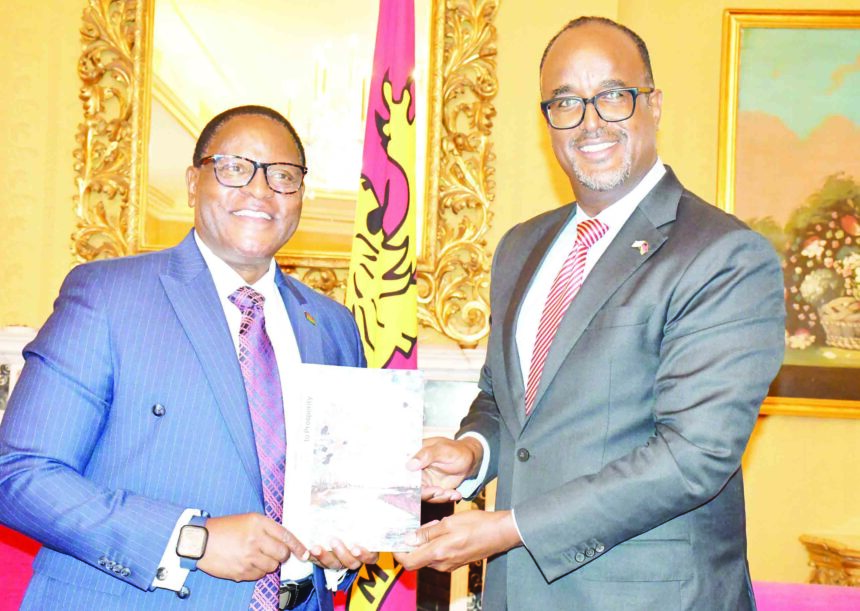
The latest Malawi Country Economic Memorandum by the World Bank has said getting Malawi back on track will require determined macroeconomic reforms.
According to the memorandum, an analysis of Malawi’s policy environment shows that it is not yet aligned with the requirements for rapid economic growth.
The World Bank says to embark on the business unusual scenario, which is the only one compatible with envisioned growth targets, decisive reforms are essential.
It says the reforms would not only mark a departure from growth patterns since independence but also have transformative effects on the standard of living of Malawians, helping reduce persistently high poverty levels.
- Advertisement -

The report says a successful departure rests on two principles of prioritising growth within government and enabling the private sector to prioritise growth.
- Advertisement -
“Prioritising growth within government starts with making growth-enhancing public investment possible at scale. To accomplish this, government debt must be sustainable.
“In the short term, the only way to achieve this is by restructuring external debt, which should be achieved rapidly to minimise the period during which the Malawian economy would suffer from low investment, while not yet benefiting from the growth-boost of debt relief,” the bank says.
It notes that given the experiences with two periods of high debt, such restructuring should be accompanied by reforms to make debt sustainability last.
“This entails reforming debt management. It also requires enhanced fiscal credibility, which demands determined fiscal reform. A crucial first step toward fiscal reform is to demonstrate budget credibility in the current budget by adhering to what was approved.
- Advertisement -
“To make this more than a one-off achievement, Malawi will need to invigorate its budgeting institutions and rely on modern systems such as the Ifmis. However, the created fiscal space will only yield positive outcomes if the funds are invested productively,” the bank says.
The bank says prioritising efficient investments means eliminating weak projects by removing them from the Public Sector Investment Programme, which, in turn, requires robust screening and monitoring.
The bank further notes that since the government alone cannot generate the necessary investments to accelerate growth, it is vital to facilitate private sector investment.
In the medium term, the bank says all proposed macroeconomic policy changes should foster an investment climate that encourages foreign as much as domestic investment.
Finance Minister Simplex Chithyola Banda was not immediately available to comment yesterday.
But in a recent interview, Chithyola Banda said authorities are committed to ensuring that they put in place the necessary reforms to enable the economy to grow.
And Speaking at Kamuzu Palace last Thursday when Malawi signed a $137 million budget support package with the World Bank, President Lazarus Chakwera said his administration is committed to engaging an extra gear for growth, growth and more growth.