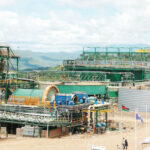
Despite being mentioned for three consecutive years in the national budget as a game changer and Malawi economy’s next big thing, the mining sector continues to be ignored.
Malawi’s aspiration to turn the mining sector into the next big thing for the economy continues to be riddled by glaring disparities between plans and amount of investment made by both the public and private sectors.
Malawi’s mining sector accounts for only one percent of gross domestic product but the government says plans are underway to scale-up the sector’s contribution to between 10 and 15 percent by 2030.
However, experts say low public funding and failure to swiftly negotiate deals with potential foreign direct investors continue to cripple take-off chances for most mining and minerals exploration activities in the industry.
For example, in the 2021-22 national budget, the government allocated K5 billion meant for establishment of a Mining Authority and a National Mining Company— the two entities which could lay a foundation for regulating the industry and spearheading investments in mining projects through partnerships—but nothing much has been done.
- Advertisement -
When presenting the 2021-22 national budget, the then minister of Finance and Economic Affairs Felix Mlusu said the sector has an enormous untapped potential to contribute to national socio-economic development through job creation, foreign exchange earnings and economic empowerment.
He then announced three developments around the sector which included establishing a Mining Regulatory Authority, establishing Mining Corporation, a State-owned company, and completing construction and rehabilitation works of the Ministry of Mining headquarters and Mineral Laboratories.

However, nothing happened until Mlusu was stripped of his ministerial powers and replaced with Sosten Gwengwe who delivered the 2022-23 national budget.
When presenting the budget, Gwengwe, said in an effort to diversify the country’s exports, the government would promote the mining sector.
- Advertisement -
- Advertisement -
He said discussions were at an advanced stage between government and investors to operationalise at least two of the four near-ready mines of Kasiya and Malingunde in Lilongwe, Songwe hills in Phalombe, Kanyika in Mzimba and decommissioning of Kayelekera in Karonga, with government standing ready to provide the needed economic infrastructure to the sites depending on their state of readiness.
With not so much to show for the words, Gwengwe went ahead to present the 2023-24 national budget.
The Mining Sector continues to be the government’s priority because of its enormous potential to generate foreign exchange, create jobs for many Malawians, generate wealth for the country and diversify the country’s exports.
“The House may wish to note that the government has allocated resources for completion of the construction of mineral laboratories,” said Gwengwe.
By the time he handed over the mantle to his successor, Finance Minister Simplex Chithyola Banda, not much had been brought to the attention of the public as ideal interventions towards revitalising the mining sector.
Chithyola Banda did not express something different from his predecessors but added that the government has engaged the World Bank for a second Kawuniwuni assignment for an in-depth study that would lead to the revelation of the quantities, quality and value of minerals to enable it to negotiate with potential investors for advance or upfront payment of mineral revenues prior to commencement of mineral extraction and production.
“Government will work to expect about $1.5 billion over the next three years in discounted mineral proceeds,” he said.
Economics Association of Malawi President Betchani Tchereni said it was disappointing to note that there was a slow pace towards rejuvenating the sector which, he said, has vast potential
“The Mining Authority, the Mining Company, these were announced two years ago and we are still moving at our well known pace; we do not worry that we have an undiversified export base,” he said.
In 2021, President Lazarus Chakwera said the country had taken the direction of turning mining into the backbone of the Malawi economy and main export saying tobacco is dwindling and agriculture has proved to be less of a helper.
Figures from last year show that the mining sector contributes a meagre 1 percent to Malawi’s GDP growth but research has shown that the sector has the potential to contribute more.