


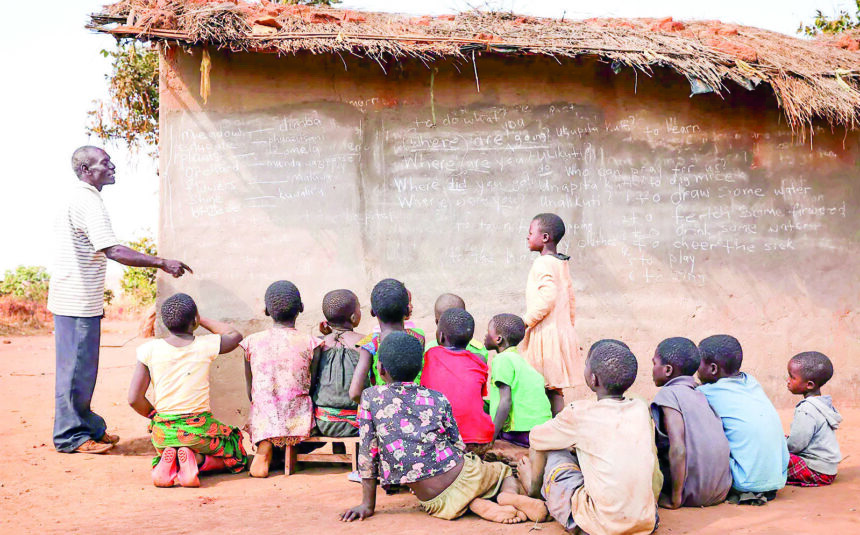
About 55.9 percent of Malawians are living in multidimensional poverty, the United Nations Development Programme (UNDP) says in its recently released 2025 Human Development Report.
The report highlights the depth of hardship facing ordinary households across the country.
Titled ‘a Matter of Choice: People and Possibilities in the Age of AI’, the report uses the Global Multidimensional Poverty Index (MPI) to measure poverty not just by income, but by simultaneous deprivations in health, education and basic living standards.
Malawi’s MPI score of 0.231, based on 2019- 2020 survey, translates to approximately 10.8 million people living without adequate access to nutrition, clean water, sanitation, electricity, housing and schooling.
- Advertisement -

The report defines multidimensional poverty as a deprivation score of at least one-third across ten key indicators.
- Advertisement -
For a typical Malawian family, this means children going to school hungry, homes without electricity or clean water, and limited access to healthcare — conditions that reinforce each other and make it harder to break out of poverty.
The report says multidimensional-poor people with little education lack access to the internet, a gap that has direct economic consequences as digital tools become increasingly central to commerce, employment and financial services.
With a gross national income per capita of just $1,634 in purchasing power parity terms, Malawi’s productive capacity is severely constrained.
This means a workforce that is unhealthy, undereducated and without basic services which cannot drive the kind of economic growth needed to lift living standards.
- Advertisement -
Malawi’s ranking of 172 out of 193 countries on the HDI underscores that multidimensional poverty is not an isolated problem. It is the defining feature of the country’s development challenge, one that demands urgent, coordinated policy action across health, education and infrastructure if the economy is to move forward.
Economist Marvin Banda said the findings are not just a poverty story—they are evidence of a structural economic failure that is actively strangling Malawi’s growth prospects and making the country’s long-term development blueprint, Malawi 2063, increasingly unrealistic without radical policy change.
“An economy cannot grow meaningfully when its labour force is hungry, undereducated and disconnected from productive infrastructure. We cannot continue celebrating marginal GDP growth figures while the majority of citizens live outside the minimum conditions required for productivity,” Banda said.
Malawi School of Government economist Francis Thauzeni said this shows that as a country we have most people in absolute poverty and struggling to access basic services regarding health care, education and utilities