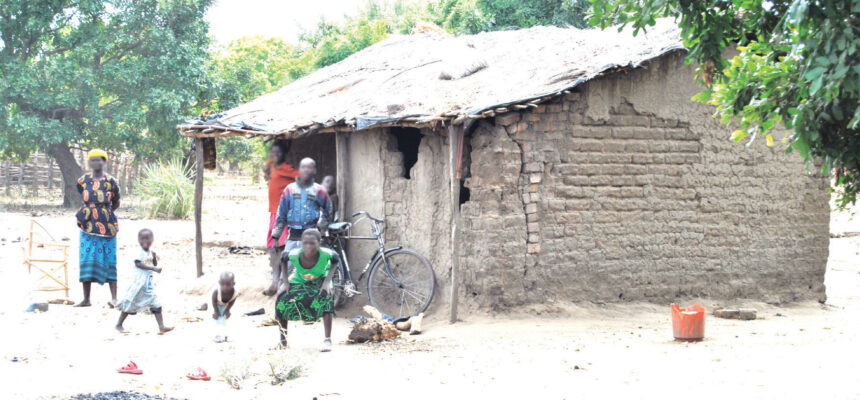
A new analysis by Unicef and the World Bank has revealed that 75.3 percent of children in Malawi live in extreme poverty of below $2.15 a day.
The Global Trends in Child Monetary Poverty According to International Poverty Lines analysis, released in Washington DC on Tuesday, has shown that Malawi has the fourth highest percentage of children in extreme poverty after Madagascar at 86.8 percent, Burundi at 79.1 percent, and South Sudan at 77.7 percent.
The analysis comes barely two weeks after the National Statistical Office unveiled the Second Multidimensional Poverty Index Report which revealed a marginal decline in multidimensional poverty.
Among Malawi’s neighbours, Zambia has 66.7 percent, Tanzania 48.6 percent and Zimbabwe 48 percent.
According to the analysis, an estimated 333 million children globally – or one in six– live in extreme poverty.
- Advertisement -
It says while the number of children living on less than $2.15 a day decreased from 383 million to 333 million (or 13 percent) between 2013 and 2022, the economic impact of Covid led to three lost years of progress, or 30 million fewer children than projected in the absence of Covid-related disruptions.
Unicef Executive Director Catherine Russell said in a statement that seven years ago, the world made a promise to end extreme child poverty by 2030.
“We cannot fail these children now. Ending child poverty is a policy choice,” Russell said.
World Bank Global Director for Poverty and Equity Luis- Felipe Lopez-Calva said a world where 333 million children live in extreme poverty—deprived not only of basic needs but also dignity, opportunity or hope—is simply intolerable.
- Advertisement -
- Advertisement -
“It is more critical than ever that all children have a clear pathway out of poverty – through equitable access to quality education, nutrition, health and social protection, as well as safety and security.
“This report should be a stark reminder that we have no time to lose in the fight against poverty and inequality, and that children must be foremost in our efforts,” Lopez-Calva said.
Speaking when he launched the Second Multidimensional Poverty Index Report, Finance Minister Sosten Gwengwe said the government remains committed to ending poverty in the country.
To end extreme poverty and offset the pandemic backslide, Unicef and the World Bank are calling on governments and partners to ensure a continued focus on children living in extreme poverty in lower, middle and low-income countries and fragile contexts.
Further, the two institutions have called on governments to prioritise agendas aimed at tackling child poverty, including expanding social protection coverage for children to reach those living in extremely poor households.