



By Daniel Zimba:
In a small, dimly lit room of a modest dwelling, the air is thick with unspoken pain and the remnants of a shattered childhood.
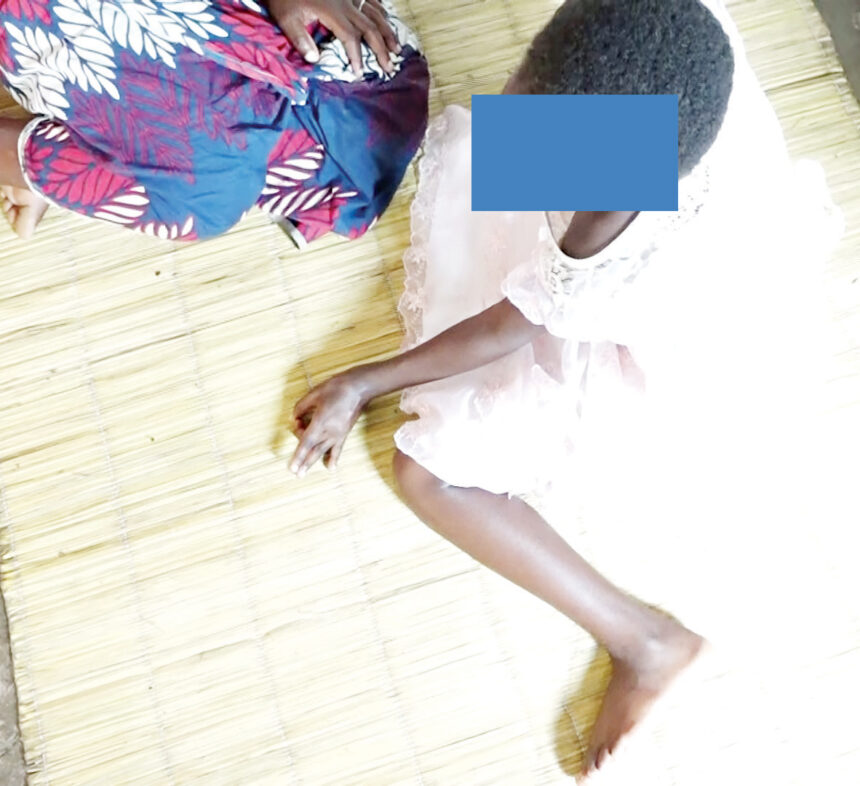
Eight-year-old Jane (not real name), once a vibrant girl with dreams of becoming a doctor, now sits quietly in the corner, clutching a tattered mat as if it were her only link to innocence.
The tragic reality weighs heavily on her family, who find themselves grappling with trauma, loss and an overwhelming sense of stigma.
Jane is always alone in her father’s house, lacking courage and confidence to go and associate with peers in the community.
- Advertisement -
It all happened on the evening of March 15, 2025, when life changed forever for Jane and her family.
As the sun dipped behind the horizon, casting shadows over the small residential neighbourhood at Zingwangwa Township in Blantyre, Jane was left alone at home while her parents were out working to provide for the family.
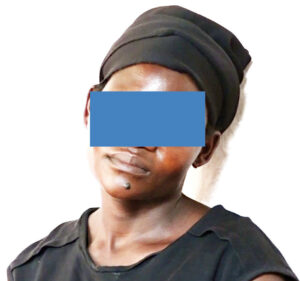
Her father, James (not real name), a night guard, and her mother Sekani (not real name), a piece worker, had no idea that their daughter would fall victim to the horrific act of a man, suspected to be from the same community.
“That day, I was tired after work. I just wanted to come home and see my daughters,” Jane’s mother, Sekani, recalls, her voice trembling as she wipes away tears.
- Advertisement -
- Advertisement -
“When I got back, Jane was not herself. She wouldn’t talk; she just sat in her room,” Sekani said.
The truth erupted when Sekani noticed signs of distress in Jane’s behaviour—the withdrawn looks, the instances of apparent fear whenever someone approached her.
“As such, I wanted to bathe her and I noticed that she was not comfortable to be touched. I insisted. When I undressed her, I was surprised to see blood stains in her pants. All she could do was to cry, without saying anything regarding what happened,” Sekani said.
“Then I approached female elders in the community who, after talking to her, advised me to take the matter to the local authorities without actually disclosing what they heard from my daughter. That same night, I approached community policing officers, who interrogated her in my absence. She explained what happened to her,” Sekani said.
It is alleged that Jane endured defilement at the hands of a 37-year-old [name withheld], such that the case is in court.
With each word, Sekani felt anger, pain and turmoil, compounded by the unbearable weight of social stigma.
According to Sekani, the little girl continues to bleed, a month after the incident, such that she is being treated at home.
In a society where victims are often shamed rather than supported, Jane’s family faced isolation and whispered judgements from neighbours, who blamed Sekani for what happened to her daughter.
The malicious glances and hushed conversations turned their home into a place of shame instead of solace.
Following the incident, group village head Zingwangwa suggested that the family relocate from their home, such that they sought refuge somewhere else.
“The whole idea behind relocating them was to keep Jane and her family in a quiet environment, one that is conducive to them. The idea is to help her heal physically and emotionally, away from community stigma.
“I also advised the family to transfer the girl from Zingwangwa Primary School to another school. As things are, currently, not okay for the family, I would like to ask well-wishers and the authorities to support her to recover,” he said.
“They can support the family in areas such as medical treatment and, afterwards, help with resources so that she can be transferred to a school that is far from this place, probably a boarding facility,” Zingwangwa said.
However, with relocation came new challenges.
The family’s financial struggles have intensified; they struggle to afford medical care and proper daily nutrition for Jane, who has been suffering from the devastating effects of trauma and the serious medical condition resulting from the alleged assault.
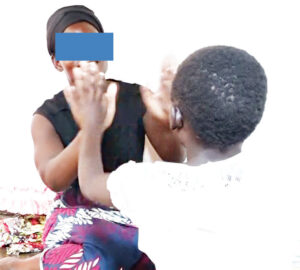
According to Sekani, medical personnel at Queen Elizabeth Central Hospital in Blantyre recommended the removal of Jane’s uterus, which they said was damaged.
“To think my little girl had to endure such pain at a tender age, how do I explain this to her later in life?” Sekani said, grief etching lines on a face that betrays her youthful spirit.
Medical documents back her claims.
Due to financial challenges, the family cannot afford advanced medical treatment for Jane.
For now, the little girl is just taking painkillers, alongside Post-Exposure Prophylaxis (PEP) and other temporary pain relief medication while at home.
“Our income as a family is insufficient. I just do piecework such as washing people’s clothes. On a good day, I generate at least K2,000 and we survive on that. My husband is a security guard and his earnings are not enough at all. There are times when we go to bed on empty stomachs with her (Jane) despite her medical condition,” Sekani said.
She said the treatment they get transcends their house’s walls.
“In one instance, I felt dismissed at Zingwangwa Health Centre. The nurse wouldn’t even look me in the eyes as if our tragedy was somehow contagious. For no reason, she shouted at me and I just returned home without getting any medical support,” Sekani explained.
Jane’s days are now filled with medications prescribed to help her recover from both physical ailments and emotional scars.
On some days, she feels a glimmer of hope, but on others, she is consumed by despair that leaves her retreating into the comfort of silence.
“I wish I could take away her pain,” Sekani whispered, pulling Jane close in a hug that speaks volumes of her love and sense of desperation.
For Jane, returning to school feels like an insurmountable challenge.
The bright classroom, once a sanctuary filled with laughter and learning, now seems like an arena for judgement.
Sekani worries about her daughter falling behind, knowing well that education is crucial for her to have a brighter future.
“I just want her to be able to play, to learn, to dream again,” she said, her voice thick with emotion.
Although Sekani managed to obtain a school transfer for Jane to another primary school, news of the assault had already spread like wildfire, leaving Jane without a safe escape.
“I thought I was doing the right thing, giving her a fresh start, only to discover that the shadows of the past had followed us,” she sighed in despair. “I just want her to play, to learn and dream again. We will appreciate it if well-wishers help us so that Jane can access the required medication and even education in a free environment,” she said.
Commenting on the matter, child rights activist Memory Chisenga highlighted the need for immediate support to save Jane’s life.
According to Chisenga, it is important to consider the life experience of victims after an incident such as the one Jane faced, besides ensuring that justice prevails.
She also called on the government to consider increasing funding towards building capacities for the country’s one-stop centres in order to help victims such as Jane access the needed medical support timely.
“Whatever recommendation they got from the hospital, I think it would be wise if the girl could go through proper scanning and the whole medical procedure quickly to determine the way forward before it is too late.
“Further delays to properly treat her might worsen the situation. As such, there is a need to treat the matter with urgency,” Chisenga said.

On the other hand, Centre for Human Rights Education, Advice and Assistance Executive Director Victor Mhango said there was a need to ensure that social welfare offices were capacitated.
Mhango urged the government to invest in building sound capacity for social welfare offices and one-stop centres so that victims such as Jane should be able to access the needed support in time.
“We, as a country, are not doing well, in terms of offering psychosocial support to victims in cases such as this. The attention is usually focussed much on punishing the culprits while the victims suffer for life.
“In this regard, we urge the authorities to take the matter further and support the victim—who, in this case, is a minor—to the end,” Mhango said.
He further asked the Blantyre Social Welfare office to take over the matter and play their part in helping Jane recover from the trauma.
In January this year, Community Development and Social Welfare Minister Jean Sendeza reiterated the government’s commitment to ensuring that children’s lives were safeguarded.
She said that was why Malawi was party to a number of international human rights instruments, including the United Nations Convention on the Rights of the Child (UNCRC).
UNCRC is an international human rights treaty that outlines the civil, political, economic, social, health and cultural rights of children, with 196 countries, Malawi inclusive, committing to the agreement.
On the other hand, Sustainable Development Goals (SDGs) call for inclusive economic, social and environmental progress for all people and the planet, with the United Nations Children’s Emergency Fund indicating that the SDGs “are the blueprint for creating the world that all of us need, and that children are demanding”.