




By Owen Nyaka, contributor:
After 16 years of marriage, Suche, from Nkhata Bay District, was abandoned by her husband.
He decided to marry another woman, leaving Suche to cope alone with life-threatening and highly contagious multi-drug-resistant tuberculosis (MDR-TB).
In 2003, Suche was one of three MDR-TB patients identified at Nkhata Bay District Hospital, according to Mavuto Khomba, the district’s TB officer.
- Advertisement -
He mentioned that in 2024, there were 200 cases of TB, including 16 children.
- Advertisement -
Suche’s two young children, both under five, are at risk. Her aunt, who brews a local alcoholic drink called mkontho, is not a reliable caregiver.
Although her aunt is an ex-TB patient, she cannot be trusted to care for Suche or her children.
The children often go without proper nutrition and are exposed to harmful smoke from open fires used in brewing mkontho.
At times, their house becomes overcrowded with heavily intoxicated mkontho customers, some of whom are chain-smokers of unprocessed cigarettes known as chingambwe.
- Advertisement -
Though it is believed that the children contracted TB from adult contacts, like many young children, they remain largely invisible in the fight to end TB.
Suche’s children, like most children in Malawi and beyond, face significant challenges in diagnosing TB.
Pulmonary TB, the most common form, presents with respiratory symptoms.
Diagnosis is often confirmed through sputum analysis and chest X-rays, but young children struggle to produce sputum for testing.
Deputy Director of the National TB and Leprosy Elimination Programme (Ntlep), Kuzani Mbendera, explains that it is not practical to ask young children to submit sputum.
“As they grow older, they are better able to produce sputum, but for the youngest children, sputum tests are typically ineffective.
“It takes only a small number of TB bacteria to cause illness in a child and even if sputum is collected, the bacteria present may be so few that they are difficult to detect, even with advanced testing,” Mbendera says.
A TB specialist at Ntlep, Samuel Chirwa, adds that while chest X-rays are helpful in diagnosing TB in both adults and children, they rely on visible changes in the lungs caused by TB.
“However, due to the paucity of TB bacteria in young children, these changes may be minimal or non-existent.
“TB diagnosis is often based on epidemiological and clinical features – looking at where TB is common and the symptoms presented,” Chirwa explains.
Other diagnostic methods depend on the type of TB suspected, such as gastric aspirates or body fluids when TB meningitis is suspected.
Mbendera states that there are techniques to obtain sputum from children.
Since children swallow sputum instead of coughing it out, a feeding tube can be inserted through the nose or mouth into the stomach to collect it.
Alternatively, as swallowed sputum is eventually digested and excreted in stool, stool samples can be tested for TB.
“The stool method is simpler and more acceptable than using a feeding tube. However, even with these techniques, the low number of TB bacteria often results in negative test results, so TB diagnosis in children is primarily based on symptoms,” the doctor says.

A lecturer at the Kamuzu University of Health Sciences, Dominic Moyo, agrees that paediatric TB is common but difficult to diagnose.
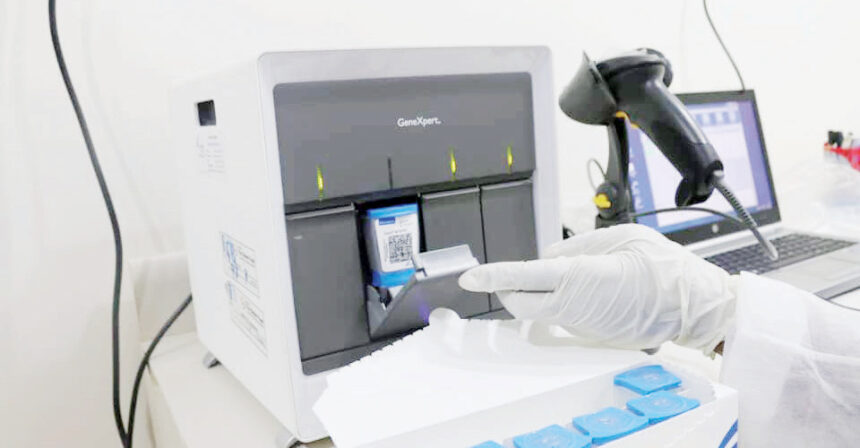
He says while techniques to induce sputum for microscopy and culture exist, the recent introduction of GeneXpert testing has improved TB diagnosis in children.
GeneXpert is more sensitive than microscopy, which relies on the human eye to detect bacteria.
GeneXpert, on the other hand, detects fragments of TB, increasing the chances of detection in this difficult-to-diagnose population.
Both Moyo and Mbendera stress that, as part of national policy, all TB samples from children must be tested on the GeneXpert platform.
Moyo, currently in Cape Town for further training, also mentions the Mantoux test, which introduces a purified protein derivative of the TB bacteria into the skin to measure the reaction.
“While this test does not require specialised equipment, its sensitivity is limited, especially in those vaccinated with Bacillus Calmette-Guérin or individuals with HIV,” Moyo says.
To ensure no one is left behind, Ntlep, under the Ministry of Health, has procured over 100 digital X-ray machines from 2018 to the end of this year.
These machines are being deployed in public and Christian Health Association of Malawi facilities.
Additionally, Ntlep has a fleet of 12 mobile vans equipped with digital X-ray machines and computer-aided X-ray reading software.
From June 2018 to December 2024, nearly 800,000 people, including key vulnerable groups such as miners, prisoners and residents of high-density areas, will have been screened.
Through the expansion of diagnostic capabilities at select health facilities and the targeted use of mobile diagnostic vans, services are reaching at-risk and hard-to-reach communities, such as the one Suche’s children are part of.