





By Rebecca Chimjeka Matemba:
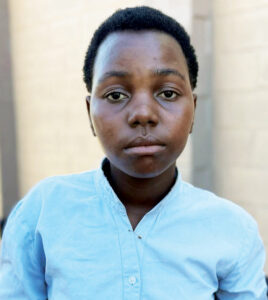
In a small village in Balaka District, where maize fields stretch far and wide and power outages are part of daily life, something unexpected is happening. A young girl named Faith Chitenjere is quietly breaking barriers—with a computer in her hands.
At just 16 years old, Faith is already making a name for herself. She is a form 4 student at Mpirisi Community Day Secondary School (CDSS), a school hidden deep in an area under Traditional Authority Kachenga.
Despite the many challenges of rural life, Faith has found a new passion—coding.
“I want to become a doctor one day,” she says with a shy smile. “But I also want to use technology to solve problems in my community—problems such as climate change.”
- Advertisement -
Faith’s journey into the world of computers started only a year ago when she joined the Malawi Girls Can Code project, a programme supported by UN Women.
The project aims to help girls and boys, especially those in rural areas, acquire skills in information and communications technology (ICT). In places where girls are often left behind when it comes to education, Faith’s story is one of hope and inspiration.
“I had never used a tablet before,” Faith says. “At first, I was afraid that I would break it. But once I learnt how to use it, I loved coding.”
Today, Faith has created a small computer programme that helps students solve maths problems, access digital textbooks and even play educational games. Her classmates, like Beston Philip, now use the programme to study and revise. For them, it is not just about getting better grades—it is about believing that anything is possible.
- Advertisement -
- Advertisement -
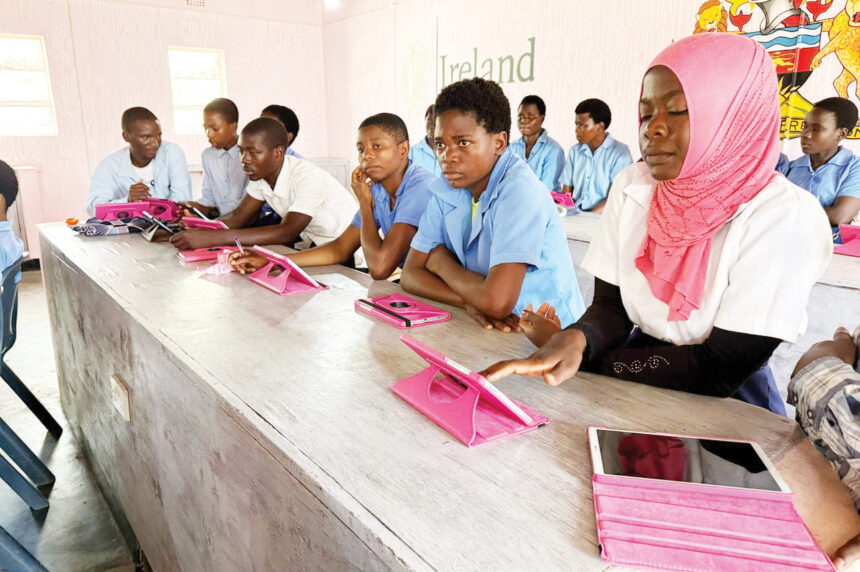
Mpirisi CDSS may not have reliable electricity or fast internet but the school has become a digital learning centre, thanks to the Girls Can Code initiative. The programme provided solar lights so that students could study even at night. This small change has made a big difference.
“Before the project [was launched], our MSCE [Malawi School Certificate of Education] pass rate was only 43 percent,” says headteacher Jaffar Chibwana. “Now it has gone up to 56 percent and, more importantly, our girls now believe that they can become anything— scientists, engineers or even tech developers.”
Out of the 99 students in the coding programme at Mpirisi CDSS, about 70 percent are girls. Most of them had never touched a computer before but, now, they can write code, make PowerPoint presentations and even create mobile applications.
“It’s amazing,” says Nelia Galeta, a support officer from UN Women. “These girls are learning fast. They are coding their way out of poverty.”
The project began in 2024 and is running in 14 schools across Mzimba, Dowa and Balaka.
In Balaka, four schools, including Mpirisi, are part of the programme. Students not only learn how to use digital tools— they also meet women working in such sectors as ICT and health; women who mentor them.
Faith remembers one of those mentors clearly.
“She was a teacher who really knew about computer software,” Faith says. “She told us that coding is like learning a new language but that, instead of talking to people, you talk to computers. That’s when I knew I could use code to change lives.”
She also loves the new look of their classroom.
“It feels like we are learning in a town school, not in the village,” she says.
Faith’s first coding project was a basic calculator application but later, with the help of free online tools, she built a small platform where students could share learning materials and play brain games.
“One time, my programme didn’t work because of a small mistake—a missing semicolon,” she laughs. “It took hours to find the problem, but I finally did!”
According to Fatima Muhammad, the Deputy Country Director of UN Women Malawi, the project is not just about technology.
“We’re changing the way people see girls,” she says. “When girls and boys learn the skills of the future, they can change their lives—and their communities.”
She said UN Women has developed a forward push strategy on Gender Equality and Empowerment of Women (Gewe), amidst a global and regional pushback.
Faith’s own family has seen the change. Her younger siblings now gather around her as she works on her tablet. Her parents, who once thought computers were only for boys, are now proud of her.
“I can now fix a phone or teach someone how to use WhatsApp,” Faith says proudly. “Before, I thought only boys did that.”
Other students in the programme are working on exciting new ideas. One group is creating an application to track changes in the weather and climate, made specifically for farmers in rural areas.
Another team is building a digital library of local stories and folklore. And Faith? She is thinking even ‘louder’.
“I still want to be a doctor,” she says. “But maybe I can also be a doctor who codes. I want to create machines that can help our hospitals or build software that can train more medical workers.”
As the Malawi Girls Can Code project nears its final phase, its impact is just beginning to show. Girls who once had no access to technology are now part of the digital world.
Under the soft glow of solar-powered lights, they sit typing away, creating solutions for tomorrow.
And at the heart of this transformation is Chitenjere—a girl from Balaka—proving that talent and dreams know no boundaries. With continued support and funding, her story could inspire a generation.
UN Women’s strategic objective of the push forward strategy is to keep the struggles of Malawian women and the gender equality and women’s empowerment (Gewe) agenda at the forefront of public debates and national and multilateral priorities.
It also aims to foster more informed dialogue with development partners, the private sector and the government, highlighting the need for aligned pathways to accelerate progress on Gewe across the humanitarian, peace and development nexus.