By Wezi Gausi:
On the website of the Malawi Blood Transfusion Services (MBTS) an organisation that collects and manages blood and blood products “to meet the needs of all patients in all hospitals in Malawi”, there scrolls toll free numbers and a message in bold, large letters: ‘Magazi Siogulitsa’.
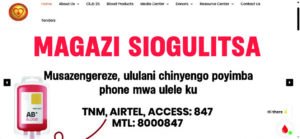
It is a clear call, printed in red.
Yet, in what seems to be a growing practice over various services that should be provided free, some staff in public hospitals still extort money from patients, according to testimonies Malawi News has gathered from some affected guardians.
And the consequences can be tragic.
- Advertisement -
The women – Ruth Banda from Dedza, Rose Kaunda in Kasungu and Efrida Lyson (an alias) from Mchinji, randomly shared their experiences – all of which have happened this year.
Banda had rushed her mother from Dedza District Hospital to Kamuzu Central Hospital in Lilongwe where hospital staff advised that the patient needed blood transfusion.
Banda said nurses told her there was need for her to cough out some money to facilitate the sourcing of the blood from the hospital for her mother.
It was at night.
- Advertisement -
- Advertisement -
She did not have the money.
The mother did not mak it to the morning.
“My mother did not die because help was impossible. She died because they asked me for something I did not have,” Banda said an interview.
Malawi News contacted the authorities at Kamuzu Central Hospital for their comment. There has been no response for weeks now.
In Kasungu, Kaunda lives with a similar pain.
Her daughter had just given birth at Kasungu District Hospital when she began to bleed heavily.
She needed blood transfusion. But she too was told she needed to provide some money for the blood to be supplied.
She reached out to relatives for help.
“But by the time blood came, my child was already gone,” the mother said.
In Mchinji, Lyson had to pay K50,000 for her child to receive blood at a public hospital there.
“I paid because I wanted my child to live,” she said. “But I kept asking myself why we are made to pay for blood in a public hospital when people donate it freely.”
In contrast to the other two experiences, the daughter survived after receiving the transfusion.
‘That is corruption’
We sought MBTS’ response on these developments.
It condemned the practice of staff demanding cash to release blood that is supposed to be given to patients without charge.
The institution’s Marketing and Public Relations Manager, Janet Katonda, explained that MBTS operates on a cost-recovery model, which requires covering expenses involved in collecting, testing, storing and issuing blood.
She said that while blood itself is free, the process includes screening for HIV, Hepatitis B and C, Syphilis, and blood grouping.
She said government covers all these costs for all blood supplied to public and Cham [Christian Health Association of Malawi] hospitals and patients in such facilities are not supposed to pay for blood transfusions.
“It is a corrupt act or a malpractice for an officer in the public hospital to demand payment for a blood transfusion. We encourage the public to report such incidents,” she said.
She added that private hospitals pay the full cost of producing a unit of blood, and these charges are eventually passed on to patients.
Katonda further said private facilities also recover costs for transfusion processes, including transport, cross-matching, giving sets and staff time.
Each year, MBTS reviews its fees through a World Health Organization (WHO) costing tool. After donor-funded discounts, public and Cham hospitals pay K63,000 per unit, while private hospitals pay K80,000.
On blood donor incentives, she said MBTS does not pay for blood donations.
“We give milestone items such as wristbands, T-shirts, caps, bottles and certificates to encourage our donors. We also reimburse travel costs for those who use public transport,” she said.
‘Services in public hospitals are free’
Spokesperson for the Ministry of Health Adrian Chikumbe said Malawi’s public health system operates under Universal Health Coverage principles as outlined in the National Health Sector Strategic Plan III.
As such, services in public hospitals are free, and this includes procedures, medicines and medical supplies such as blood.
He said while Malawi has also introduced a National Health Financing Strategy which allows people who wish to pay for private services to do so in certain public facilities, that option does not apply to essential supplies like blood in general wards.
In terms of oversight in public health facilities, Chikumbe said blood and blood products from MBTS must be properly documented like other medical commodities.
All facilities are expected to keep records on how blood is received and used.
He said the ministry encourages patients and families to report any case where they are forced to pay for services or supplies that are meant to be free.
“We now have a Hospital Ombudsman in every district who is legally mandated to investigate reported cases,” he said.
However, few people bring such cases forward for action, he said.
‘Rules must be respected’
Health rights activist Maziko Matemba said Malawi’s public health system is meant to offer services free of charge at the point of care, and blood is one of the essential commodities that must remain free.
He said people donate blood voluntarily to save lives, and hospitals must uphold that principle.
He added that many of the misunderstandings that lead to informal charges arise because some officials do not follow policy on procurement and management of blood.
This failure, he said, creates room for practices that place patients at risk.
“Everyone must follow the national policy on how blood is supposed to be procured and administered in public facilities,” he said.
“Blood is free in public hospitals, and that rule must be respected,” Matemba said.