







Malawi faces growing uncertainty over climate change financing following the failure of the 31st Conference of the Parties (CoP31) to reach a political agreement on key climate commitments in Antalya, Türkiye.
The conference, which ran from November 9 to 22, 2026, ended without adopting two major proposed decisions under the Antalya Pact, leaving unresolved critical issues surrounding adaptation financing, fossil fuel commitments and efforts to address the global climate ambition gap.
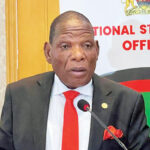
Natural Resources Minister Patricia Wiskes has described the outcome as a major concern for Malawi, saying the country’s climate action programme depends heavily on international financial support to address the growing effects of floods, droughts and tropical cyclones.
“Malawi’s third Nationally Determined Contribution (NDC 3.0), submitted in June 2026, estimates that the country requires $7.06 billion to implement its climate commitments between 2025 and 2035, with $4.28 billion, representing 61 percent, expected from international support,” Wiskes said
She said the adaptation programme alone requires $2.84 billion, of which $1.75 billion is dependent on external financing.
- Advertisement -
Wiskes said the absence of a formal agreement at CoP31 had raised concerns about how Malawi would mobilise resources to protect vulnerable communities, strengthen infrastructure and build resilience against climate-related disasters.
“One of the major setbacks was the failure to secure a renewed political commitment to at least triple adaptation finance by 2035, while the proposed Antalya- Addis Ababa roadmap, which was expected to guide increased investment in adaptation and resilience, was also dropped,” she said
According to NDC 3.0, floods, droughts, and tropical cyclones have roughly doubled in frequency since the 1980s, with climate-related economic losses estimated at between 3 and 5 percent of the country’s gross domestic product annually.
The effects have been particularly devastating following cyclones Idai in 2019, Ana in 2022 and Freddy in 2023, which destroyed infrastructure, crops, and livestock and displaced more than one million people.
- Advertisement -
Malawi’s reliance on rain-fed agriculture further exposes millions of households to changing rainfall patterns and prolonged dry spells, making investment in agriculture, water resources, energy, climate services, and nature-based solutions increasingly urgent.
Meanwhile, the Civil Society Agriculture Network (Cisanet) has urged the government to urgently mobilise domestic resources and strengthen food systems’ resilience following the CoP31 deadlock.
In a position paper, board chairperson Driana Lwanda and national director Elizabeth Namaona said weakened commitments on fossil fuel phaseout and the removal of a proposed $120 billion annual adaptation finance floor had placed Malawi in a difficult position.
Cisanet further expresses concern that Malawi is entering the 2026-27 El Niño season with a $187.3 million funding gap in its National El Niño Preparedness Plan.
“Waiting on broken global promises is a death sentence for rural livelihoods,” the organisation says.
