By Chisomo Sumani:
For decades now, roads in a number of townships in Blantyre City and all the cities in the country are not seeing any meaningful makeover. They are in a state that could symbolise the state of collapse for Malawi at large.
For those in doubt, visit Machinjiri Township. Pick any road.
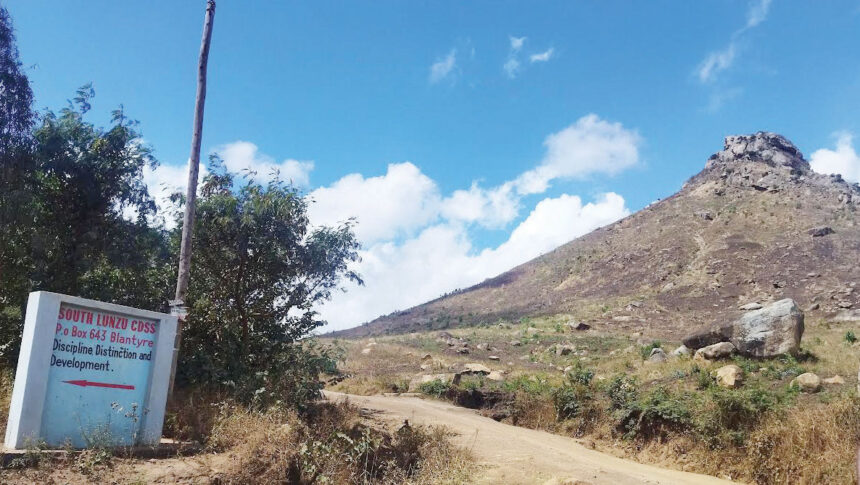
For example, start off at Area 5 centre where you have a police station and a number of shops on the road between Chirimba Industrial Site and Limbe. Follow the road towards the Lambat’s direction. The first 200 metres are rugged and torrid. So warned by the torture of this stretch, turn left as if you want to pass through the old Habitats lines. Trundle another 50 metres after turning, and, fearing a potential nightmare ahead, turn right hoping to enjoy a drive in a highway since there is South Lunzu Community Secondary School at the end of this road.
See if you won’t run into trouble there also.
- Advertisement -
Such is the state of many roads in Machinjiri Township that one has nowhere to run to. From cul-de-sac to cul-de-sac, from pothole to pothole, from ravine to ravine, such is the state of many streets in the township.
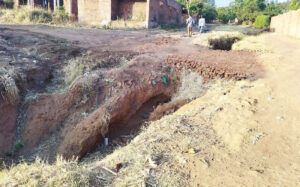
This road to the secondary school, for example, connects to five others. It is the spine of an avoidable natural disaster. For more than 10 years now, like all streets in the area, the road has been in a state of constant destruction. No maintenance.
Now it is a stream, in literal sense of the word. Scoured to its depth, during every rainy season, water gushes down this ‘river’ with vicious force. To perfect this new found usage and image, there are patches of grass on its ‘banks’.
In the early stages of destruction, there were potholes on many of its stretches, as one resident said. Now these potholes have degenerated to drum holes and to ravines.
- Advertisement -
- Advertisement -
The road, if it is to be called, makes for a difficult drive today. But the real threat regards what could happen with this emerging river.
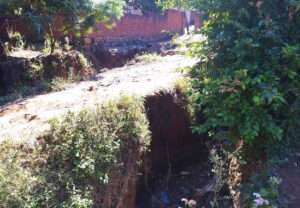
After every rainfall season, water springs form right in it for weeks. There won’t be a road soon. It will be a river.
Seeing that government is not coming in to rehabilitate it, every year, residents of the area make financial contributions to try to patch up certain stretches with sacks filled with soil and bricks. But every year, during rains, water gushes down, washing down all that effort.
“It’s been years since the emergence of this threat. Our efforts have proven worthless as it is just too much for us. Most potholes are now so deep that they can hide a fully grown man,” says Emmanuel Maganga, chair of the community, who has stayed in the area since 1996.
To the more unscrupulous citizens, the roads have now become waste sites for used diapers, dead dogs and all manner of rubbish, risking the community’s health.
The condition of the roads in the area has come about due to a number of factors, according to residents. One of the major factors is that the roads have become a drainage system for water descending from the heavily-deforested mountain in the area.
Then there is the issue of lack of maintenance. Jane Mangani settled in the area in 2014. She has never seen any road maintenance work by the government in all this time.
The state of the roads puts at risk delivery of services such as fire responses from the city council in the event of such an incident and police action in case of a criminal activity.
Motorists are also bearing the brunt. A minibus owner who just called herself Patricia complained: “My bus breaks down regularly. To avoid this, sometimes I have to park it away from the area. Sometimes we think of leaving the place but where can we go?
The impact of wretched or inadequate roads can be far reaching. According to the World Bank, inadequate road infrastructure retards economic growth potential as it undermines the export competitiveness of agricultural produce and other manufactured goods. This curtails the opportunity for employment and business development; and impedes human development efforts in health and education, the World Bank says.
Among politicians, this call by the World Bank isn’t new. That is why several politicians have promised to fix the roads in the country’s townships. But they have left the roads in a worse condition without maintaining them.
According to the Local Government Act (1998) and Decentralization Policy (1998) the responsibility of maintaining rural roads which are not under central government is in the hands of the Local Authorities. The Act defines ‘Local Authority’ as district assembly, Town assembly, Municipal assembly or City Assembly. The roads under the assemblies include district roads, township roads, city roads and housing estate roads.
Sometime between 2017 and 2019, there was that flurry of activity by these councils maintaining some of the roads in the townships. This was a promising programme. Seeing a road in the neighbouring location being maintained gave residents on the other end the hope that theirs would be next on the list. However, that programme seems to have scaled down significantly it actually gives the impression that it is no longer a priority.
Needless to say that many of the roads that were rehabilitated during that period have been damaged already, a testimony of substandard work that they were. But residents in those areas can say they once saw a proper road in their area in their lifetime. For many residents in Machinjiri Township, that is a luxury they can only dream of.