By Pemphero Malimba:
Despite efforts by the government and non-state actors to improve access to health care, people in some parts of the country continue to face challenges in reaching services at nearby public health facilities.
The people of Namale, in Traditional Authority Chakhumbira, Ntcheu, are not exempt from this situation.
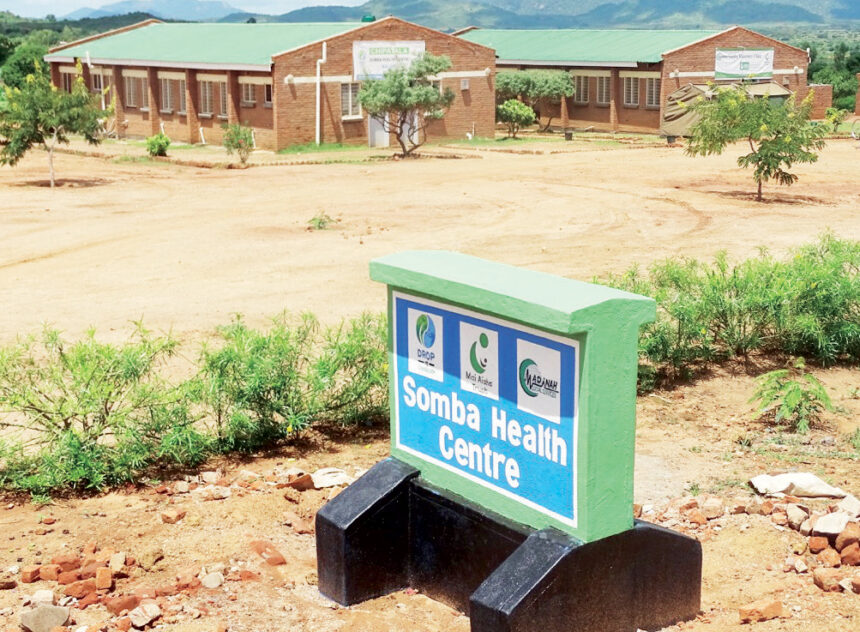
For generations, over 15,000 residents in this part of Ntcheu, located between Bangwe Mountain and the Kirk Range and along the Livulezi River, have struggled to access health care due to the absence of a nearby facility.
“Namale is a hard-to-reach area where most services are unavailable. Some people have died trying to cross the Livulezi River, which often floods during the rainy season, simply because they were attempting to reach the nearest health facilities,” says Lower Chakhumbira Area Development Committee Chairperson Gereson Kamoto.
- Advertisement -
According to Kamoto, others have died at home because they could not reach the nearest hospitals, while expectant mothers have faced complications from giving birth at home or on the way to a facility.
Namale is 10 and 8 kilometres away from the Christian Health Association of Malawi’s Chigodi and the government’s Kandeu health centres respectively.
This contravenes the government’s policy of having a health facility within every five kilometres and for every 5,000 people.
Kamoto explains that most residents rely on painkillers bought from local groceries when they fall ill due to the long distances they must travel to reach a government health facility.
- Advertisement -
- Advertisement -
“We have lost many people. Most fail to access the nearest hospitals, Chigodi and Kandeu, and only those who manage to find transport are able to receive health care,” he says.
Ntcheu District Council Director of Health and Social Services Innocent Mhango notes that, in addition to long distances, the area faces challenges such as a poor road network, which contributes to preventable deaths.
Mhango says the Livulezi River floods annually, making it difficult for people in Namale to access health care.
“In the health system there are a number of delays. One is the decision to seek care, and the second is the delay in accessing it.
“Distance has been a critical factor in this area, contributing to complications arising from these delays, and unfortunately others have died from preventable causes,” he says.
Ntcheu, home to over 790,000 people, has 42 facilities excluding health posts.
However, the National Bank of Malawi Plc and Press Trust have now demonstrated their commitment to assisting the people of Namale.
On Thursday, October 23, 2025, the two institutions signed a memorandum of understanding (MoU) in Lilongwe, agreeing to construct a health centre at Namale.
The institutions will each invest K540 million, bringing the total project cost to K1.08 billion.
The project will include an outpatient department, a maternity wing, two staff houses and the provision of water and electricity.
Kamoto describes the development as a dream come true after numerous proposals to the district council went unanswered.
“National Bank of Malawi and Press Trust coming to our rescue is something the people of Namale will remember for the rest of their lives,” he says.
He is also optimistic that expectant mothers who previously delivered at home or on the way to health facilities will no longer face such risks once construction is complete.
“The construction of the maternity wing in particular will greatly help the people of Namale,” Kamoto says.
Mhango believes that the construction of Namale Health Centre will enhance efforts to increase access to health care, aligning with pillar three of the Health Sector Strategic Plan.
This pillar focuses on constructing new facilities to meet health delivery needs, thereby improving access for all and contributing to universal health coverage.
“It will also help reduce complications arising from delays in accessing health care and preventable deaths,” Mhango says.
Speaking during the signing of the MoU, Press Trust Board Chairperson Sosten Gwengwe said the institution believes the new health centre will enable the community to access services with dignity.
“But beyond the bricks and mortar, this partnership brings hope. Hope for mothers who will give birth safely, for families who will access care with dignity, and for a community whose wellbeing is the cornerstone of progress,” Gwengwe said.
He commended the long-standing partnership between the bank and the Trust, which he said “runs deep”.
“From the investment income we draw through direct investment in the bank and through Press Corporation Limited, its majority shareholder, to our shared commitment to translating corporate success into community impact. This is where finance meets purpose and commerce meets compassion,” Gwengwe said.
He added that construction is expected to be completed within one year.
According to Gwengwe, physical construction is likely to begin in a month or two, as stakeholders are currently sourcing consultants for the designs and related work.

National Bank of Malawi Plc Chief Operations Officer Masauko Katsala said the partnership aims to address the challenges faced by the people of Namale in accessing health care.
Katsala added that the bank believes in supporting various sectors of society as a way of giving back to communities.
“We believe in being a good corporate citizen, and one way of doing that is by helping communities in need. In Malawi’s health sector, there is a great need for collaboration and assistance,” he said.
Secretary for Health Dan Namalika urged private sector players to invest in the country’s health system to promote medical tourism.
“Instead of exporting business by sending our patients to India or South Africa, it is time to invest locally.
“An example is Mwayi Wathu, the International Blantyre Cancer Centre, which has just been constructed, as well as several diagnostic facilities and laboratories within Lilongwe. These are businesses that can contribute to medical tourism,” Namalika said.
He added that the ministry is considering the Constituency Development Fund to help address infrastructure challenges in the health sector.
Namalika noted that since services have been decentralised, resources are now moving to districts and communities.
He cited the proposed K5 billion Constituency Development Fund mentioned in the Democratic Progressive Party manifesto, which includes a portion for health.
“We want to discuss whether it can be used to support ambulance services and health posts. The fact that money is now reaching communities gives us the opportunity to make the case that health services are a catalyst for development,” Namalika explained.
Ntcheu District Commissioner (DC) George Ngaiyaye said he would facilitate the mobilisation of people to safeguard the project.
He said the council will engage local governance structures during construction and afterwards.
“We know we must take care of the infrastructure and we are ready to maintain its quality so that it is sustainable and durable,” Ngaiyaye said.
He also pledged the council’s support for the construction of additional staff houses for the facility.
“Our annual investment plan did not include these houses, but I promise to ensure that they are built using other funding sources so that workers can live close to the facility,” the DC said.