By Simon Allison:
Abil Ahmed’s destiny was foretold by his mother. She was an unusual woman: an Orthodox Christian who married a Muslim coffee farmer from Oromia, settling down with him in Beshasha, a small town in central Ethiopia.
Abiy was her fourth child, born just two years after the fall of Emperor Haile Selassie.
She named him Abiyot, meaning “revolution” in Amharic, and from a young age would whisper in his ear that he was born to rule; that one day he would be king.
Abiy has spent most of his life trying to fulfil that prophecy —and, remarkably, succeeding —while struggling to reconcile its contradictions.
- Advertisement -
Is he the emperor who will restore Ethiopia’s glorious past, or the revolutionary who breaks it all apart?
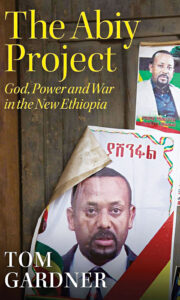
This is the question that Tom Gardner seeks to answer in The Abiy Project: God, Power and War in the New Ethiopia, his new biography of the prime minister.
Gardner was The Economist’s Horn of Africa correspondent, based in Addis Ababa, from 2016 until he was expelled by Abiy’s government in 2022.
These years will go down as some of the most extraordinary in Ethiopia’s long history, and Gardner witnessed it all: Abiy’s dramatic, unexpected rise to power; his sweeping, previously unthinkable reforms to both ruling party and state; the end of the decades-long war with Eritrea — which won Abiy the Nobel Peace Prize — and then the brutal collapse into civil war and internal conflict, much of instigated by the prime minister himself.
- Advertisement -
- Advertisement -
For better or worse, or both, Abiy is remaking Ethiopia in his own image – but who, exactly, is he? Answering that question is not straightforward.
“It was an iron law: the closer someone had been to Abiy, the less likely they were to talk about him,” writes Gardner.
Nonetheless, the details that Gardner does unearth paint an unsettling portrait of a man who believes he was chosen by God for greatness — no matter how many casualties accumulate along the way.
Growing up in a dilapidated house in Beshasha, from which his mother, Tezeta, sold honey wine, Abiy was “no doubt conscious from an early age of his relatively lowly social rank, as a younger and lesser-favoured son”.
His father was mostly absent, and their relationship was difficult. When Ahmed Ali died in 2019, Abiy barely acknowledged it.
But he idolised Tezeta, a “strong-willed and independent woman”, and it was from her that “Abiy seems to have drawn much of his titanic self-belief ”.
A young Abiy showed a keen interest in politics, joining the local branch of the ruling coalition where he started off by delivering tea to more senior cadres, and then the national army.
“Those who knew him back then recalled him roaring around the camp on a motorbike, for instance, or chewing khat, a local stimulant, and getting drunk on local ‘tej’ honey wine in nearby bars.”
His impish charm would always get him out of trouble. He would later use that same charm on world leaders, to similar effect.
 Abiy spent 15 years in the army, training as a radio operator. It was during these years that he forged the political connections and developed the language skills – including basic Tigrinya – that were crucial to his future success.
He also served on the front lines of the brutal trench war against Eritrea in the late 1990s, and nearly died: one day, when he stepped out to position his antenna, the rest of his unit was wiped out in an explosion.
Abiy’s next move was into Ethiopia’s murky intelligence establishment. He orchestrated it himself, knocking on the door of a senior military intelligence official with a bold idea: to publish an Amharic-to-English dictionary that he had written.
It never got published, but it got him noticed, and Abiy was soon recruited into the new Information Network Security Agency (INSA) – an electronic surveillance agency loosely modelled on America’s National Security Agency.
In charge of protecting the government from cyber-hacking, Abiy spent six months in South Africa studying cryptography. He was also scheming.
He developed “a reputation for eavesdropping on private phone calls”, and allegedly using this information against his rivals – although Gardner notes that these claims were never proven, “and given the closed nature of Ethiopia’s security agencies, never will be”.
It was also around this time that Abiy started going to church – specifically, the Ethiopian Full Gospel Believers’ Church, the biggest Pentecostal church in the country.
Most Ethiopians identify as Ethiopian Orthodox Christians or Muslims, but Pentecostal churches have been growing in size and influence in recent years. Their teachings emphasise individuality over the collective, and modernity over tradition.
Abiy seems to have been especially taken with the Prosperity Gospel, which equates financial success with God’s favour – so much so that he renamed the ruling party the Prosperity Party.
Wherever Abiy worked, his first move was always to renovate the offices, favouring a modern, corporate aesthetic – including that of the prime minister, when he finally got there.
Nowhere is this impulse more evident than in Abiy’s ambitious – and expensive – drive to modernise Addis Ababa. This includes building new roads, parks and museums, as well as a multi-billion dollar palace complex for the prime minister – that is, himself – to occupy.
But while the city may be thriving, the nation is falling apart. Gardner offers a compelling analysis of how Abiy ruthlessly exploited tensions between regions and ethnic groups to gain power and neutralise his enemies.
Once in office, however, those tensions only heightened, and then exploded into an all-out civil war between the federal government and Tigray province – a war that claimed tens of thousands of lives, and left millions at risk of famine.
Gardner’s descriptions of that war, and its lingering impact, are hard to read.
Although a peace agreement was signed in November 2022, there is new conflict in the Amhara region, where Ethiopian troops have been implicated in war crimes, while other parts of the country are increasingly restive.
Abiy may have fulfilled his mother’s prophecy. He is king in all but name. But king of what, exactly?
As Gardner concludes: “It was a brittle sort of power, with hard and binding limits. Though Abiy faced no serious contenders for the throne, Ethiopia was a more dangerous, more violent place than it had been in decades. If the central state’s writ, under [former prime minister Meles Zenawi], had once reached every village, now it seemed barely to extend beyond the capital.”