By Patience Lunda:
Cyclones, floods, outbreaks and other emergences have been recurring in the recent years in Malawi leading to loss of life and property.
The disasters have also been disrupting many social and economic activities in the country, including education.
As has been documented, such crises hit children the most, making them experience increased problems regarding their physical health, mental health and learning after exposure.
Between 2019 and 2023, Malawi has been hit by tropical cyclones Freddy, Idai, Gombe and Tropical Storm Ana which affected many sectors including education by damaging infrastructure as well as school property in the affected areas.
- Advertisement -
The destruction of infrastructure and damage to other education related materials crippled the education sector, prompting the government to suspend classes for some time.
For example, during Cyclone Freddy in March 2023, the Ministry of Education suspended schools for three days to protect children from the deadly cyclone.
Later, the ministry extended the break by three weeks to April 17, 2023.
By March 27, 2023 at least 530 schools were affected across 15 education districts with a total of 139,929 learners impacted in primary and secondary schools. Of these, 23,066 were adolescents and 1,853 were learners with disabilities and at least 307 teachers had been affected.
- Advertisement -
- Advertisement -
Despite this predicament, students in schools away from the sites affected by the cyclone continued with their education.

According to Unicef, Malawi is highly vulnerable to the impacts of extreme weather events given its location along the great African Rift Valley, rapid population growth, unsustainable urbanisation, climate variability and change and environmental degradation. This means the country is at high risk of disasters which will disrupt education and force many children out of school at some point.
However, the proliferation of digital platforms is proving to be a solution to ensuring uninterrupted education for every child affected by humanitarian crisis.
And Malawi is tapping into this resource through various interventions.
The Story Workshop Educational Trust (Swet), a non-governmental organisation, is implementing the Maphunziro Ulalo Wathu phase four project which is aimed at promoting the integration of information, communication and technology in the education system.
The project which is being funded by the German Ministry for Economic cooperation and Development (BMZ) through GIZ aims to create a resilient education system to emergencies and natural disasters.

Swet Executive Director, Peter Pangani, says there is need for the integration of Information and Communication Technologies (ICT) in education system so that the sector is transformed.
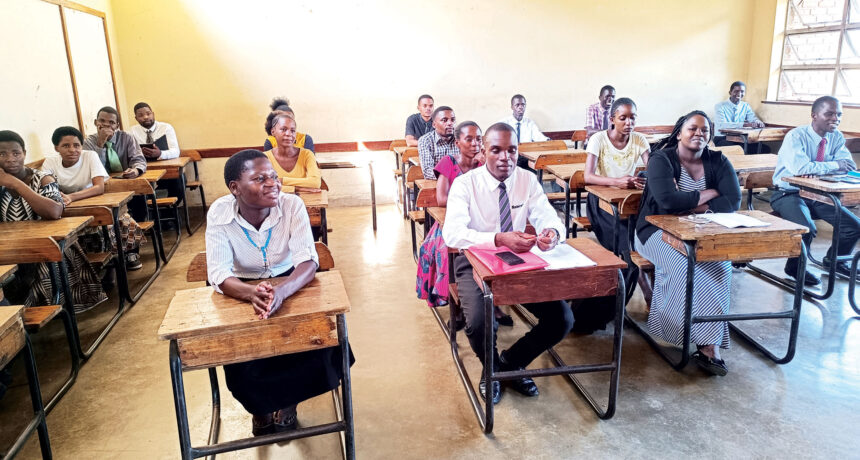
Pangani says under the project, Swet is forming radio listening clubs in Teacher Training Colleges (TTCs) and at teaching practice schools that will be deliberating on content that Swet will be airing using radios.
“Our main targets are the student teachers as well as qualified teachers. What we are trying to do is to popularise ICT platforms and also to encourage their utilisation by teachers. This is after learning from the past experiences where we have been challenged by emergencies such as Covid-19 and other disasters,” he says.
This far, the project is being implemented in eight TTC’s across the country and Swet will be measuring the impacts of the project through facilitation guides which among others contain actions being taken after listening to Maphunziro Ulalo Wathu programmes.
Wasana Munthali, a teacher at Namuyemba Primary School in Chitipa, a teaching practice school where the radio listening club has also been set, says they have not been fully utilising digital platforms, resulting in the disruption of lessons during emergencies.
Munthali says integration of ICT is also crucial if the government is to realise the Malawi 2063.
“Our learners need to be aware of ICT because this is in line with the Malawi 2063 blueprint but currently we are not fully utilising these platforms like we should and we shall use the radio listening club that was established here to learn how best we can use ICT when teaching,” he says.
Chairperson of Karonga TTC radio listening club, Ellen Chirwa, says it is crucial to start with the student teachers so that they should be well versed with the ICT platforms before they join the mainstream.
And acting Head of Education Foundation Studies at Karonga TTC, Alstarico Mbizi whose department is responsible for use of ICT in teaching and learning says the project will complement government’s efforts in training teachers in the usage of ICT in teaching, grading and assessment of learners.
Mbizi stresses the need to take advantage of technological advancements because they are being used by people of all ages including children.
“The different skills that they are going to learn on how to deliver lessons using ICT will help student teachers to be conversant and also to be able to deliver lessons even during times when we have experienced predicaments which makes it hard for teachers to meet their students physically. ICT will bridge this gap,” he says.
The primary goal of the National Education Policy in Malawi is to promote equitable access, relevance, quality and improved governance and management of the education sector to contribute sustainable socioeconomic development and poverty reduction.
However, studies around the world say school closures due to emergencies have negative impacts on education.
They say that when used effectively, ICT can help strengthen communication among teachers and learners.