
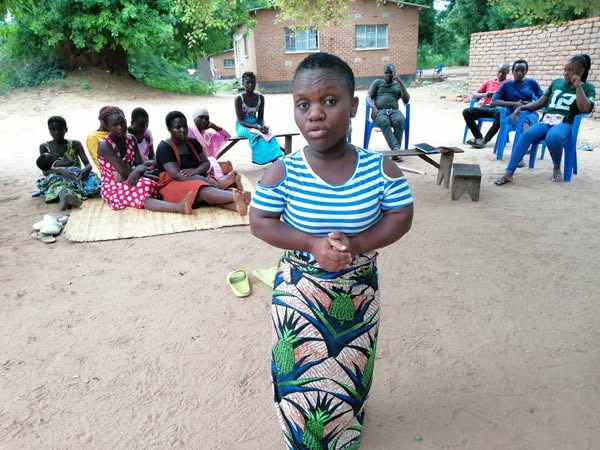
For 34-year-old Mphamvu Miracle Kalima, it was about overcoming the limits she felt society had placed on her.
Mphamvu is a fighter.
She has always fought for inclusion and recognition in a society which does little, or nothing at all, to promote and respect women as key decision makers.
Apart from being a woman, Mphamvu has, over the years, faced constant challenges due to her short stature.
“Growing up, I faced challenges, from primary to secondary school, as I could not be in the company of peers without facing any form of ridicule such as being called a child and Kafula, for example,” Mphamvu narrates.
- Advertisement -
However, Mphamvu fought against such ridicule to sit the Malawi School Certificate of Education (MSCE) examinations and pursue a course in Administrative Studies.
Indeed, she was among women with disabilities who dared to run for public office in the general elections on September 16, 2025.
As a candidate for Nyamadzere Ward in Nsanje District in the Local Government Election, Mphamvu says she fought to claim her rightful place in society and encourages others to do the same.
Her fighting spirit already earned her a place in communities under Traditional Authority Malemia in the district.
- Advertisement -
- Advertisement -
Mphamvu has served in various roles, including those of Nsanje District Youth Network vice chairperson and the Area’s Development Committee (ADC) chairperson.
She also served in a local non-governmental organisation called Voices of the Youth and People with Disability.
“I have always wanted to actively fight and amplify the voices of the youth, people with disabilities and the elderly in my community,” she says.
It is this passion that inspired her run for public office.
She plans to raise more awareness and encourage the participation of marginalised groups in society.
“It was in 2022 when I decided that I was ready to run as ward councillor in the general elections after undergoing training that non-governmental organisations were organising in the area,” Mphamvu says.
But the new terrain provided yet other new challenges.
“Lack of resources and ridicule on the political front have been some of the challenges, I have had people calling me names just because I was not able to give them handouts,” she says.
She, however, says support from various stakeholders, including her male counterparts, proved useful during campaign.
Apart from that, it was her resolve to take part and be counted that kept her going in a sector dominated by men.
“For me, quitting was never an option because I felt that doing that would have discouraged many women and people with disabilities from running for public office because I know that having a disability is not a crime and is not supposed to limit my dreams,” she says.
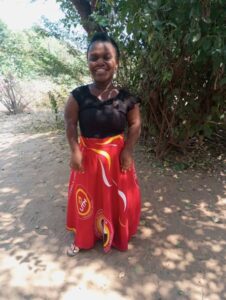
Like Mphamvu, Emelia Chapaheya, who run for the Mulanje South West Constituency parliamentary seat, believes disability is not inability.
“Being a person with a disability does not necessarily mean I cannot do anything because I have discovered that those who are considered able and have been representing people have not done well in bringing development in their areas,” Chapaheya says.
Chapaheya says she has managed to weather various storms such as being denied access to hold rallies in other areas and receiving threats from opponents to the extent that a vehicle she used to hire for campaign was torched.
“But some chiefs supported my courage and provided spaces for me to hold rallies and, through support from other people, I managed to get another vehicle,” she says.
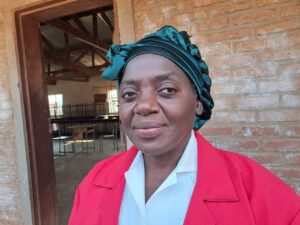
In Blantyre, Elipher Mvula prepared for myriad rallies in her Bangwe Namiyango Ward.
But lack of finances and difficulties in mobility are some of the setbacks she faced.
“I got motivated to join politics in 2006 after a meeting with several organisations that were encouraging women with disabilities to join and actively participate in politics, which everyone was describing as a dirty game at the time,” Mvula says.
Mvula says the journey has not been smooth.
She, however, says she took strength from her goal to make positive contributions to society.
“Most candidates and the electorate are used to giving or receiving handouts, which makes it difficult for visionary people to embrace politics with ideas only.
“Despite all that and the limited support, I managed to push so that I could provide an alternative choice to the people,” Mvula says.
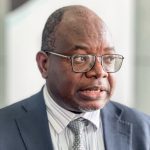
Ezekiel Kumwenda, who run for the Mzimba Hora parliamentary seat, also faced challenges in as far as participation in politics is concerned.
A visually impaired person, Kumwenda says access to infrastructure and materials were some of the challenges people with disabilities faced in their pursuit for political office.
“There were instances when, at first, people could dismiss us just because of our disabilities but, eventually, as we continued sharing ideas, progress was being made,” Kumwenda says.
According to Kumwenda, working together with other candidates assisted people with disabilities to reach out to more people in their areas.
Mphamvu Kalima, Elipher Mvula and Ezekiel Kumwenda are among the 78 candidates with disabilities who were approved by the Malawi Electoral Commission to contest either as members of Parliament (MPs) or ward councillors.
At least 18 people with disabilities run for office either as MPs (15 males and three females) or ward councillors as 60 participated in the Local Government Elections (51 males and nine females).
According to information provided by the Malawi Council for Disability Affairs (Macoda), of the 78 candidates with disabilities, 34 contested as independent candidates.
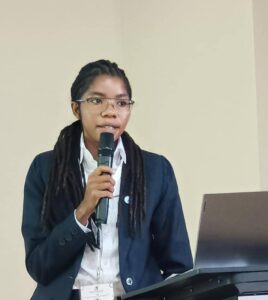
Political exclusion at political party level has been cited by many of the independent candidates as the main reason of their candidature status, says Harriet Kachimanga, communications specialist at Macoda.
“We have been facilitating the creation of a conducive environment that ensures that persons with disabilities thrive in the electoral and political spheres. This included engaging the Malawi Electoral Commission and other stakeholders to ensure that the elections were inclusive.
“We have also been conducting community engagements and campaigns highlighting this right to participate in politics and public life so that persons with disabilities themselves are encouraged to participate and that other citizens as well as political parties have a positive attitude towards candidates with disabilities,” Kachimanga points out.
She goes on to say that Macoda closely worked with other organisations to ensure that existing programmes aimed at supporting persons with disabilities in the electoral and political processes are effective.
The Disability Act of 2024 provides for deliberate policies and measures to guarantee the participation in political and public life of persons with disabilities.
“The government shall, through deliberate policies, create a conducive environment for persons with disabilities to effectively and fully exercise their political rights, directly or through their freely chosen representatives,” the Act reads.
On the other hand, the Gender Equality Act encourages equal participation of women in decision-making processes.
But despite this, women continue to lag behind when it comes to participation in political spaces.
In 2022, the Malawi Electoral Support Project was established as part of efforts to assist key national authorities and development partners to perform core functions for inclusive participation and representation.
Key priority areas include encouraging participation and representation of women, youth, the elderly, people with disabilities and people with albinism in the electoral processes.
Despite all such efforts, Elipher, Mphamvu, Emelia and Ezekiel have not done well in the election, but their audacity to participate against all odds will go a long way in encouraging marginalised groups of society— notably women, the youth, people with disabilities and people with albinism—to come out of their shell, participate and be counted in public life.