




When political violence is allowed to persist, it poses a huge threat to peace, democracy and development.
This threat often intensifies during elections, as political actors exploit existing inequalities and tensions, particularly among young people.
In areas where youth face high unemployment, limited educational opportunities and poverty, they are frequently targeted and manipulated to incite unrest.
Mangochi is one such area, often identified as a hotspot for political violence.
- Advertisement -

“The situation in our district is alarming,” Paul Lwanda, a youth leader from Traditional Authority (TA) Mponda in the lakeshore district, says, his voice filled with concern.
- Advertisement -
Paul’s observation reflects a broader pattern, whereby political actors deliberately recruit young people as foot soldiers during campaigns or confrontations.
This occurs not because young people are inherently violent, but because of the socio-economic challenges they face.
“When those in power arrive, they know exactly whom to approach. They offer money and promises. In a place like this, where poverty is widespread, it is easy to be swayed,” Paul explains.
However, he is not merely highlighting the problem; he is also contributing to the solution.
- Advertisement -
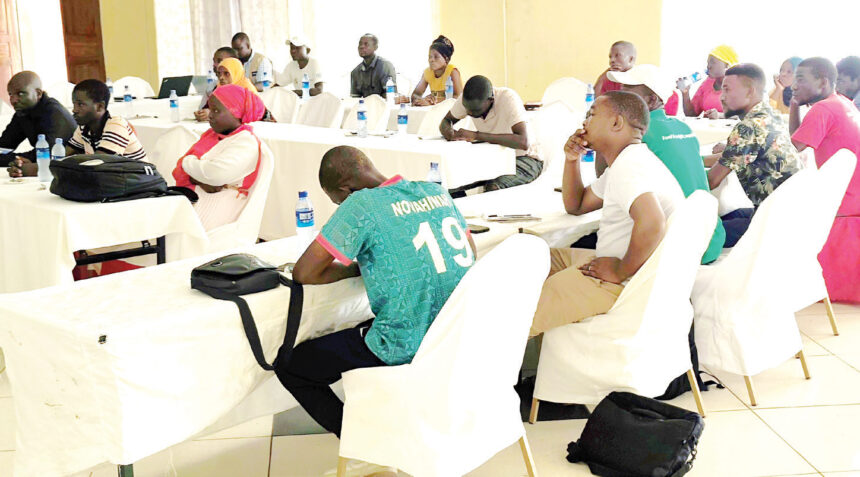
Paul has been participating in a capacity-building training programme on conflict management, designed to empower young people to resist political manipulation and become peacebuilders within their communities.
“We have learned a great deal. We now understand our role in reducing political violence and encouraging fellow young people to avoid being used by politicians for violent purposes,” he says with a sense of resolve.
The training focuses on non-violence, civic responsibility and the power of youth leadership.
For Paul and many others, it has inspired a change in mindset and a renewed sense of purpose.
“Now we plan to advocate within our communities. By sharing what we have learned, we hope to help reduce political violence and promote lasting peace,” he says.
To address the persistent issue of political violence during elections, the Centre for Social Accountability and Transparency (Csat) has launched a project to empower young people as peace advocates and active participants in Malawi’s democratic processes.
The project, titled ‘Strengthening the Meaningful Participation of Young People in Electoral Processes’, is being piloted in Mangochi, a district long associated with high levels of political unrest.
It is funded by the German Government through the Institute for Foreign Cultural Relations.
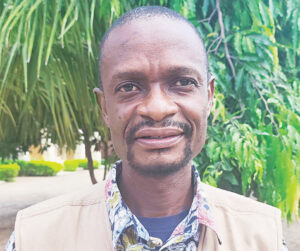
“Too often, politicians exploit young people as agents of violence. We are here to change that narrative,” Albert Lulaka, Csat’s project coordinator, says.
Running for eight months, the project targets three TAs in Mangochi: Mponda, Chowe and Namavi.
However, its impact is expected to extend beyond the district through extensive media engagement, including radio broadcasts and newspaper pieces.
“Our aim is national. Although we are starting in Mangochi, the information we are sharing via the media will reach young people across the country.
“We want them to realise that they have a choice, to reject violence and embrace meaningful participation,” Lulaka adds.
The initiative also promotes civic education and encourages youth to volunteer as peer educators and election monitors.
From voter registration to campaigning and election day itself, these youth volunteers will help to monitor proceedings and raise awareness.
“When young people monitor elections, they become defenders of democracy. They are less likely to be manipulated when they understand the process and their rights,” Lulaka explains.
Csat is also working with key community stakeholders, including religious leaders and political party representatives, to promote messages of peace.
“Religious leaders are influential, but some are becoming entangled in politics. We are engaging them to advocate for unity and peace within their congregations,” Lulaka says.
He adds that political party officials, particularly district governors and chairpersons, are being urged to lead by example.
As to why Mangochi was chosen as the starting point for the project, Lulaka cites the district’s troubled history.
“Mangochi has consistently ranked among the worst in terms of political violence during elections. We saw it as a critical area to begin, not only to support the youth here but also to serve as a model for other high-risk districts,” he says.
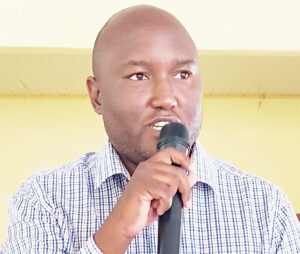
According to Kumbukani Manda, Mangochi District Youth Officer, the project will play a vital role in transforming the way young people engage in the electoral process.
He confirms that the district has experienced numerous instances of political violence over the years, with young people frequently involved.
“They are manipulated by various political parties. We are confident they will become more aware of the dangers of participating in violence and more engaged in the democratic process, especially with elections scheduled for September 16,” he says.
The project’s focus on educating young people and involving them at every stage of the electoral process is something Manda believes is essential to changing attitudes.
He also recounts the district council’s collaboration with the Malawi Electoral Commission to raise awareness about the elections.
However, Manda admits that challenges remain in reaching every part of the district.
“That is where our partners come in. This project will help to extend our outreach, particularly to hard-to-reach areas, ensuring that youth are not used to fuel political violence,” he explains.
Manda also reflects on the deeper social issues that fuel political violence.
He identifies widespread unemployment and poverty as the main drivers, leaving young people vulnerable to exploitation.
In this context, Manda believes the initiative offers an opportunity for behavioural change and broader empowerment beyond civic education.
“It will also support youth engagement in small businesses and other productive ventures, keeping them occupied and less likely to be drawn into political violence,” he says.