By Charles Mpaka
A quiet revolution is unfolding in the lush landscapes around Kasungu National Park in Malawi and stretching to Lukusuzi National Park in Zambia, where local communities are turning to beekeeping as a sustainable livelihood, shifting away from practices like poaching or chopping trees for firewood in protected areas.
The increasing viability of beekeeping drives this shift as an income-generating enterprise alongside climate-smart farming initiatives.
Anthony Chatama, a local leader in Kasungu, speaks optimistically about beekeeping’s future.
- Advertisement -

“From this early experience, we see many potential benefits in beekeeping,” he says. “On top of them all, we see improved incomes for our families and our cooperatives taking a significant part in building community projects.”
- Advertisement -
Honey extraction is not necessarily new in these communities. It’s a centuries-old tradition in Africa, where hunters harvest honey from bee colonies found by chance or by tracking the bees to tree and ground cavities. They often do so at night, when the bees are inactive, usually without protective clothing and using fire and smoke to subdue them. The honey gathered is mainly for home consumption, although the surplus is sold unprocessed.
National Park
How beekeeping benefits wildlife
The Kasungu and Lukusuzi areas are part of the Malawi–Zambia Transfrontier Conservation Area (TFCA), where Ifaw works across two countries, including three national parks and the surrounding communities.
It’s a key landscape for our Room to Roam Initiative, as it is important to the seasonal dispersal of elephants, which sometimes come into conflict with the people who live there, mostly small-holder farmers dependent on their crops for income.
- Advertisement -
Room to Roam endeavours to build climate-resilient landscapes where people and animals can thrive together despite the challenges presented by climate change.
Working with partners, the project trains farmers in climate-smart agriculture techniques and growing drought-resistant crops, supporting biodiversity and preventing deforestation.
Income-generating opportunities
Until recently, honey production was never a domesticated, income-earning enterprise in these communities. It was just a way of benefitting from nature’s smooth provision.
In the communities around Kasungu, beyond the challenges they are facing with their nascent industry, people are beginning to believe that with better production processes and marketing, money can flow from honey production. That’s because, at the moment, even without a structured market and selling unprocessed honey, they can still make about US$5 per litre selling at village markets, or US$2.50 selling to occasional buyers.
Phillip Namagonya, Ifaw Community Engagement Officer, believes there’s still a long way to go before newly commercial honey farmers reach full production potential and become competitive in domestic, regional, and international markets, all of which would guarantee them adequate returns and profitability.
“However, with training on value addition, proper harvesting, and processing, and provision of real-time market linkages, beekeepers can make their enterprise more profitable,”says Namagonya.
“Ifaw works with partners like Community Markets for Conservation (Comaco), which have the expertise to help,” he says.
The market for honey is vast, and demand is unmet. Data for 2020 from Africa Eats, a pan-African holding company consisting of a collection of locally run food and agriculture companies, shows that in Malawi, of the 200 tonnes of honey demanded annually, only 60 to 90 tonnes are supplied through domestic production.
Internationally, developments next door in Tanzania, which neighbours Malawi and Zambia, provide insight into existing honey market opportunities. Local media in Tanzania recently reported that East Africa has secured a honey export deal with China, which requires 32 million tonnes annually. The report further said that Tanzania already earns US$77 million from honey and bee product exports annually.
However, with the rising demand for honey in local and international markets, more supply is needed. Last year, to help meet this demand and provide livelihood opportunities to communities
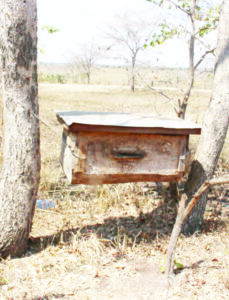
Ifaw delivered nearly 300 beehives to cooperatives in four chiefdoms around Kasungu. The beehives were installed in forests in communities that share a boundary with the park. This year’s honey harvest is already underway, with 700 kilograms collected as of July 2024.
In Malawi–Zambia, where Ifaw works with COMACO, the project distributed 1,500 beehives—five for each of 300 households.
Forest restoration and human-wildlife conflict prevention.
Beyond economic benefits, beekeeping is a strategic conservation tool. It contributes to forest conservation, which is essential for hanging beehives.
“It’s an opportunity for forest restoration in our area, because you need trees to hang beehives,” Chatama says. “Now forest conservation implies several ecosystem advantages for us.”
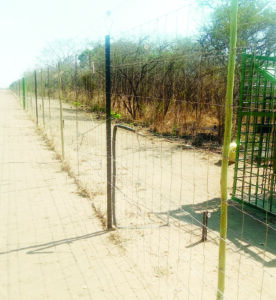
Beekeeping is also a way of dealing with human-elephant conflict. Typically, people enter protected areas to extract resources to earn money for their households. With thriving beekeeping enterprises, they would not need to enter the national park and put themselves at risk of wildlife attacks.
Beekeeping also offers a humane solution to human-elephant conflicts. Scientific studies have shown that beehive fences can effectively deter elephants from entering crop fields, thus preventing conflicts and encouraging peaceful coexistence.
One such study, conducted in Kenya and published in the
African Journal of Ecology in 2011, found that beehive fences constructed between a farm and protected areas prevented elephants from invading crop fields. A series of studies have since produced similar findings.
According to the studies, for all their mammoth size, elephants are scared bees due to their buzzing sound, scent, and sting. So, they make sure they stay safe by keeping off.
Need for investment Malidadi Langa, the board chairperson for Kasungu Wildlife Conservation for Community Development Association (Kawiccoda), a community-led organisation, describes beekeeping as a nature-based, income-generating conservation strategy.
He calls on partners to invest in the entire honey value chain to maximise the opportunities beekeeping provides, from production to marketing.
“Helping beekeepers in honey processing, packaging, and marketing would enable the enterprise to significantly contribute to conservation and livelihood outcomes,” Langa says.
As beekeeping becomes more established, there is a critical need for investment across the entire value chain. Enhancements in honey processing, packaging, and marketing could significantly boost the industry’s contribution to conservation efforts and sustainable livelihoods.
As these communities harness the ancient art of beekeeping to forge a new path toward economic independence and environmental stewardship, support from global partners will be crucial in realising the full potential of this sweet endeavour.—Ifaw