




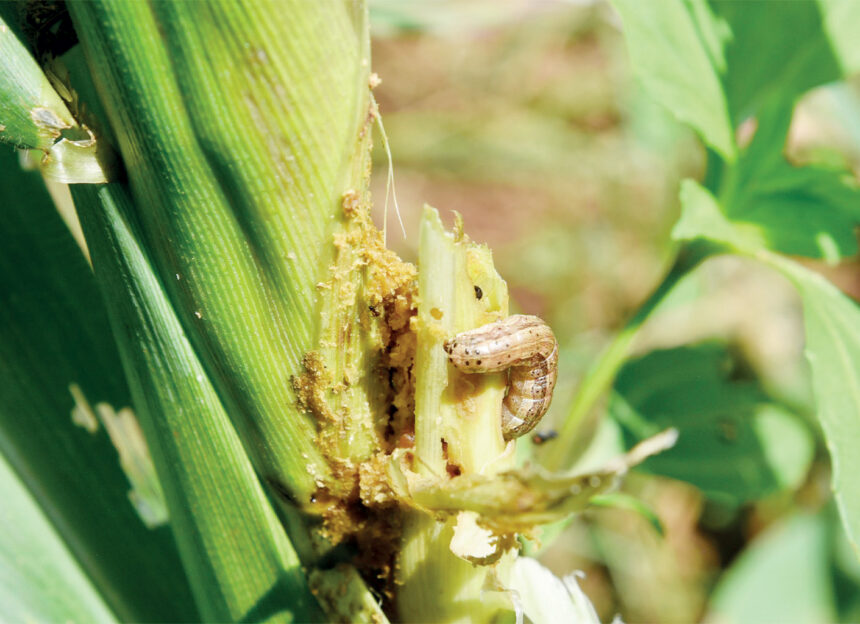
Silently, it ruthlessly worked its way from its native South and Central America, crossed into Africa, arrived in West Africa in early 2016 and made its way into Malawi.
It attacked crops, especially maize, causing huge losses among smallholder farmers and shook Malawi’s food security foundations to the core within a year.
By the time then president Peter Mutharika declared the fall army worm a disaster in 20 out of the 28 districts in Malawi, the pest had already destroyed approximately 382,000 hectares of maize, sorghum and millet.
About one million farming families were already experiencing one of the most devastating threats to agricultural productivity in years.
- Advertisement -

The fall armyworm was detected and quickly became a major threat to maize, Malawi’s staple crop.
- Advertisement -
The invasion also affected Zimbabwe and Zambia, destroying over 124,000 hectares of maize in seven of the latter country’s eight corn growing provinces, according to reports.
The government in Zambia was forced to start using military planes to spray pesticides in highly affected areas.
But the worm was not going anywhere. Soon experts in Malawi began advising farmers to find ways of adapting to the pest, such as intercropping among other farming methods, saying the worm was here to stay.
It was at the height of the fall armyworm outbreak that Martha Khoma, a smallholder farmer at Nankumba Village, Traditional Authority Ndindi in Salima District, started farming.
- Advertisement -
“As a farmer, I made huge losses due to the dry spell and the fall armyworm because we were given too many messages about how we could deal with the pest, some of which were not working,” Khoma says.
She says the attacks began on the plant leaves and stalks, making it almost impossible for crops to produce.
As a control measure, Khoma says agricultural extension workers advised the farmers to pick the pest physically and crush it with their hands, especially when it was in the larva stage, one of its most destructive phases.
“Later, we were advised to use what was then called friends of farmers, insects which prey on the pest, so we would boil any kind of fish and spray the water on plants to attract ants to the top of the crop.
“The ants would climb the plant and in turn eat the fall armyworm in a process which was too slow to eradicate large swarms of the pest,” Khoma says.
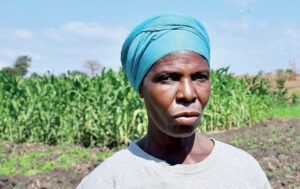
Another farmer, Loveness Bamusi, recalls her experience with the fall armyworm.
Bamusi, a lead farmer at Chipoka in Salima, says natural ways of controlling the pest drew mixed results, working in some instances when they applied powder from the leaves of some trees such as neem.
“Such remedies used to work as compared to when we sprayed the crops with some chemical pesticides available to us, which were also expensive for us to manage over time,” Bamusi says.
Khoma and Bamusi are among thousands of smallholder farmers in Malawi who, together with major farmers, have fought the destructive fall armyworm for over a decade now.
Through various home-grown innovations and solutions, the farmers have learnt to live with the pest for now.
From the various chemical pesticides and these home-grown solutions, experts are now turning to biological control methods as a long-lasting solution to the fall army worm and other pests.
At Bvumbwe Agriculture Research Station in Thyolo, research is currently underway to establish the right biological control methods for different pests by developing parasitoids.
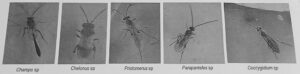
Parasitoids are insects whose larvae live as parasites which eventually kill their hosts; an example of these are little wasps.
Gift Golden Chimbizi is an entomologist (agricultural research scientist) at Bvumbwe Research Station and says parasitoids are the future of pest control.
He says the research station is focusing on biological control methods for the fall armyworm, leaf miner and another pest in macadamia, the two spotted stink bug, as well as the macadamia nut borer.
“Parasitoids are little wasps that lay their eggs inside the eggs of the pests or inside a developmental stage of the pest, for example, the larvae.
“For instance, with the fall armyworm, a parasitoid called Trichogramma lays its eggs inside the eggs of the pest so that instead of the eggs developing into the larvae and then into the adults of the fall armyworm, they develop into the wasps and the circle continues, thereby increasing the population of the crop friendly wasps while reducing the population of the fall army worm,” Chimbizi says.
He adds that the more parasitoids lay eggs inside the larvae of the fall army worm, the smaller the population of the pests and therefore the more protected the plants.
“So, this is a sustainable way of controlling pests as compared to the use of synthetic pesticides because for starters, chemicals are expensive for a smallholder farmer.
“Also, most of the chemicals that we buy require technical know-how and the use of personal protective equipment, which most of our farmers cannot afford,” he says.
He goes on to say that the use of chemicals may also degrade the soil and damage the environment in the long run.

On the other hand, Chimbizi says using parasitoids, which are organisms that are already in the environment and were already provided by nature to control the issue of pests, is the most sustainable and cheapest way for smallholder farmers.
“Once the parasitoids are in your field and you are able to manage them, to give them a place to stay, to multiply and to survive, they will be in your field for years to come controlling pests in a more sustainable way,” Chimbizi says.
The use of parasitoids is already gaining popularity in several countries across the world such as India, where Chimbizi says that for people to use chemicals, they need to go through a lot of procedures to be allowed to use the chemicals.
“So, countries like India, Sudan, China, Canada, the United States, Kenya and South Africa are now pivoting their plant protection towards parasitoids,” he says.
The scientist adds that the use of parasitoids is the future of plant protection, saying most countries are already doing it with others commercialising the use of parasitoids by selling them to their farmers while the excess is being exported to other countries.
Madalitso Khonje, a research assistant at the entomology laboratory at the station, says the research that is taking place will benefit thousands of farmers and reduce losses to pests.
“We are trying to find the relevant parasitoids and increase their populations so that we can reach out to as many farmers as possible,” Khonje says.
Already the government of Malawi has reiterated the importance of research-based solutions to various challenges that the country is facing in its agricultural sector.
Director of Crop Development in the Ministry of Agriculture, Elida Kazira, recently told an agricultural conference that research could go a long way in building resilience among farmers in the wake of climate change.
“As a government, we have policies in place that promote various research-based innovations and technologies for sustainable farming practices,” Kazira said.