By Wanangwa Tembo:
For one Moses Manda, 43, of Mphichi Village in Traditional Authority Mabilabo in Mzimba, the 2023- 2024 growing season has been a mix of sad realities, more so being someone whose survival solely depends on farming.
It is a season the longtime maize and tobacco farmer saw his farming ventures tumble, throwing him deep in the chasm of hopelessness and despair.
“Rain started unusually very late. And when it came, it was heavy and destructive.
“Before the crops had matured, the rains were gone,” he says.
- Advertisement -
The village did not harvest anything as the dry spell that followed scorched all the crops before they had matured, and that would also be the genesis of a long hunger spell.
“We do not have food. That is the situation for almost all households here. It was a bad season,” Manda says.
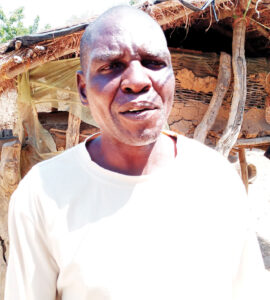
In the neighbouring Vilimnthumbo Village, 29-year-old Malule Chirwa repeats Manda’s sentiments.
“I cultivate maize, soybeans and tobacco but if you check in my house, there is nothing to show.
- Advertisement -
- Advertisement -
“We have heard about climate change before, but we never knew that this is what it means. We are a community that depends on agriculture, but this year we have no food,” he says.
Across the country, the 2023-2024 growing season was marred by El Nino weather conditions, which moved President Lazarus Chakwera to declare a State of Disaster in 23 districts in line with Section 37(1) of the Disaster Risk Management Act.
Making the declaration on March 23, Chakwera said apart from the late and erratic onset of rains, the country had experienced inadequate rains, floods, and prolonged dry spells, which severely damaged crops and the prospects of food production.
Preliminary assessments at that time revealed close to 2 million farming households were affected countrywide, with at least 749,113 hectares of maize affected, representing 44.3 percent of the national crop area.
“This is devastating,” Chakwera said.
He added: “It would have been devastating enough if this was the first disaster to befall us in recent times. But unfortunately, this is the fourth time I have had to declare a State of Disaster.
“In all 23 districts where I am declaring a State of Disaster today, the most urgent need is food because of the large number of people at risk of hunger.”
Accordingly, the President appealed to individuals, development partners, charities and the international community for support.
Mzimba did not make it on the list of the districts declared a State of Disaster in that the larger part of the district had not experienced the harsh patterns.
However, some communities in Emfeni and Kanjuchi in TA Mabilabo in the district were heavily hit and the appeal for help got the attention of the Malawi Red Cross Society.
Principal Agriculture Officer for Mzimba District Council, Julius Banda, says Emfeni and Luwerezi in the area of Traditional Authority Mabilabo were battered by drought.
He says at least 22, 090 farming households were affected in Mzimba South, of which 2,652 families are in Mabilabo alone.
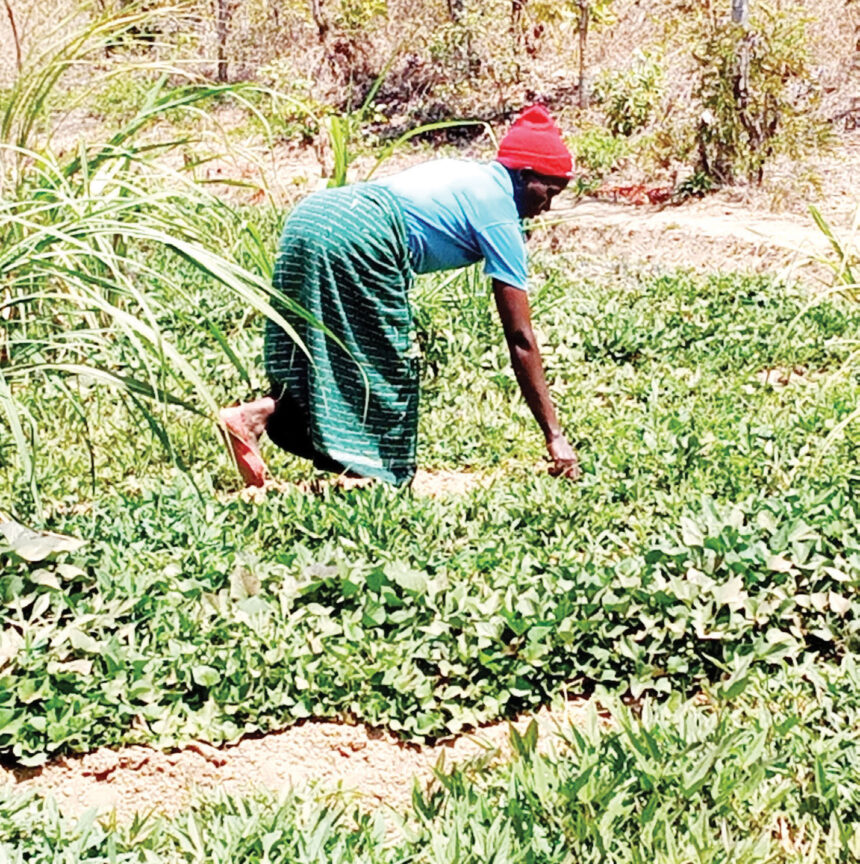
“With partners like Malawi Red Cross Society, we intervened by supporting the households with drought resilient crops like orange fresh sweet potato and vegetables so that they can quickly get into irrigation farming in ‘dimba’ gardens.
“So far we reached out to 500 farmers with potato vines, enough to plant on a 0.1 hectare of land which would give at least 1,200 kilogrammes of harvest,” Banda says.
He says the ‘dambo’ farming will also act as a seed multiplication exercise for the farmers so that they can cultivate larger hectarage during the rainy season.
“As an office, we are happy because the household showed a lot of willingness to venture into this irrigation farming.
“We supervised the work and we are hopeful that at least things will go as planned. We want to reduce incidences of hunger in the area,” Banda says.
He says rainfall projections for the coming season indicate that the district would receive below normal rains, hence the need to target more farmers with sweet potatoes and avert suffering.
“Malawi Red Cross Society also provided cash transfers to the affected households to address immediate needs. But the planting of draught resilient crops was the only long term solution and we are pleased that it has worked.
“These are highly deforested areas. Trees have been heavily cut down to create gardens for millet cultivation. So on the other hand, we are also promoting natural regeneration of forests,” he says.
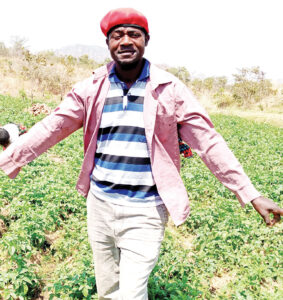
A visit to Manda’s and Chirwa’s gardens on the beds of Chigumukire stream found various crops flourishing under irrigation.
“We thank the Red Cross Society for coming to our rescue. These crops you see are products of the support we received from them,” Manda says pointing at sweet and Irish potatoes, maize, vegetables, tomato and onions.
“From the money we were given, I used some to buy Irish potato tubers which I planted here. I expect to harvest not less than four tonnes in a few coming weeks,” Manda says.
He hopes the ‘dambo’ produce will provide a relieving bridge taking the households to the next harvest in April next year.
On his part, Chirwa says he is surviving on money he realises from selling vegetables.
“As indicated earlier, apart from the sweet potato vines and vegetable seeds, we also received K150, 000 each from Malawi Red Cross Society which I invested a vegetable garden. So the money we get from vegetables is largely used to buy food.
“I also expect to harvest the sweet potatoes on the onset of the rainy season so that we don’t lose the vines which we will use to cultivate the crop on a larger scale,” he says.
Louis Tobias Solomon is the Emergency Operations Coordinator for the Malawi Red Cross Society and says it is pleasing that their intervention is bearing fruits.
He says immediately after the Malawi Vulnerability Assessment Committee (Mvac) report of 2023-2024 which indicated that 4.4 million Malawians would be in need of food assistance due to dry spell, flooding and El Nino phenomenon, the humanitarian society started lobbying for support.
“We launched a hunger appeal which was also covering the southern part of Africa, specifically Zambia and Zimbabwe because those two countries were also affected.
“So through this appeal, we managed to mobilise resources to support food insecure households in Mzimba District because according to the Department of Disaster Management Affairs, Mzimba was one of the affected,” Solomon says.

He says Mabilabo area had 1,500 households earmarked to be given food assistance in form of cash transfers and inputs for irrigation farming.
“With K396 million, we managed to disburse K150,000 to each of the affected households which was given in three months for immediate food needs.
“We also carried out complimentary activities whereby we supported 500 households with agriculture inputs like vegetable seeds and potato vines so that they had something to do during winter.”
The Malawi Red Cross Society also supported trainings for lead farmers to ensure that there were no gaps in the provision of agriculture extension services to make the interventions a success.
“All in all we are thankful to Dodma [Department of Disaster Management Affairs] Mzimba office for the guidance which has also helped to make this programme successful.
“We believe we have registered significant successes looking at how the beneficiary households use the cash transfers and also the successful trainings and the winter cropping,” he says—Mana